










by Mathias Hellman, Vice President IPR Strategy & Value, and Janne Peisa, Head of Connectivity Networks
Introduction
Over the last 150 years, Ericsson has been a global leader in ICT solutions, shaping how the world communicates. We are the largest contributor to 3GPP, the global partnership project behind several generations of mobile technology, from 3G to 5G. Our engineers have submitted more than 90,000 technical contributions, thousands more than any other company. Today, Ericsson continues to lead in the evolution of global mobile standards, currently focusing on 6G standardization. Such long standing role does not happen by chance. This article explores key elements needed to build and sustain leadership in cellular standardization.
Long-term R&D strategy
Leadership in cellular standardization is rooted in long-term research and development (R&D) process that integrates early technical innovation, structured collaboration, and rigorous validation. Over the last three decades Ericsson has invested over $100B in R&D. Nearly 27,000 professionals are dedicated to R&D efforts to accelerate the future of connectivity. In 2025, we invested $5 billion, more than 20% of our annual global revenue, into R&D initiatives. We began our 6G research activities as early as 2018, introducing our 6G vision in 2020.
Ericsson research activities cover different stages of technological maturity. Some teams explore highly uncertain and forward-looking technologies. These may include emerging fields whose commercial relevance is not yet clear, such as potential applications of quantum computing in telecommunications networks. At this early stage, the objective is to understand technical feasibility and identify whether the technology could become relevant for future mobile systems. As clarity increases regarding feasibility and potential impact, these research ideas are transformed to larger research concepts by larger research teams and are eventually developed to complete concepts for future generations.
In consequence, many concepts in current 6G standardization are built on ideas developed by Ericsson several years ago. Today, the emphasis has shifted toward formally studying the technical solutions that will be actually specified in 2027/28. As next step, our ideas and concepts to standardization will be reviewed and evaluated by thousands of engineers from hundreds of other companies with the ambition of transferring research concepts to a system suitable for commercial introduction around 2030.
Internally, Ericsson standardization teams consist of delegates from research and product teams. This allows fast transferring of knowledge to business areas and product development teams. It further permits to adapt research outcomes to concrete product needs, refine technical solutions, and ensure readiness for upcoming technology deployment.
Establishing collaborations to advance 6G
Collaboration with academia and with industry partners is central to Ericsson success throughout the standardization lifecycle. It complements Ericsson’s concepts by broadening technical perspectives, validating concepts, and ensuring ecosystem relevance.
Cooperation with universities and research institutes provides access to specialized knowledge and enables exploration of new technical approaches beyond immediate product constraints. Working with them involves stimulating research, filtering the results that are relevant to standardization and integrating those results into final products.
Industry collaboration includes joint research initiatives, large-scale research projects and joint trials and prototypes. These settings allow technical exchange, validation of assumptions, and convergence around architectural directions. Cooperation with partners, customers and vertical companies enables discussion on new use cases, provides insight into performance expectations, deployment constraints, and scalability requirements. These perspectives help ensure that 6G concepts are grounded in practical needs and can be implemented on a global scale.
Ericsson also leads and engages in major international projects. Examples include Hexa-X and Hexa-X II in Europe, where Ericsson was the technical manager for the projects. We also participate in global initiatives like Bharat 6G Alliance and NextG Alliance. In the latter, Ericsson holds several chair positions. These projects enable us to exchange early research ideas and align technical developments with worldwide requirements. As a result, we ensure that Ericsson’s proposals are evaluated against the broadest possible set of technical and market needs.
Simulation and advanced testbeds
Technical solutions from 3GPP need to be demonstrated, quantified, and stress-tested under realistic conditions. This can be conducted either with advanced simulations, or by trials and testbeds.
Ericsson maintains sophisticated models of radio propagation, network behavior, and system interactions to be able to assess design options and trade-offs with advanced simulations. This allows researchers to test multiple alternatives efficiently and generate quantitative evidence that supports technical decisions.
In addition to simulations, key technical components must be validated by actual implementation. Certain behaviors only emerge when systems operate with actual hardware and under realistic environmental conditions.
Testbeds are controlled environments where new communication technologies are designed, performance bottlenecks identified, and design choices refined before they are deployed in the real world. Currently the spectrum use, radio characteristics, and architectural complexity are not yet fully developed for 6G, making hands-on experimentation particularly important. Testbeds allow standard developers to evaluate solutions, confirm that technologies operate as intended, and experiment with new concepts before adoption.
Building and supporting testbeds requires significant resources and long-term commitment, up to two years each time. Dedicated teams at Ericsson work continuously on upgrading infrastructure, integrating new features, and adapting configurations as concepts evolve.
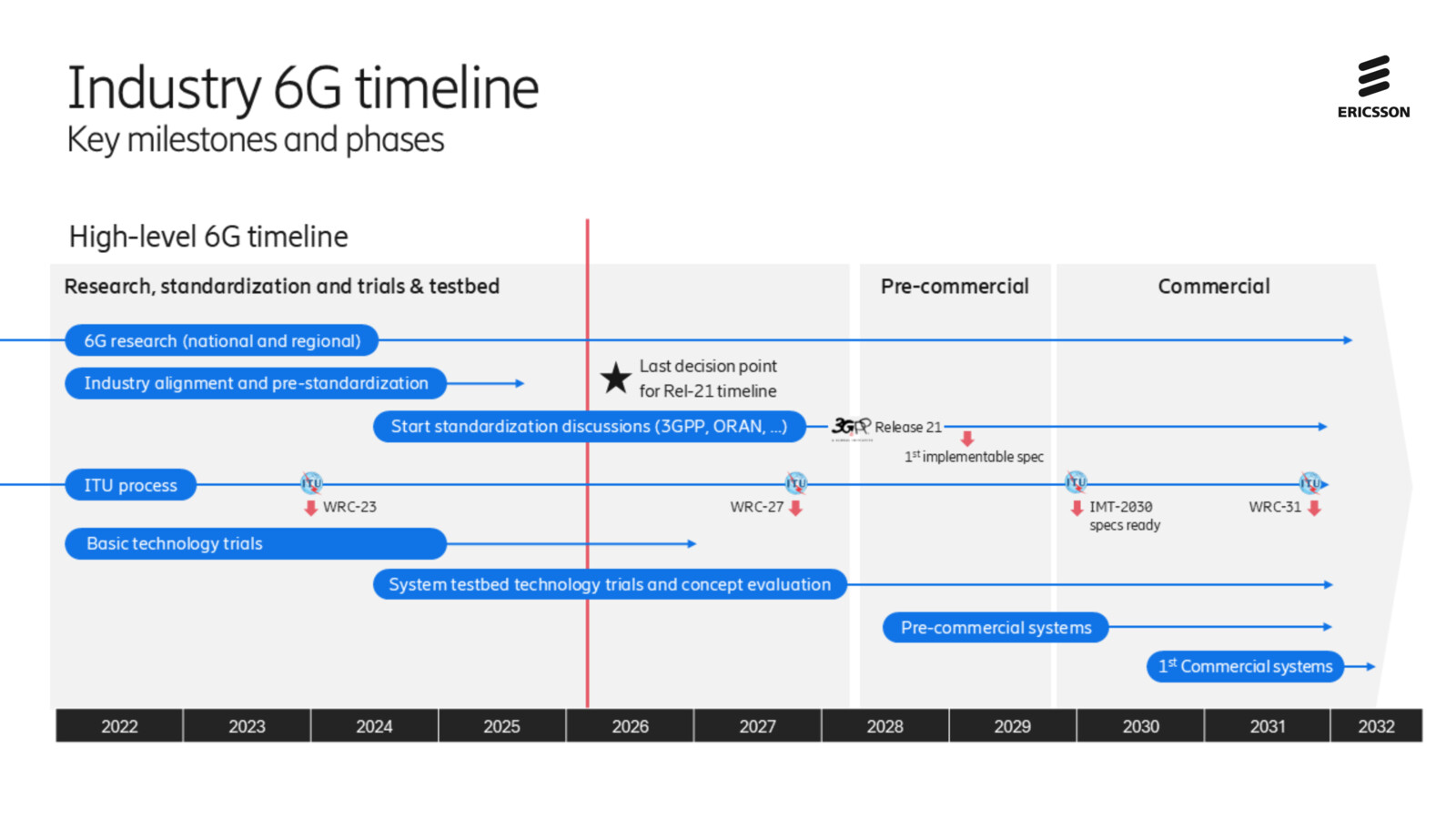
Figure 1. Ericsson. 6G standardization timeline
Anticipating future technological developments
A defining element of leadership in cellular standardization is the ability to anticipate how connectivity requirements will evolve over the coming years.
Ericsson has a dedicated unit, the Consumer and Industry Lab, which analyses technological trends and studies how consumers, enterprises, and industries are expected to use connectivity in the future. As a result, the Lab provides early indications of emerging requirements, helping researchers and implementers understand which technical directions are likely to deliver long-term value.
Engagement with industry players developing new digital services provides an additional source of insight. This collaboration explores areas such as extended reality, artificial intelligence applications, and industrial automation, helping clarify expected traffic patterns, latency requirements, reliability needs, and scalability challenges. These exchanges ensure that future network evolution is designed for future deployment conditions and use cases. From the emergence of SMS applications to today’s advanced internet services, Ericsson has consistently enabled each new step in connectivity evolution. Anticipating technological development therefore involves identifying emerging trends, testing assumptions, and understanding which future services standards and networks will need to support. In this way, Ericsson’s contributions to 6G remain relevant throughout the lifecycle of the technology generation.
Turning innovations into practical products and strengthening trust in the market
To lead in cellular standardization, we also need to turn research outcomes into successful deployable technologies. Standardization and product development therefore evolve in parallel rather than sequentially.
Within Ericsson, close cooperation between research and product development teams guarantees that technical concepts are continuously evaluated against performance, scalability, and deployment constraints. Ericsson standardization teams routinely consist of members from research and product development organizations, so that emerging specifications remain technically robust and commercially viable.
Turning 6G innovations into products also involves translating market expectations into implementable network solutions. This involves understanding how connectivity should be designed to support future use cases. For instance, during the development of 5G, engineers examined how AI-assisted glasses could operate smoothly through the network. This required analyzing how such devices would communicate with the network, their connectivity needs, and how networks should be designed to support thousands of users simultaneously. Addressing these questions early helps align research priorities, product evolution, and standardization contributions.
Ericsson transforms technological advances into products that build the infrastructure supporting the next generation of networks. This includes designing radio access networks and radio base stations, core network solutions, and advanced radio systems and antennas.
Leadership in standardization also depends on trusted relationships across the ecosystem. Close cooperation with operators and industry partners allows Ericsson to continuously refine technologies based on deployment experience. Practical feedback from commercial networks contributes to improving performance, reliability, and interoperability. This experience supports contributions that reflect real operational conditions rather than purely theoretical assumptions. This helps Ericsson’s objective to ensure that standardized technologies function as intended once deployed in live networks.
At the same time, Ericsson focuses on continuous development of expertise. From research to product development, teams bring together specialists across disciplines, combining long-standing experience with new talent entering the organization. Knowledge transfer between generations of engineers ensures continuity while enabling adaptation to emerging technological challenges.
This combination of technical competence, deployment experience, and accumulated know-how reinforces confidence in solutions contributed to standardization. Over time, consistent delivery of reliable technologies strengthens trust among partners and supports the adoption of globally interoperable standards.
Possible developments in 6G licensing
Standardization and licensing are closely connected. The development of globally interoperable standards relies on sustained investment in R&D, which in turn depends on predictable mechanisms for technological access and fair remuneration.
The licensing framework applied to previous generations of cellular technology has enabled broad adoption while supporting continued innovation. Standard essential patent (SEP) licensing has created a balanced and highly successful ecosystem. Implementers gain access to standardized solutions in exchange for paying reasonable royalties while companies contributing foundational technologies can receive fair compensation. Reasonable royalties, in turn, enable continued R&D efforts to develop the next generation of mobile networks, fostering a virtuous cycle of innovation.
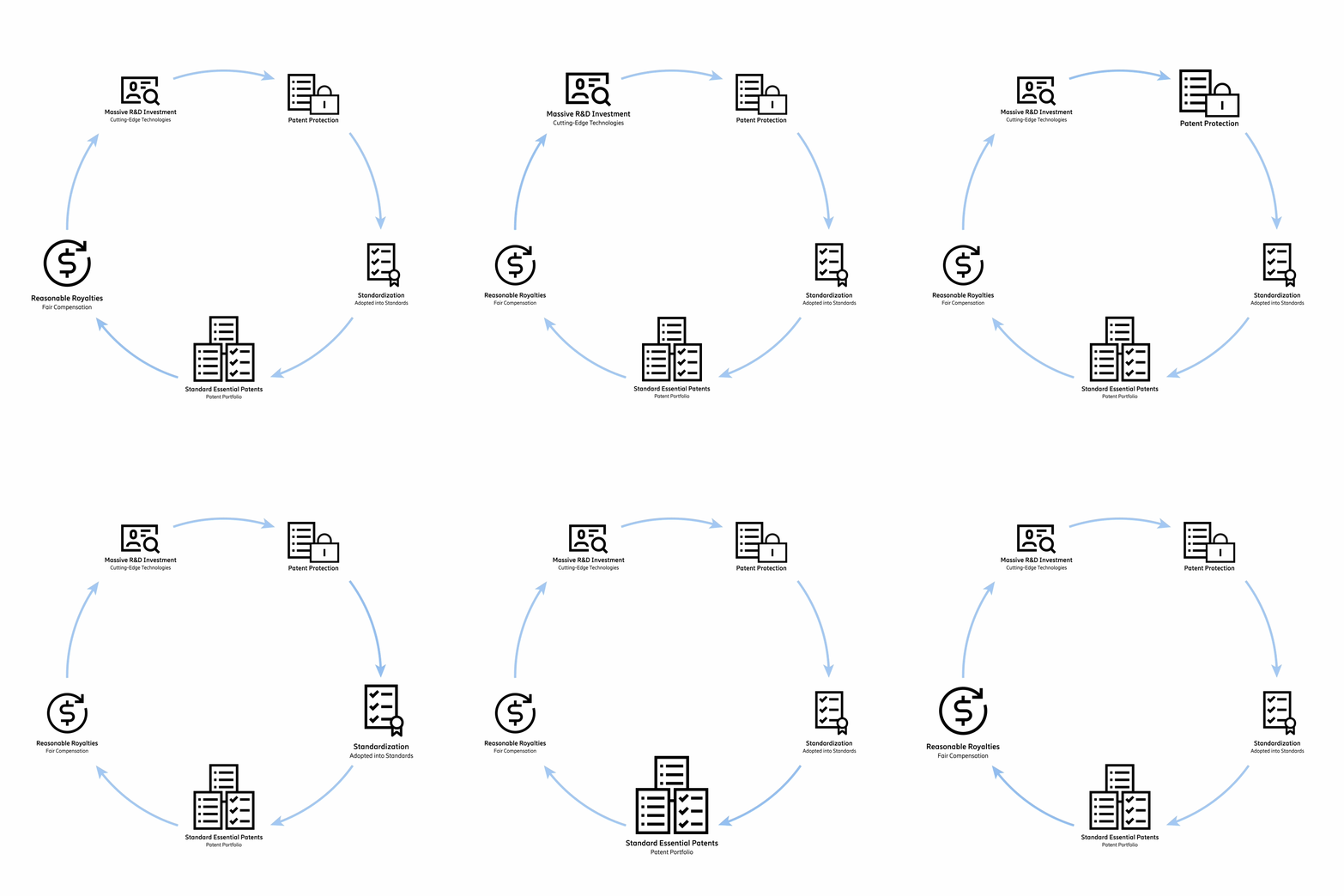
Figure 2. Ericsson. Cycle of Innovation
As 6G develops, licensing discussions are likely to evolve alongside new technological and market dynamics. Future networks are expected to support a wider range of industries beyond traditional mobile communications, including industrial automation, immersive applications, and connected infrastructure. This expansion is likely to introduce new categories of implementers with different levels of familiarity with cellular licensing practices.
Companies entering the cellular ecosystem for the first time may not be familiar with licensing on Fair, Reasonable and Non-Discriminatory (FRAND) terms and conditions. Thus, they may seek guidance. For example, they may ask how to assess the FRAND compliance of licensing offers or what behavior is expected from them. Mediation can facilitate mutual understanding and reduce negotiation impasses in a constructive manner. Therefore, mediation could play a larger role in this regard.
Many SEP owners, for their part, appear to be open to mediation.
One recent example is the WIPO Mediation Pledge for SEP licensing negotiations involving IoT SMEs to which Ericsson is co-signatory. Under this initiative, participating SEP owners commit to offering confidential mediation through the WIPO Arbitration and Mediation Center before initiating litigation concerning the relevant SEPs. In the mediation, the parties can exchange information material to the negotiation of a prospective FRAND-compliant license with the assistance of an independent mediator. Thus, the pledge provides early dialogue and transparency, with the objective of concluding a FRAND-compliant license in a timely manner.
Another initiative that could impact 6G licensing are two recent Ericsson contributions to ETSI’s IPR Special Committee. In the first contribution, Ericsson proposes improving dispute resolution mechanisms. When ETSI members cannot resolve their dispute bilaterally, Ericsson suggests that ETSI should encourage them to refer their dispute in good faith to mediation or arbitration. The contribution further suggests that those mediation or arbitration proceedings would be administered by a third-party organization specializing in dispute resolution and recognized for resolving global FRAND disputes. As with the WIPO pledge, this initiative would provide early dialogue and transparency, with the objective of concluding a FRAND-compliant license in a timely manner.
The second contribution to ETSI is intended to improve the quality of the IPR disclosures and licensing declarations in its IPR online database. Currently, the database lists IPRs that the declarer believes “may be or may become” essential. Ericsson proposes that ETSI should encourage members to further indicate whether a claim chart is available for a disclosed IPR. Providing such information could enhance transparency and improve the overall quality of the database as to the essentiality of the IPRs. To promote high quality of claim charts, each chart would be prepared through a rigorous analysis by a person skilled in the art. The indication of such information would not determine the value of such IPR. However, it would further narrow the number of potentially essential patents and improve the quality of the ETSI database. If the declarant indicates that a claim chart is available for a disclosed IPR, the declarant would commit not to dispute that its FRAND commitment applies to those IPRs. This would further strengthen confidence in the standard.
Regardless of what the future holds for these various initiatives, the fundamental licensing objective remains unchanged: ensuring broad access to standardized technology while preserving incentives for long-term research investment and for contribution of that research to standard development. This will continue to be a key tenet for 6G licensing.
Conclusion
Being a leading contributor to such a novel and groundbreaking project as 6G standardization is a complex achievement that is composed of various factors. Conquering each of these factors is directly related to dedication to quality and a bold vision for the future of connectivity. At Ericsson all this development evolved steadily and with the utmost focus and care. The ultimate goal is to pave the way for building 6G into a network that will transform connectivity as we know it, providing countless new capabilities.