










Ericsson’s 5G leadership is driving global digital transformation
I. Introduction
Countries around the globe are undergoing a massive digital transformation. At the heart of this, 5G plays a crucial role in enabling connectivity across industries. Acting as a catalyst for digital transformation, 5G’s ultra-fast, ultra-reliable connectivity supports a wide range of cutting-edge applications across different sectors. Notable examples include smart factories, automated ports, connected cars, digital twins, remote diagnostics, mission critical communications, precision farming, and energy-efficient grids.
By the end of 2025, 5G is expected to account for one third of worldwide mobile connectivity subscriptions, rising to 6.3 billion by the end of 2030. This marks the fastest adoption of any mobile and wireless generation to date. As a result, 5G’s impact on the global economy is tremendous. By 2035, 5G is projected to generate USD 13.2 trillion in economic impact and 22.3 million jobs across the global 5G value chain. In Europe alone, it is estimated to elevate the GDP by € 1.0 trillion. In the U.S., 5G is expected to contribute between $1.4 trillion and $1.7 trillion to the economy.
Ericsson stands at the center of this digital revolution. Through decades of early R&D initiatives, leadership in standardization, protection of innovation, and good faith licensing practices, Ericsson has built the foundation for today’s 5G world. The results speak for themselves. Today, Ericsson provides 5G in 80 countries across 5 continents, supporting 189 live networks and carrying around 50% of the world’s 5G traffic outside China.
But this 5G success story was not built overnight. It is the outcome of long-term commitment to strategic research, global collaboration on standardization, and good faith licensing practices. Together, these elements form the backbone of Ericsson’s leadership in mobile connectivity and explain why the company remains at the forefront of the digital era.
II. The 5G (r)evolution enabling game-changing use cases
5G represents the latest step in a long evolution of wireless technologies. Each generation of wireless communication is built on the solid foundation of established cellular technologies from previous generations. This 5th generation of wireless systems is up to 100 times faster than 4G. It offers higher speeds, ultra-low latency, and wider bandwidths.
Besides low-band frequencies from the early generations essential to cover large areas, 5G introduces new frequency bands in the mid- and high spectrum range. The mid-band frequency (1GHz to 6GHz) provides higher coverage and wider capacity. The high-band (24.25GHz to 86GHz) is entirely new and delivers high performance in specific areas that require strong indoor and outdoor coverage.
Comparing the performance of 5G vs 4G
| 5G | 4G | |
|---|---|---|
| Peak download speed | 20 Gbps | 1 Gbps |
| Peak upload speed | 10 Gbps | 0.2 Gbps |
| Latency (shortest delay time) | 1 millisecond | 10 milliseconds |
| Availability | 99.999% | 99.99X% |
| Mobility | 500 km/h | 350 km/h |
| Positioning accuracy | 1 meter | 45 meters |
| Device density (per square mile) | 2.5 million | 250 |
Figure 1: Ericsson. 5G spectrum: the key differences): What is 5G? How will it transform our world?
5G advancements encourage innovation and help build a broader ecosystem that will benefit all users over time. They enable a broad spectrum of use cases to foster transformation across industries. Here are some game-changing examples across different verticals:
|
Fixed Wireless Access (FWA) 5G FWA offers an alternative to traditional fixed broadband services, which rely on costly deep-fiber infrastructure, enabling connectivity in underserved urban and rural areas.
|
Internet of Things (IoT) 5G is a platform to connect devices with each other, such as vehicles, robots, drones, machines, and everyday wearables like smart watches. Use cases include smart transportation, smart factories, and smart ports. |
AI in networks Network AI supports efficient, secure, and resilient networks. Use cases include cybersecurity, performance optimizers, and digital twins. Increasingly businesses cite 5G as “critical” for deploying AI effectively. |
|
Public safety 5G mission critical networks facilitate emergency responses, railway safety, and power grids’ infrastructure. |
Immersive technologies 5G elevates extended reality (XR) experiences, including in gaming and education. |
Healthcare 5G enables real-time services such as remote diagnostics, telemedicine, and even remote-assisted surgery. |
III. Ericsson’s 5G leadership
a. Ericsson’s leadership in 5G standardization: a proven track record across 3GPP
Cellular standards are developed at 3GPP, a consortium of seven standard development bodies. While hundreds of member companies from around the globe participate, the collaborative effort relies heavily on the voluntary contributions of a few companies. Between 2001 and 2020, only ten companies accounted for over 70% of all technical contributions submitted in 3GPP. To date, Ericsson is the largest contributor with over 90,000 technical contributions to 3GPP. This leadership continues as the company is playing a central role in shaping 5G and 6G standards worldwide.
The 3GPP work is divided into three Technical Specification Groups (TSGs): Radio Access Network (RAN), Core Network and Terminals (CT) and Service and System Aspects (SA). Within each of them, the working groups (WGs) perform the technical specification process. Within TSG RAN, WG1 and WG2 specify the most crucial technologies for the air interface. The air interface allows handsets, devices, and radio network infrastructure to communicate over the air. In both RAN WG1 and WG2, Ericsson co-authored 25 percent of all approved contributions related to 5G/New Radio (NR) between 2016 and 2023.
At 3GPP, the features approved by the WGs are consolidated into releases, which are published roughly every 18 months. Each 3GPP release marks a milestone in the development of the 5G system.
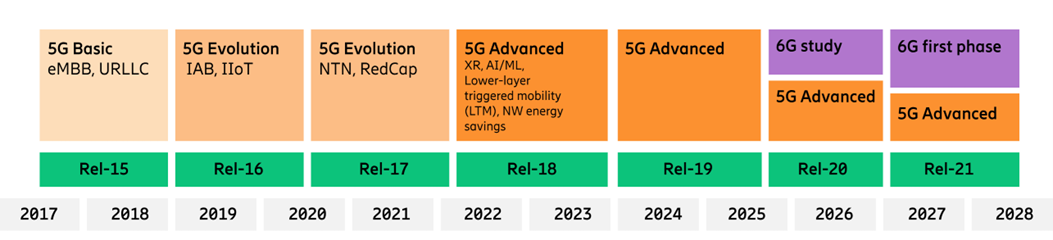
Figure 2. Ericsson, Timeline of 3GPP releases, 5G Advanced, your network for the next wave of 5G
The first release, Release 15, established the technical foundation for the air interface and the initial network architecture, marking it as the primary milestone for 5G. A company’s influence on the initial release is a strong indicator of its contribution to the 5G groundwork, a role Ericsson demonstrated clearly. In Release 15, Ericsson submitted nearly 6,500 technical contributions in WGs RAN1 and RAN2, with over 3,400 approved - the highest among all contributors. The following release, Release 16, introduced the first set of enhancements to NR. During the specification of 5G across Releases 15 and 16 (between 2016 Q2 and 2020 Q2), Ericsson topped the charts in chair positions when measured in chair-quarters.
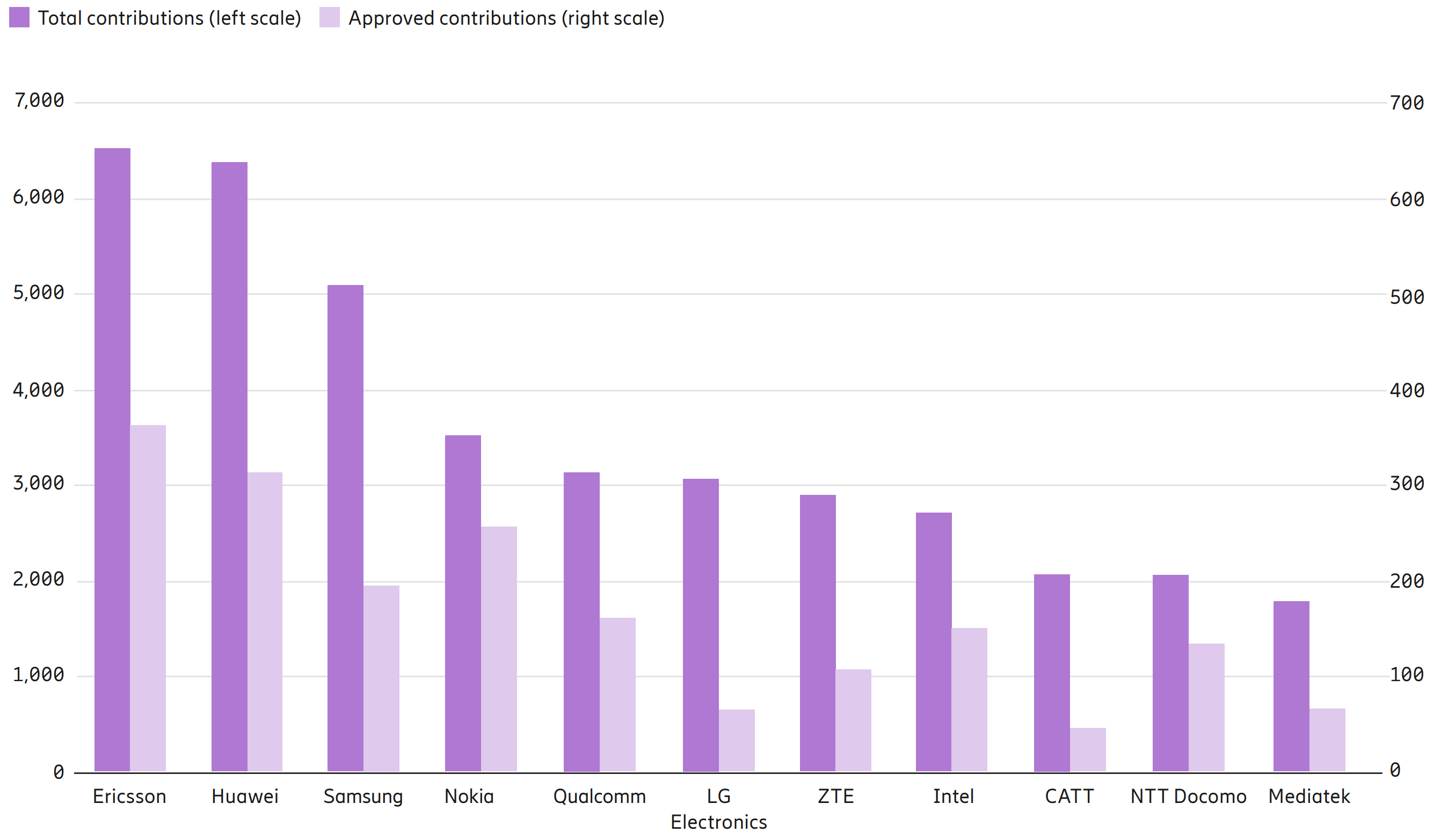
Figure 3. Number of total and approved 5G contributions in RAN WG1 and RAN WG2 up to the functional freeze of Rel-15 (Q1 2019). Ericsson Standardization Leadership Report, November 2020.
Release 17 extended 5G to cover new use cases and provided new features and functional enhancements for existing use cases. This Release adds support for broadband IoT and public safety use cases and improves Enhanced Mobile Broadband (eMBB) and Critical IoT use cases. In Release 17, from 2020 through 2022, Ericsson maintained its leadership in chair positions. 5G Advanced, which started in Release 18, introduced features like intelligent network automation and sustainable connectivity. In this Release, from 2022 to 2023, Ericsson ranked first in approved contributions across RAN1 through RAN4.
Ericsson’s leadership in 5G standardization remains strong. The company is currently actively contributing to Releases 19 and 20. Release 19 enhances 5G Advanced to support XR, indoor positioning, and non-terrestrial networks, and it is now being finalized. Release 20 has just started and builds on the foundation of 5G to enhance its capabilities. This release also launches technical studies on the next-generation 6G mobile technology.
b. Shaping 5G from the start: Ericsson’s innovation journey
Leading in the pre-standardization phase
To lay the groundwork for our leadership in 5G standardization, Ericsson’s work began long before the standardization processes. Indeed, some companies invest heavily in R&D to outline concepts, test their feasibility, and refine potential solutions. 3GPP officially kicked off work on 5G in 2015. However, years earlier, Ericsson had already launched internal research projects and engaged in partnerships and other collaborations with industry, research institutes, and universities.
For instance, as early as 2011, Ericsson had initiated industry discussions around 5G, to define 5G services and requirements. This engagement was critical to understanding the needs and challenges across different verticals that use mobile technology.
At the same time, Ericsson’s R&D team was hard at work conducting comprehensive internal research. In 2013, Ericsson published a forward-looking white paper establishing the vision of the next generation mobile networks. The following year, the company’s inventors outlined 5G requirements such as advanced antennas, ultra-lean design, spectrum flexibility, low latency, and support for billions of connected devices.
Figure 4. (Ericsson, 5G radio access, white paper, internal archive, June 2013)
Figure 5. (Dalhman E. et al, 5G radio access, Ericsson Review Journal, June 18, 2014)
Extensive 5G research led to the publication of several books: LTE-Advanced Pro and the Road to 5G (2016), 5G mobile and wireless communications technology (2016), and 5G/5G-Advanced – The new generation wireless access technology (2018). Publications of this kind are continuously being released, demonstrating Ericsson’s R&D team’s commitment to educating the industry on cutting-edge mobile technologies.
Between 2012 and 2015, Ericsson coordinated the EU’s Mobile and wireless communications Enablers for Twenty-Twenty Information Society (METIS) project, which conducted research for 5G systems. The project brought together 25 global partners across academia, industry, and research. It defined the 5G system concept and roadmap for standardization, and prepared actions for regulatory and standardization bodies. In both phases, Ericsson played a leading role as coordinator, contributing to R&D of radio access design and technologies essential for 5G.
These efforts ultimately enabled Ericsson to develop the world’s first 5G device, recognized by the international media. Through its 5G testbed program, Ericsson developed novel hardware and software across all parts of the Radio Access Network. The company also demonstrated several key concepts such as 5G-LTE dual connectivity, massive MIMO with beamforming, and higher data rate speeds. Thanks to its groundbreaking achievements, Ericsson’s testbed won the LTE Asia award for “Biggest Contribution to 5G Development”, nominated by an independent panel of industry analysts in 2015.
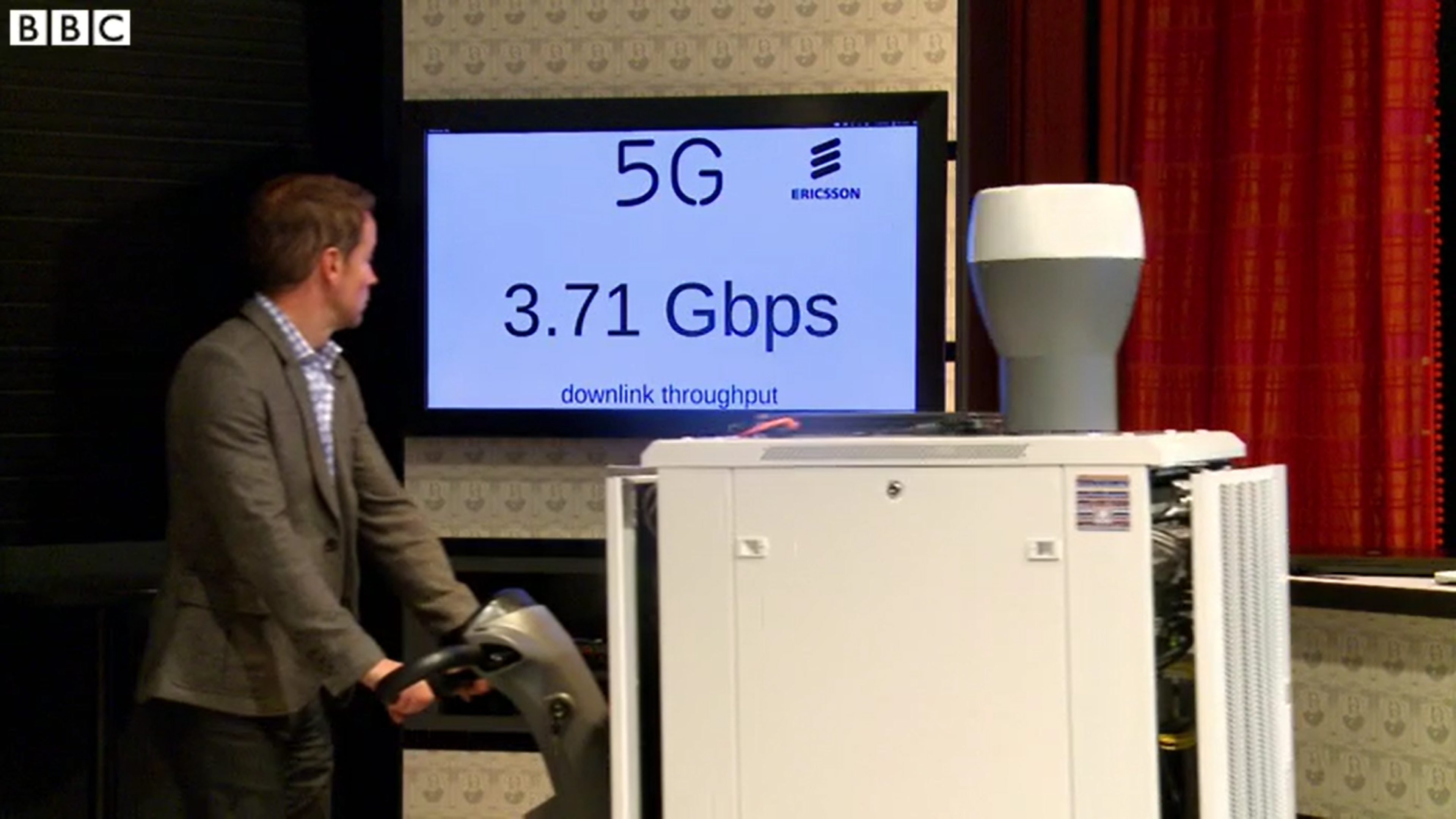
Figure 6: BBC Documentary on Ericsson’s 5G device (Figure Source: BBC. How will the 5G network change the world?, December 2014)
Demonstrating Ericsson’s leadership in 5G
Ericsson has pushed the boundaries to prove some of the main capabilities of 5G, in and out of the labs. In February 2016, Ericsson and its industry partners made several “world-first” announcements in conjunction with the 2016 Mobile World Congress in Barcelona. These included field trials showing Ericsson’s award-winning 5G radio prototypes delivering 10 Gbps speeds and 25 Gbps peak downlink throughput. The company’s radio devices also reached outdoor cumulative 20 Gbps of data throughput with two simultaneously connected devices. At the congress, Ericsson also showcased a live demo of its 5G radio prototypes with multiple-user MIMO, Massive MIMO, beamforming and beam tracking. The beam visualizer impressed the audience by demonstrating extraordinary speeds of 27.5 Gbps with a user equipment moving on a robot frame.
5G partnerships and other collaborations: Ericsson at the heart of the 5G ecosystem
Ericsson has consistently advanced 5G technology through partnerships and other collaborations across the globe. Through these partnerships, the company has led record-breaking demonstrations, world-first first achievements, and commercial milestones, cementing its role at the heart of the 5G ecosystem.
In 2016 and 2017, Ericsson delivered use cases demonstrating breakthrough capabilities of 5G. Some examples are peak rates of 15Gbps and latency below 3 milliseconds, in partnership with Telia, and 25Gbps downlink throughput, with NTT DOCOMO and Korea Telecom.
Ericsson also completed a series of pre-commercial trials with other industry leaders. In one of them, Ericsson broke the world record speed with 5G, reaching 3.6Gbps at 170kph, in collaboration with SK Telecom and BMW. In another trial, Ericsson, Verizon, and Intel demonstrated how 5G will shape the future at the historic Indianapolis Motor Speedway. By connecting a home and a moving car through a 5G network, the companies showed how 5G can deliver high-bandwidth at a high-speed. Besides that, Ericsson, Intel and Telia provided Europe’s first public 5G live network.
Having tested 5G in initial trials, the next step was bringing 5G to commercial networks and realizing its full potential. In 2018, Ericsson connected a smartphone prototype to a live 5G network for the first time with Swisscom and Qualcomm. Ericsson also enabled the first network data call over licensed 3.5GHz spectrum, in partnership with Telstra and Intel. Furthermore, Ericsson and Qualcomm demonstrated interoperability with device chipsets over multi-band 5G NR, setting the stage for the commercial launch of 5G standard-compliant infrastructure and devices.
In 2019, as 5G went live, Ericsson powered SK Telecom’s 5G launch in South Korea. Together with T-Mobile US and Intel, Ericsson carried out the first 5G call on 600MHz. Moreover, Ericsson enabled the first transglobal 5G data call, in partnership with OPPO, Qualcomm Technologies, Swisscom and Telstra. Ericsson also delivered the first 5G network for automotive production, with Mercedes-Benz and Telefónica Deutschland.
In the following years, between 2020 and 2021, the company continued to set world-first benchmarks in innovation. Ericsson reached 5G peak speed of 5.06Gbps, with Verizon and Qualcomm, and 5Gbps 5G download speed, with Telstra and Qualcomm. UScellular, Qualcomm Technologies, Inseego, and Ericsson also achieved a multi-gigabit extended-range 5G milestone over mmWave coverage to address the digital divide. Ericsson and MediaTek reached a breakthrough in dual connectivity combining sub-6GHz bands with higher data rates of millimeter wave, enhancing the 5G standalone experience.
These milestones highlight Ericsson’s technical strength and its ability to drive the global 5G ecosystem forward. Through close collaboration, Ericsson successfully tested, proved, and commercialized 5G in real-world environments across industries and geographies worldwide. As cellular technology evolves, Ericsson continues to drive collaboration to ensure the latest standard-based technologies are deployed in commercial 5G networks.
Ericsson’s network infrastructure leadership
Ericsson’s success in RAN infrastructure is reflected in both performance metrics and industry recognition. Numerous operators across the globe have chosen Ericsson to build their 5G networks. To date, 189 live 5G networks in 80 countries rely on Ericsson’s equipment. That is more networks, in more regions, than any other vendor. This leadership is recognized by independent analysts, placing Ericsson as the forefront leader.
- Leader for the fifth year running in Gartner’s Magic QuadrantTM for CSP 5G RAN Infrastructure Solutions 2025;
- Forefront leader for the fifth year in a row in Frost RadarTM for Global 5G Network Infrastructure Market, 2025.
Awards
Ericsson’s commitment to advancing 5G has earned the company multiple awards over the years, establishing it as a recognized leader in cellular technology. Here are some examples:
- “Biggest Contribution to 5G Standards” at the LTE and 5G World Awards, 2016;
- “Best Innovation for LTE to 5G”, Asia Mobile Awards, 2017;
- “Best Plan for Integrating LTE Advanced Pro and 5G”, TechXLR8 Awards, 2018;
- “Overall Mobile Technology & Best Mobile Technology Breakthrough – Ericsson Spectrum Sharing (ESS)”, Global Mobile Awards, 2020;
- “Best 5G core technology – Vendor” 5G MENA Digital Symposium, 2021;
- “Innovative breakthrough in mobile technology”, GTI Award, 2023.
IV. The cycle of innovation thanks to the FRAND ecosystem
This continuous innovation journey is a direct result of Ericsson’s unwavering commitment to R&D. As a testament to this dedication, the company employs almost 27,000 researchers worldwide and reinvests about 20% of its global revenue into R&D annually. In 2024 alone, these investments totaled around USD 5 billion.
Nevertheless, R&D efforts cannot continue without adequate compensation. Patent protection thus plays an extremely important role in Ericsson’s solid commitment to innovation. The company has relied on strong patent rights to translate research into patented inventions that shape the industry. In 2016, Ericsson demonstrated its technology leadership in a landmark 5G patent application, the largest ever in cellular communications. Built on years of research, this comprehensive application combined numerous Ericsson inventions into a unified architecture for the 5G network, establishing the foundation for 5G telecommunications. It was granted by the U.S. Patent and Trademark Office in April 2020 and has been granted in dozens of other jurisdictions around the world.
Today, Ericsson owns more than 60,000 granted patents worldwide, including over 7,500 patent families declared to ETSI as potentially essential to the 5G standard. According to patent experts, Ericsson also holds the industry’s biggest share of essential 5G patents, between 17.6 and 20.1%; no other company exceeds 12%. However, while numbers may point to patent leadership, quality matters even more. The market itself recognizes the strength of Ericsson’s patent portfolio, with 9 out of the world’s 10 largest smartphone makers having taken 5G licenses, as well as numerous other companies.
Figure 7: Created using data from the analysis by Robert Stoll of Faegre Drinker (former USPTO Patent Commissioner), based on data from Bird & Bird.
Licensing plays a critical role in enabling Ericsson’s innovation. Ericsson seeks to license its patents essential to cellular standards, such as 5G, on fair, reasonable, and non-discriminatory (FRAND) terms. Through licensing, Ericsson’s standardized technologies are made accessible to others who wish to build on the standard. Meanwhile, Ericsson is rewarded for its innovations and contributions to the wider standards ecosystem. These royalties, in turn, foster further R&D efforts into the next generation of groundbreaking technologies, sustaining the cycle of innovation.
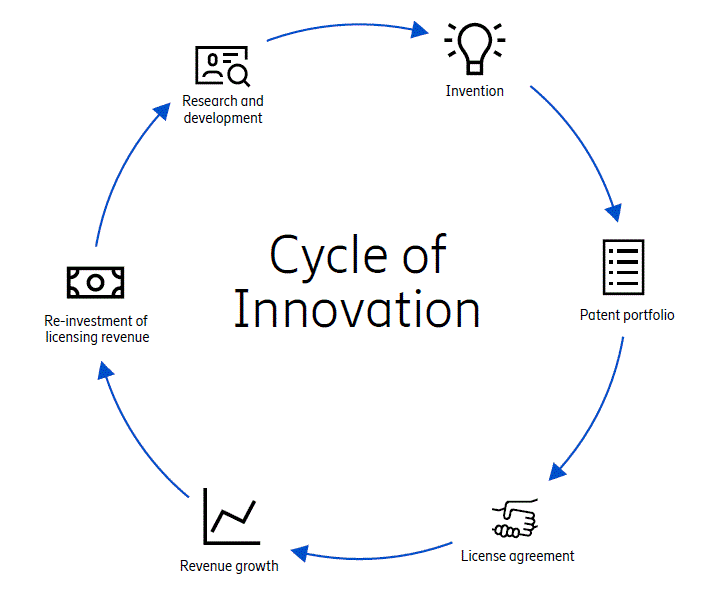
Figure 8: Ericsson. Cycle of innovation
V. Conclusion
Worldwide, society is experiencing significant digital transformation. This shift includes the widespread adoption of mobile technology by consumers, electronic payments and services, e-healthcare, automated factories, and the ever-growing deployment of AI. While the transformation is multifaceted, one of its pillars is cellular technologies, like 5G. As with previous generations of cellular standards, Ericsson has demonstrated a proven track record of leadership in 5G research and development.
What began as a vision was rigorously tested, refined, and advanced across industries and geographies across the globe. A central element of this journey has been Ericsson’s consistent commitment to building and contributing to 5G standardization in a meaningful way. These efforts have also led to a world-class patent portfolio, made available to industry through good faith licensing practices. Ericsson is not just part of the 5G story. It is the architect behind it, enabling the digital society of today and the future.