Skip navigation
The future of network automation

The future of network automation

Intelligent automation with rApps

rApps

RAN automation rApps are revolutionizing the network management and optimization software landscape. These innovative applications are the driving force behind the automatic evolution, deployment, optimization, and healing of networks, enabling service providers to maximize network efficiency and performance.

Overcoming network automation challenges

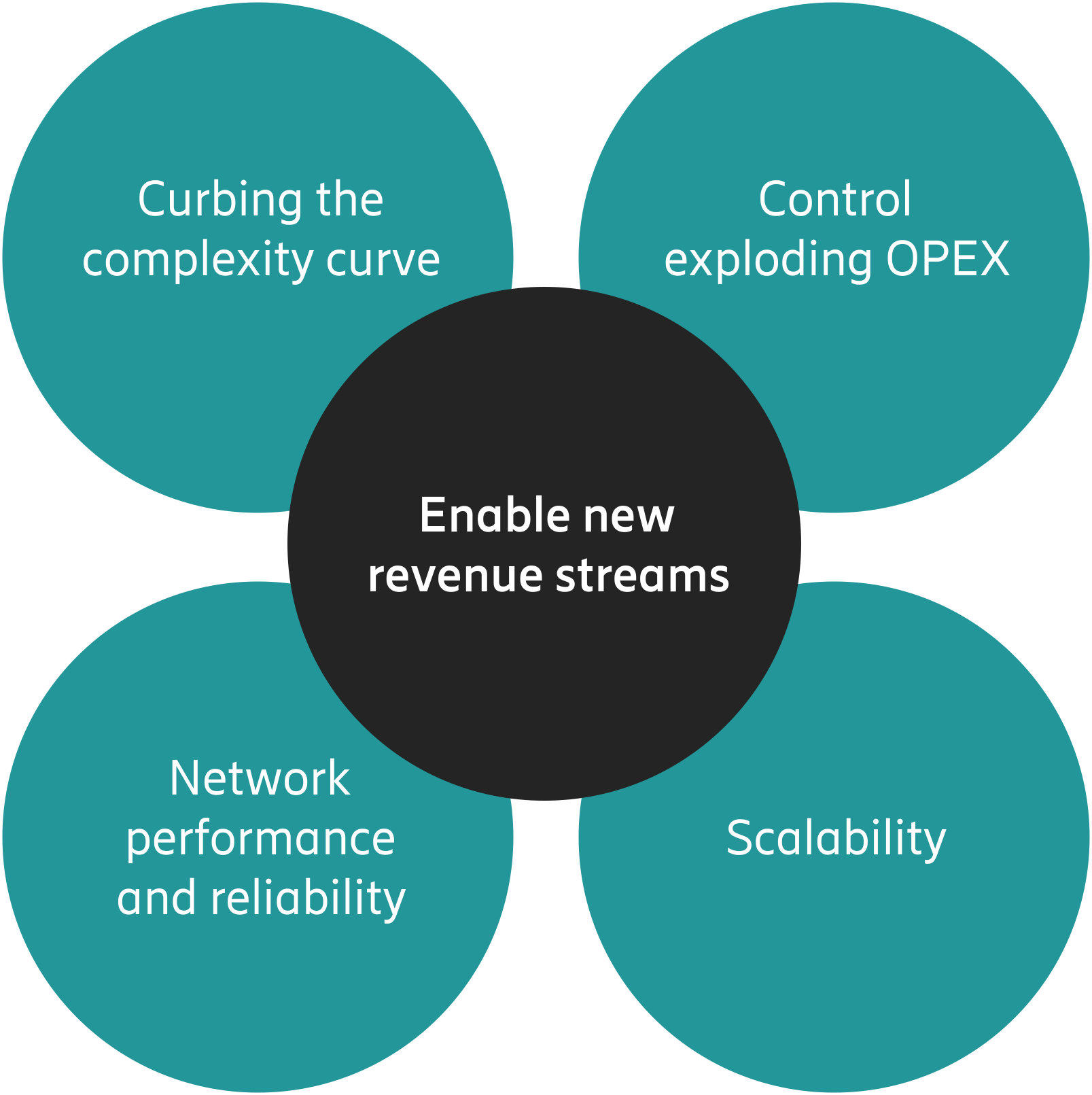
Over the past two decades, automation became crucial for managing network complexity and controlling operational costs, but early efforts lacked standardization, causing fragmented software management challenges. Also, AI-driven solutions, developed by the industry, struggled with scaling and integration, leading to a complex tool landscape. 

The emergence of service management and orchestration (SMO) introduced a unified data layer to support AI-driven automation at scale. This was the baseline for rApps to take the key role in redefining network automation.

With an open, flexible, and scalable framework, rApps enable seamless collaboration and innovation, empowering communications service providers (CSPs) to manage networks more efficiently and improve end user experience.

Networks have never been as complex as they are today and rApps are key to unlock the opportunities. Watch this video to learn more.

What are rApps?

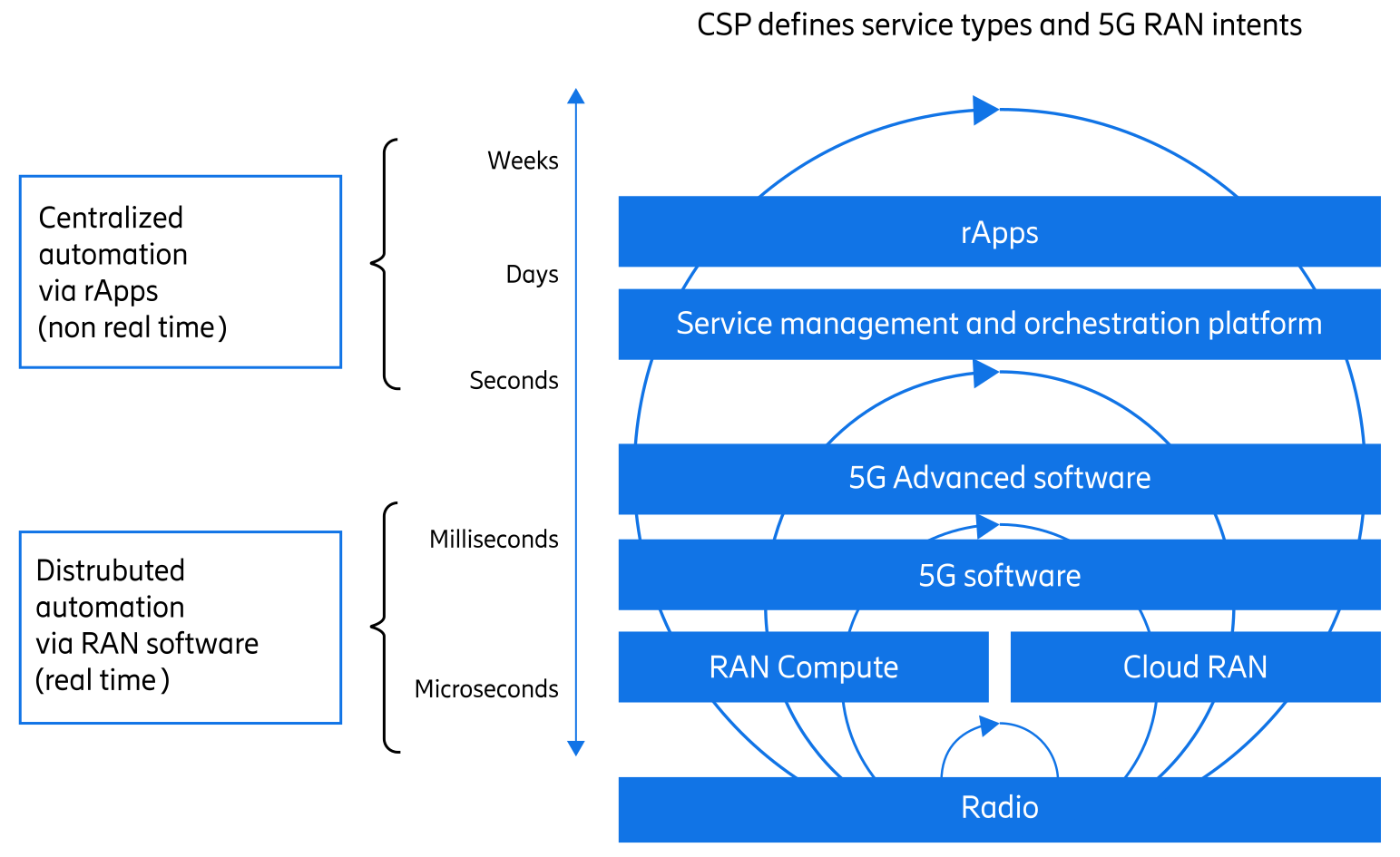
rApps are software applications designed to manage and optimize Radio Access Network (RAN) in a non-real time manner.

They have different objectives such as consistency checks, failure detection, performance monitoring, or network optimization. These tasks involve control loops that function on a time scale of one second and longer.

Depending on their purpose, AI can enhance the efficiency of tasks. By utilizing machine learning modules, it can predict or simulate network performance under various configurations using historical data.

ORAN Alliance defines the concept of rApps, providing a flexible, unified, and simplified approach to network management applications. Ericsson expands this scope to include both purpose-built RAN and the ORAN framework. The overarching goal is to integrate various automation applications into a single platform, thus eliminating isolated automation systems.

What do rApps do?

rApps empower communications service providers to automatically evolve, deploy, optimize, and heal their networks, bringing a new level of autonomous network management and optimization to the forefront.

Depending on the task, an rApp will consider different data sources, and include different algorithms or AI/ML models. Its outcome will be a report, a configuration proposal or data that another application could use.

By offloading these tasks to the Non-RT RIC, rApps can focus on refining business logic, accelerating the development of automation solutions and enhancing operational efficiency.

What do rApps do?

rApps: Transforming network management with intelligent automation apps

Intelligent automation using rApps has the potential to revolutionize the world of network management and orchestration, augmenting or replacing existing manual processes to improve network performance and reduce costs.

Read the article

rApps’ impact on the entire network lifecycle

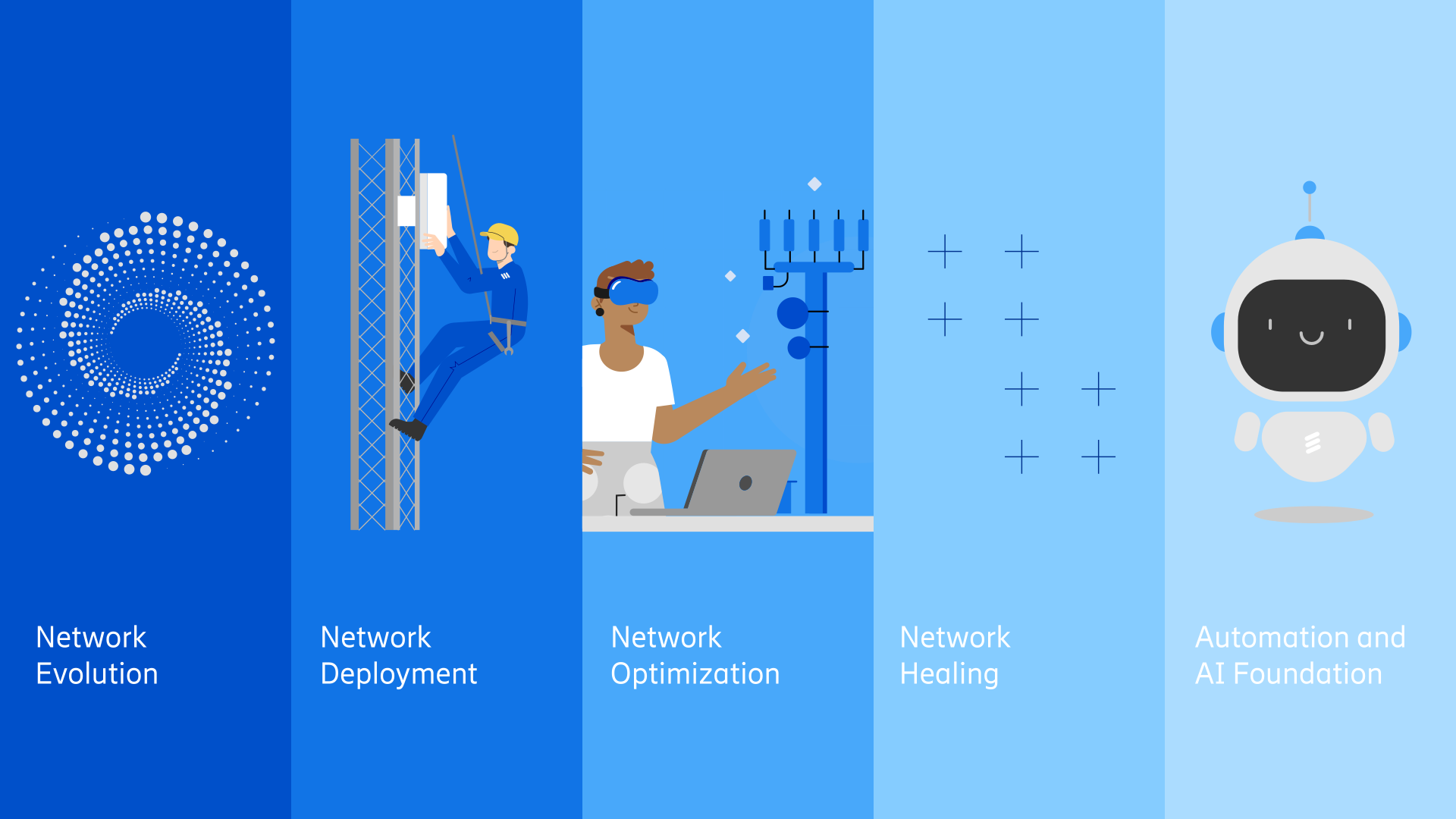
Ericsson rApps categories: network evolution, deployment, optimization, healing, automation an AI foundation.

Ericsson rApps categories

rApps enhance efficiency and optimize network performance across all stages of the network lifecycle. They are classified into four different categories:

  • Network evolution rApps 
    Facilitate planning and dimensioning by predicting and anticipating network changes.
  • Network deployment rApps
    Streamline processes such as network element integration, feature activation, and software upgrades.
  • Network optimization rApps
    Automatically maximize network capacity and performance for peak efficiency.
  • Network healing rApps
    Detect and correct outages or service disruptions to minimize impact on end users.

Dive deeper into rApps applications

Explore how different rApps improve network performance, reduce energy consumption, accelerate deployments, uplift customer experience, and provide more benefits in autonomous network management and optimization.

Traffic prediction and steering

Congestion is a common problem for 4G and 5G networks. It occurs when traffic demand exceeds a cell's capacity due to many users or high data usage in an area.

This results in delays, reduced download speeds, and network accessibility issues, that impact users' experience and service quality.

An intelligent solution capable of predicting and steering the traffic is necessary to avoid such issues.

rApps effect example:

Traffic Steering Manager rApp checks if cells have Physical Resource Block (PRB) or Physical Downlink Control Channel (PDCCH) congestion in 4G and 5G networks and suggests modifications to facilitate correct balancing through traffic absorption by other carriers or available neighbors.

Accelerated network deployments and configuration management

One of the main impediments in network deployment is the inconsistency created by having several engineers and automations configuring new equipment and making changes to optimize the parameters and achieve the performance targets.

In these cases, rApps will detect and fix any inconsistency or misconfiguration in minutes, making deployment much faster and improving the user experience.

rApps effect examples:

Ericsson Automated Configuration Consistency (EACC) rApp enables users to uncover baseline configuration consistency errors. It corrects inconsistencies found in either open-loop or closed-loop mode and can roll back configuration changes if a KPI degradation is detected.

Ericsson RAN Lifecycle Orchestrator rApp enables automation of the full lifecycle of RAN operations by simplifying integration in an Open RAN architecture and future-proofing operations for Cloud RAN and purpose-built RAN solutions. 

Learn more

Reduced energy consumption 

Optimizing networks to reduce energy consumption while maintaining high performance is challenging and requires innovative strategies. As networks’ complexity grows, this challenge demands intelligent solutions that will help balance environmental sustainability and operational efficiency while paving the way for future network advancements.

rApps effect example:

The Energy Cockpit rApp, one of the Ericsson rApps that help optimize and reduce energy consumption, analyzes the whole network every 15 minutes, down to the cell level, and decides which power-saving features should be activated, considering traffic impact.

This is an example of how rApps excel at speed, scalability, and agility, compared to standard automation tools.

Learn more

Faster anomaly detection and fault management

Network performance is often optimized by combining manual and automated rule-based instructions with predetermined thresholds for each performance metric. As the network complexity grows, the number of rules increases, making maintaining these algorithms manually a highly complex task. 

Intelligent automation using rApps can augment or replace existing manual processes to improve network performance and reduce costs.

rApps effect example:

Ericsson Cell Anomaly Detector rApp is a deep learning app that automatically monitors and categorizes potential performance anomalies within a network. Its primary use cases include automatically identifying various cell issue patterns and applying deep learning techniques to assess cell performance, configuration, and alarms.

The Cell Anomaly Detector leverages advanced algorithms to identify a broad spectrum of issues that traditional methodologies might overlook.

Learn more

Coverage optimization

The growing demand for high-speed data and seamless connectivity, along with the surge in connected devices, is putting significant strain on mobile networks. One major challenge is managing the limited radio spectrum, which is crucial for running services smoothly. Efficient spectrum use helps ensure reliable connections, minimizes delays, and meets the increasing need for data transmission.

rApps effect examples:

Coverage Optimiser rApp uses network data and advanced geospatial analytics to gain precise insights into traffic distribution and accurately identify offending cells. Once overshooting and undershooting cells are identified, the solution follows predefined policies and applies iterative configuration changes, such as adjusting the antenna coverage.

Ericsson AAS Cell Shaper rApp is designed for the optimization of Advanced Antenna Systems (AAS) using AI reinforcement learning techniques. It optimizes cell-level digital tilt in the vertical plane and beamwidth in the horizontal plane. It automatically adjusts to the unique characteristics of each cell and its surrounding network, resulting in an optimized radio environment and improved traffic distribution.

Automatic anomaly detection 

CSPs must continually optimize network performance, minimize downtime, and enhance operational efficiency. To ensure service continuity and effectively resolve both simple and complex issues, precise and actionable insights are essential. These insights help deliver high availability while keeping operational costs low. rApps empower CSPs by facilitating automatic anomaly detection and predicting performance trends.

rApps effect example:

Naavik AI-based Anomaly Detection rApp utilizes a data-driven causality graph to analyze and interpret multidimensional data sources in real time. It enables rapid identification of correlations and causations within critical RAN KPIs, essential for effective root cause analysis.

Get closer: hear from our rApps experts

#rAppItUp video series

Hear from our experts how rApps reduce management costs, speed up innovation, and optimize every use case.

Watch #rAppItUp videos

One vision, multiple views on RAN Automation

Five key influences are accelerating the transition to higher levels of network autonomy. This series of guides will cover each one in depth—and how to navigate the transition effectively.

Explore now

Exciting rApps applications on the horizon

Automated healing with rApps

As networks become more complex, the level of conflict will become too much for human experts to handle. 
Watch this episode to discover how healing rApps provide a solution by automatically detecting, analyzing and resolving issues, avoiding network outages.

Featuring:

  • Najla Naim, EMEA Services Strategy and Portfolio Engagement Lead, Ericsson

Recognized by customers and industry

Power of the ecosystem for RAN Automation

The panel discussion at MWC25 brought together top industry experts who shared their thoughts on rApps, AI, network automation, and the importance of collaboration.

Watch the panel

Ericsson rApps win Red Dot Award

Red Dot Award for Design Concept 2024 in the Interaction, UI, and User Experience category recognizes the design and experience created for the Ericsson rApps portfolio.

Read the press release

Experience rApps flexibility

rApps offer great flexibility. CSPs can choose between an rApp developed by Ericsson and third-party rApp or build their rApp, finding the best solution tailored to their specific business and operational needs.

Ericsson Intelligent Automation Platform provides a powerful, open foundation for seamless connectivity across any Radio Access Network (RAN). With the flexibility to support rApp development by CSPs, independent software vendors (ISVs), and Ericsson, the platform enables tailored applications designed to efficiently manage and optimize any RAN environment.

Ericsson develops rApps using the Intelligent Automation Platform ecosystem. The platform also empowers developers with all the capabilities to build, validate, share, and operate rApps.

What is Intelligent Automation Platform ecosystem?

The Ericsson Intelligent Automation Platform (EIAP) ecosystem is an open framework of key assets, services, and infrastructure that allows rApp developers to develop high-quality and high-value automation applications independently.

Learn more

All rApps are available in the Ericsson rApp Directory. Here, you can discover new rApps, explore their functionality, and connect with the rApps owners to understand more about how their applications help transform the automation performance of networks.

Check out some of the featured Ericsson rApps:

Explore Ericsson rApps

Deep dive into our industry-leading rApp offering

Ericsson rApps

Explore the rApp Directory

Ericsson and third-party rApps providing solutions on all areas of RAN automation.

rApp Directory

Related technologies and solutions

Explore further

News and Press release

Blog post

Whitepaper and reports

Follow Ericsson Networks