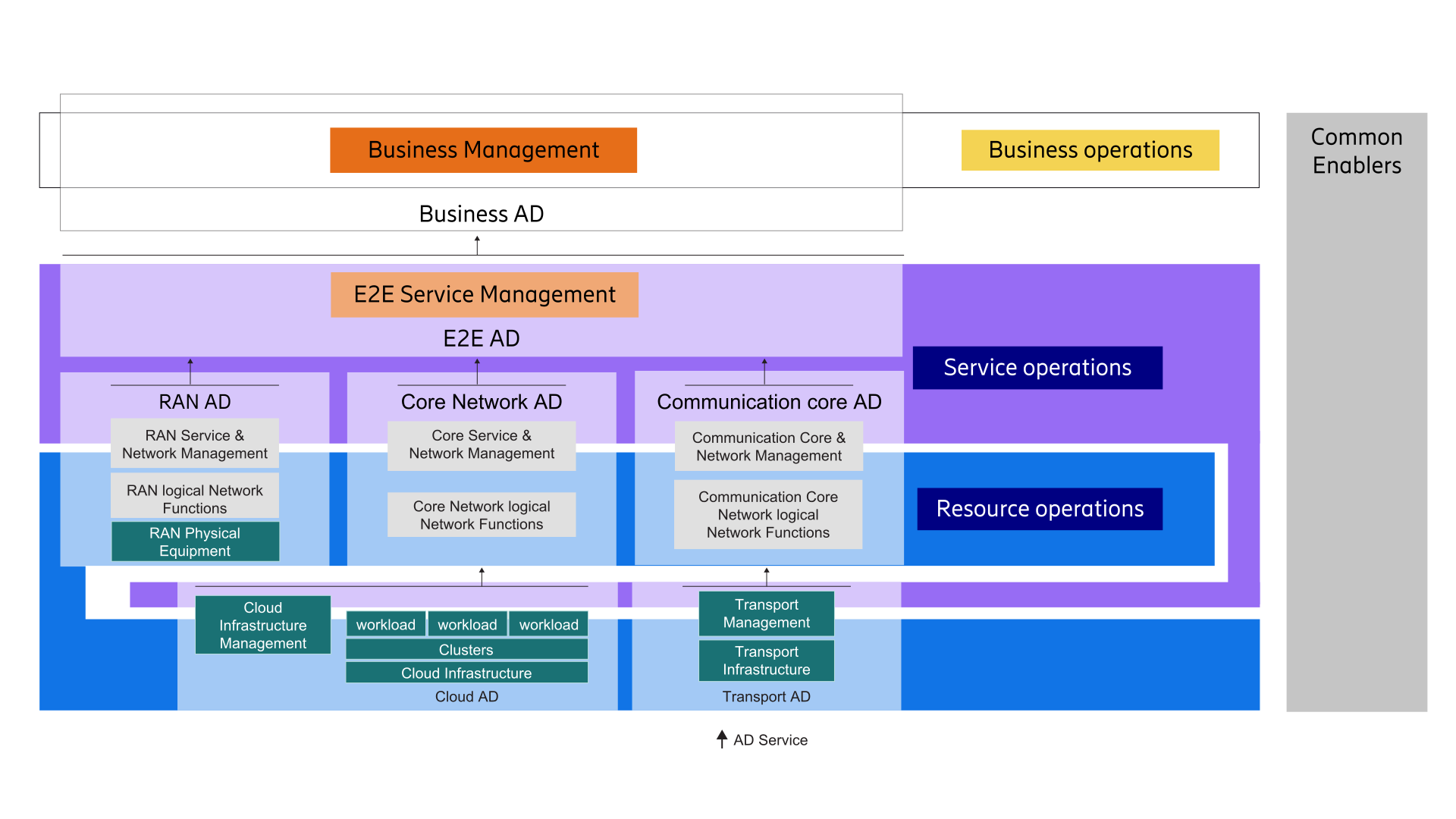
Communications service providers (CSPs) are on a journey toward autonomous networks. The motivation rests on three pillars[1][2]:
- cost savings, where current manual tasks are automated
- additional revenues from improving the quality of existing services through automated service assurance
- new revenues from new services, enabled by solutions that allow versatility and thus offer a wide range of tailor-made services to end customers with a fast time-to-market
TM Forum has introduced different levels of autonomy, and the primary goal for CSPs is to transition toward full autonomy. To achieve higher levels of autonomy, improvements must be made in all phases of the autonomous network lifecyle: planning, deployment, service provision, maintenance, and optimization[2].
In autonomous networks, predictive analysis plays a major role [3]. Artificial intelligence (AI)-driven models predict action outcomes to guide network decisions, with continuous learning. The challenge CSPs face is to implement and integrate AI models and solutions that target a wide range of use cases without increasing complexity and cost.
To succeed in the journey toward fully autonomous networks, AI agents are needed to support decision-making by predicting and reasoning about the future state of the network. Today’s technology features large language model (LLM)-powered AI agents that offer flexibility. However, they lack the reliability required to accurately predict network key performance indicators (KPIs) or assess the impact of actions on the network. On the other hand, traditional machine learning (ML) prediction models are often scoped to a narrow set of network KPIs and fail to capture the full complexity of the network.
In this paper, we promote the vision of telecom foundation world models: models trained on a wide variety of network data that can predict how the network state evolves in response to candidate actions, enabling improved decision-making and increased autonomous capabilities.
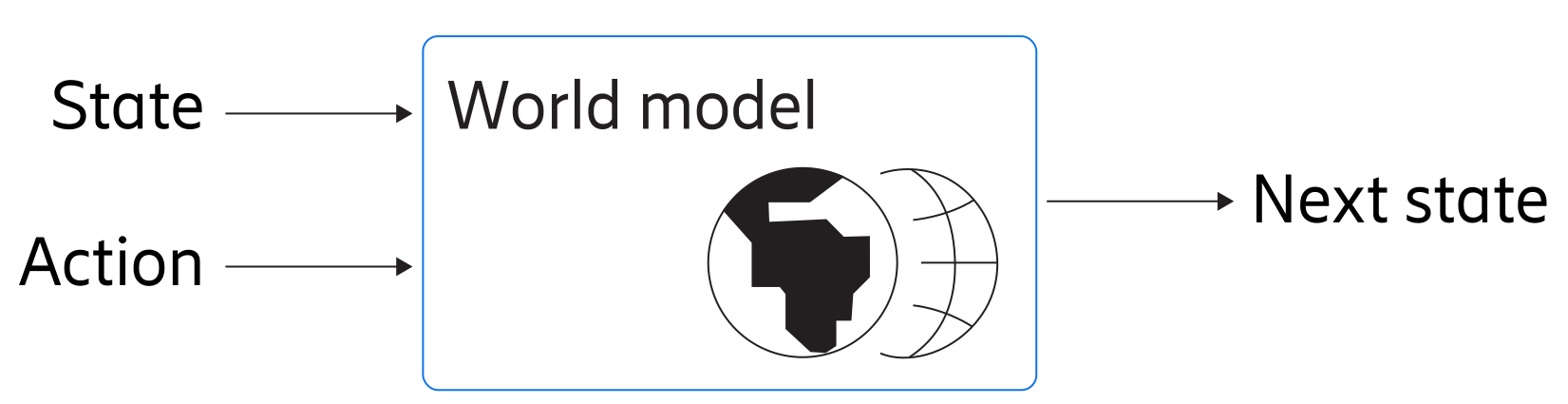
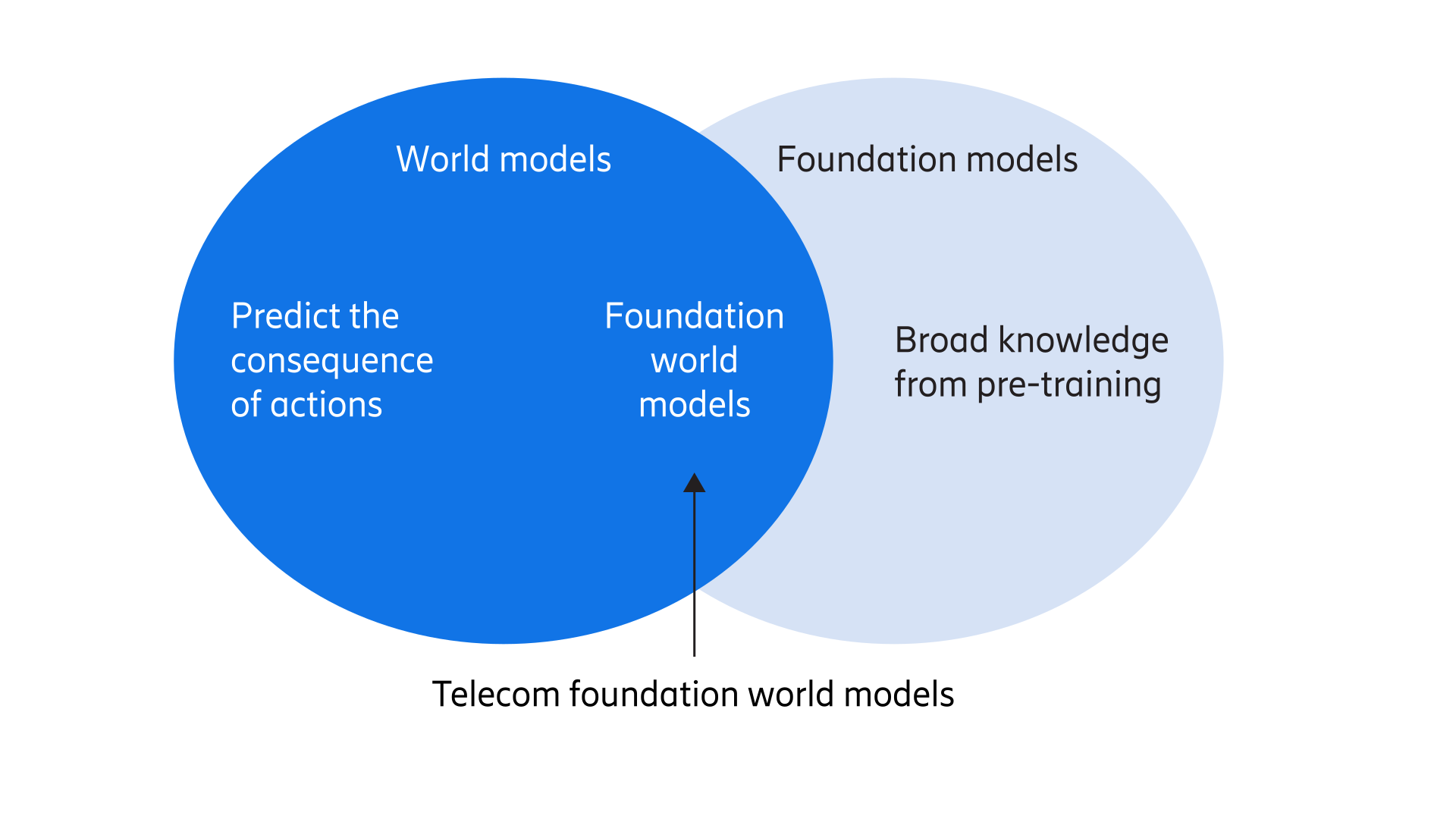
A world model is an AI model that has the capability to predict the state of the world—in this case, the network and its environment—when applying a sequence of actions and is designed to assist in decisions to carry out modifications in the network. World models can be used to evaluate the impact of candidate modifications before they are applied.
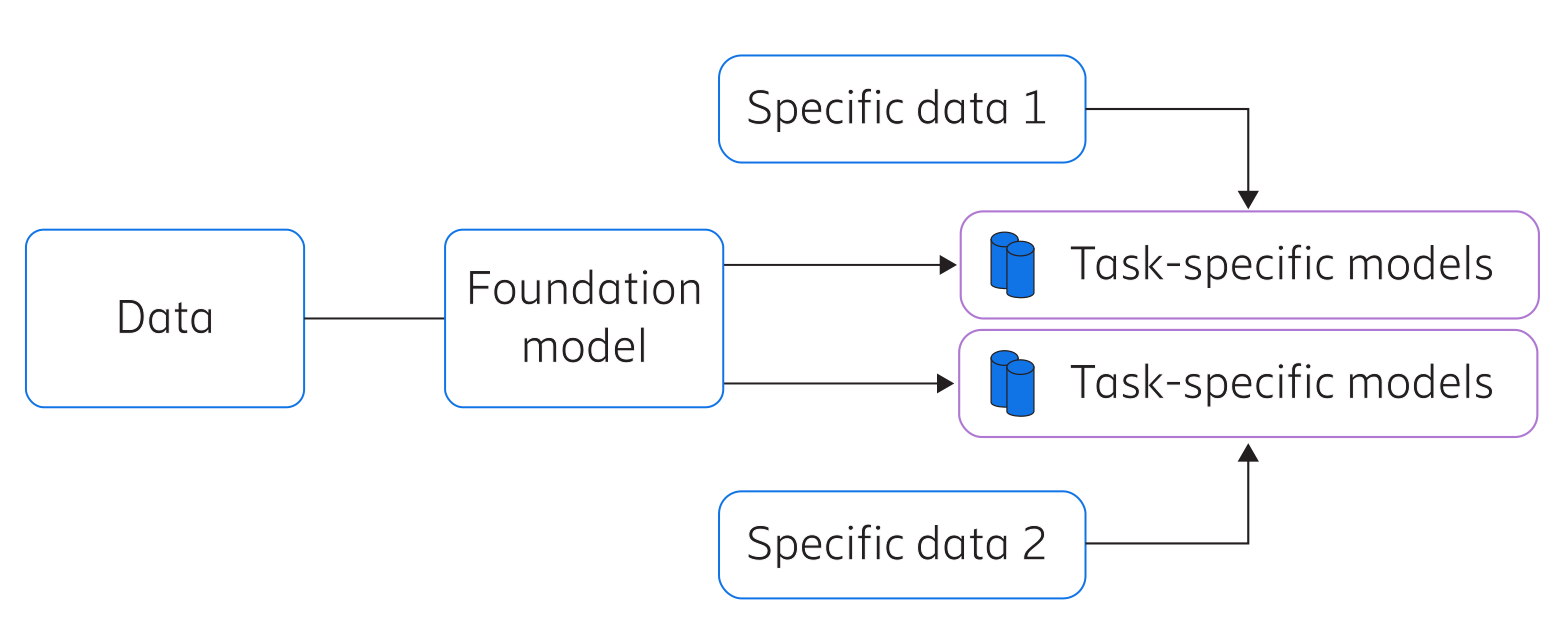
Foundation models are AI models trained on massive datasets. They are widely used in the text and image domains (LLMs and image processing) and are starting to be adopted by the telecom industry. Telecom foundation models [4][5] are pre-trained and fine-tuned on various network data ranging from network management and orchestration to physical layer data. After extensive pre-training, and adaptation to specific use cases, these models can be applied to a wide range of tasks.
World models can rely on foundation models to predict of the impact of actions. We refer to them as foundation world models. Utilizing foundation models to build world models brings the advantage of generalizing to a wide range of use cases.
Telecom foundation world models will enable CSPs to move toward fully autonomous networks thanks to their broad understanding of the network architecture, deployments, performance, and characteristics, and primarily, their understanding of how performance depends on network configuration.
Telecom foundation world models in the management domains are enablers in many automation use cases, such as intent management functions, network digital twins (NDTs), and radio access network (RAN) applications (rAPPs) in service management and orchestration.
We believe these challenges can be addressed using telecom foundation world models, which enable prediction of the impact of changes in the network for a wide range of use cases in all phases of the autonomous network lifecycle.