



Skip navigation
Connecting new worlds of innovation through open global standards

Network standardization

Connecting new worlds of innovation through open global standards

What are network standards
Network standardization makes it possible for your device to set up calls and share data with different branded devices across different networks at different parts of the world – all at a relatively low cost. This is made possible through a shared framework of best-in-class rules and agreements that together ensure safe and interoperable network services.  

Many major global organizations contribute to this process, bringing together key players from relevant technology domains including vendors, service providers and original equipment manufacturers, as well as interest groups, industries and governments.

Technical specifications, that together make up network standards, are developed often over many years. Ideas and solutions from individual contributors are protected by patents, with a commitment to license them on fair and reasonable terms. Ideas are shared and selected to be included in the standard based on majority consensus. Vendors, manufacturers and service providers then develop their own competing solutions, products and services based on shared standards.

Today, Ericsson plays a leading role in developing network standards for all major mobile and fixed communication systems. With more than 60,000 granted patents worldwide and the most valuable 5G essential patents, Ericsson also has the highest-quality patent portfolio in the industry.

Driving mobile networks for new waves of innovation

Driving mobile networks for new waves of innovation

Ericsson and 3GPP: 30 years of leadership

Explore our world-leading contribution to network standards

Jump to our 3GPP leadership

Why the world needs network standards

Network standardization is a fair, open and consensus-driven process that brings together the broadest base of network stakeholders across the world to develop and agree on standardized technical specifications for future network solutions.

This creates a shared baseline when it comes to ensuring network safety, security and interoperability. As a result, network standardization makes it possible for our industry to deliver truly global connectivity, supporting millions of jobs and generating a sizable proportion of global GDP each year.

Global network interoperability

Network standards feature common standardized protocols. This ensures that all standards-based network products and services are interoperable and compatible with all other standards-based products and services. This makes it possible for your device to receive and share data with another device of a different vendor, on a different network, in a different part of the world – all at a relatively low cost.

Secure and safe networks

Network standards set a secure baseline for the world’s mobile networks through commonly agreed, tested, verified, and updated solutions according to best common practice. This includes critical security properties such as interface definitions, security protocols, key lengths, and the strength of cryptographic algorithms.

A competitive technology market

Shared network standards create economies of scale that drive faster, broader and more affordable scaling of network technologies. For innovators, costly system integration and lifecycle management is kept to a minimum, supporting lower implementation costs and faster time to market. As a result, consumers enjoy the benefits of a more competitive and affordable global technology market.

Open network innovation

Network standards have become an engine for innovation across virtually all sectors that benefit from connectivity. Standards frameworks create a shared platform which can be leveraged by innovators of all sectors and sizes. It guarantees compatibility with existing systems, processes and devices, reducing the barriers to entry for new market entrants and ensuring new technologies can proliferate and achieve impact rapidly.

The mobile miracle: how industry structure changed the world

The universal impact of mobile technologies continues to transform virtually every business, sector and way of life worldwide. According to GSMA figures, mobile technologies and services generated 5.4 percent of global GDP in 2023, a contribution that amounted to 5.7 trillion USD of economic value added, supporting around 35 million jobs worldwide.

Standardization has been the essential driver of this mobile miracle right from its earliest days, enabling the rapid and widescale growth of new technologies, services and business models across international markets.

Learn more about the scale and innovation power of the mobile miracle.

A woman taking a selfie at the bike stand

Standardizing the open network platform: who are the players and how does it work?

There are several major SDOs that together lay the technical groundwork for the evolution of today’s open and horizontal network platform architecture. This process comprises hundreds of stakeholders across multiple technology domains and industry verticals, including traditional standards fora such as 3GPP and ITU, as well as relatively new open-source fora such as O-RAN and the Linux Foundation’s CAMARA project.
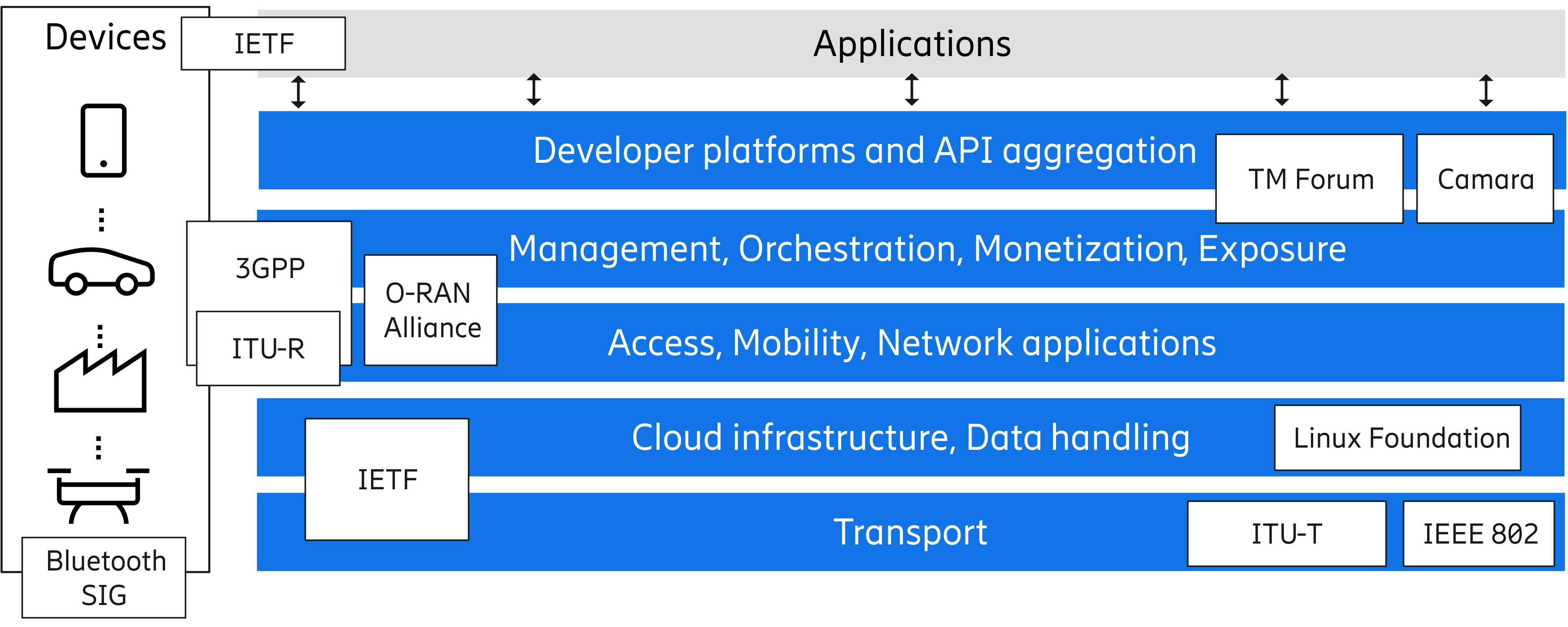
Overview of major standards development organizations (SDOs) across ICT sectors

Overview of major standards development organizations (SDOs) across ICT sectors

Major standards development organizations (SDOs) across ICT sectors

The Third Generation Partnership Project (3GPP) is one of ICT’s leading SDOs that creates the specifications for the end-to-end mobile network. Based on open global standards, 3GPP creates a full system-level design that enables today’s multi-vendor platforms across an interoperable global ecosystem. Its open standards facilitate new entrants on both the network and device side to innovate, launch products and successfully compete.

The International Telecommunication Union (ITU) is the intergovernmental body responsible for defining how telecommunication networks operate and interwork, and a convenor of several thematic topics such as smart cities, intelligent transport systems and AI. ITU-T is a leading SDO in multiple areas including optical transport, media codecs and climate change.

The European Telecommunications Standards Institute (ETSI) is one of the founding partners of 3GPP and a key contributor to the development of global harmonized standards across telecom, broadcasting, and other electronic communications networks and services. In recent years, ETSI has driven the standardization of key technologies such as network function virtualization, network slicing, edge computing, IoT and new radio access technologies.

The Institute of Electrical and Electronics Engineers (IEEE) is a leading consensus building organization that facilitates standards development and collaboration within the networking domains of Ethernet, Wi-Fi, IoT, Time Sensitive Networking (TSN) and more. It also plays a pivotal role in facilitating use cases such as smart energy, electrification and transport. Today, Ericsson leads the 802.1 Working Group and the TSN Task Group within IEEE.

The Internet Engineering Task Force (IETF) is the premier SDO for the Internet, facilitating the development of standards related to Internet protocols (IP), transport layer protocols, routing and traffic management, and network security and privacy protocols, among other areas.

The Open RAN (O-RAN) Alliance is an industry initiative that creates global technical specifications in areas of RAN automation, cloudification and disaggregation. Its ambition is to create a multi-supplier RAN solution that allows for the disaggregation of hardware and software with open interfaces and virtualization, hosting software that controls and updates networks in the cloud.

Explore our impact on the O-RAN Alliance, and specifications in the areas of RAN automation, cloudification, and disaggregation.

The International Organization for Standardization (ISO) facilitates development and interoperability of standards across several ICT domains, including information security and management, cloud computing, IoT architecture and device management, software and systems engineering, and more.

The TM Forum is a global alliance of telecommunication and technology companies comprising more than 800 members including major network vendors, service providers and hyperscale cloud providers. It facilitates industry alignment on key digital transformation topics such as open digital architecture, open APIs, AI and machine learning, network automation and orchestration, and more.

The Linux Foundation brings together the world’s open source communities to drive collaboration and achieve scale across a large number of cross-industry open source projects. Ericsson is a founding member of Linux foundation networking Fund (LFN) that drives many open-source networking projects, as of now, includes the ONAP, ODL, OPNFV, FD-io, SNAS, PNDA and Tungsten fabric projects and we contribute to several of these projects. Ericsson is also member and contributor to the Openstack, CNCF and LF Edge that includes Akraino project.

CAMARA is an open source project within Linux Foundation that defines, develops and tests APIs. This is achieved in close collaboration with the GSMA Operator Platform Group to align API requirements and publish API definitions for developers. Ericsson is committed to being a key driver of the CAMARA project, enabling the future evolution of network APIs.

3GPP explained: the global engine behind network standardization

As the leading organization behind the development of mobile network standards, 3GPP creates a full system level design that defines how today’s and tomorrow’s mobile networks are built – from device to RAN, core networks and applications and services.

More than 700 companies contribute to 3GPP, which has achieved global interoperability, roaming and economies of scale. With its frequent releases new technologies enabling game changing services have become available at an unprecedented speed. Its scope has expanded from communications services for consumers to those for enterprises and newer use cases in areas like public safety.

Without 3GPP there would be no mobile internet, the primary means of access for most of the world’s population, which has paved the way for the app economy. Global standards and scale economies are key to ensuring that remains the case, particularly now as the far-reaching consequences of 5G’s rollout continues.

From idea to standard: the 3GPP workflow explained

The development journey to a 3GPP standard is long and winding. Everything begins with an idea, one that is explored through a ‘study item’. This exploration phase turns that idea into a detailed plan, documented through various technical specifications. After all parties have agreed on the most suitable technical specification to take networks forward, this is then enshrined in the final 3GPP standard.

Study item

This is the research phase of a project where 3GPP members explore whether a new idea or technology is feasible and worth pursuing.

Work item

In simple terms, this is the 3GPP version of a to-do list, comprising all the tasks, challenges and projects that need to be overcome to develop the technical solution.

Technical specification

This comprises a detailed set of instructions or rules that describes how a particular 3GPP technology or system should be designed and implemented.

Standard

The final, agreed-upon version of a set of 3GPP specifications are transposed into a standard by 3GPPs organization partners (for example ETSI). All members must adhere to the standard to ensure that different devices and networks all over the world can work together seamlessly.

5G standardization: developing the world’s biggest open innovation platform
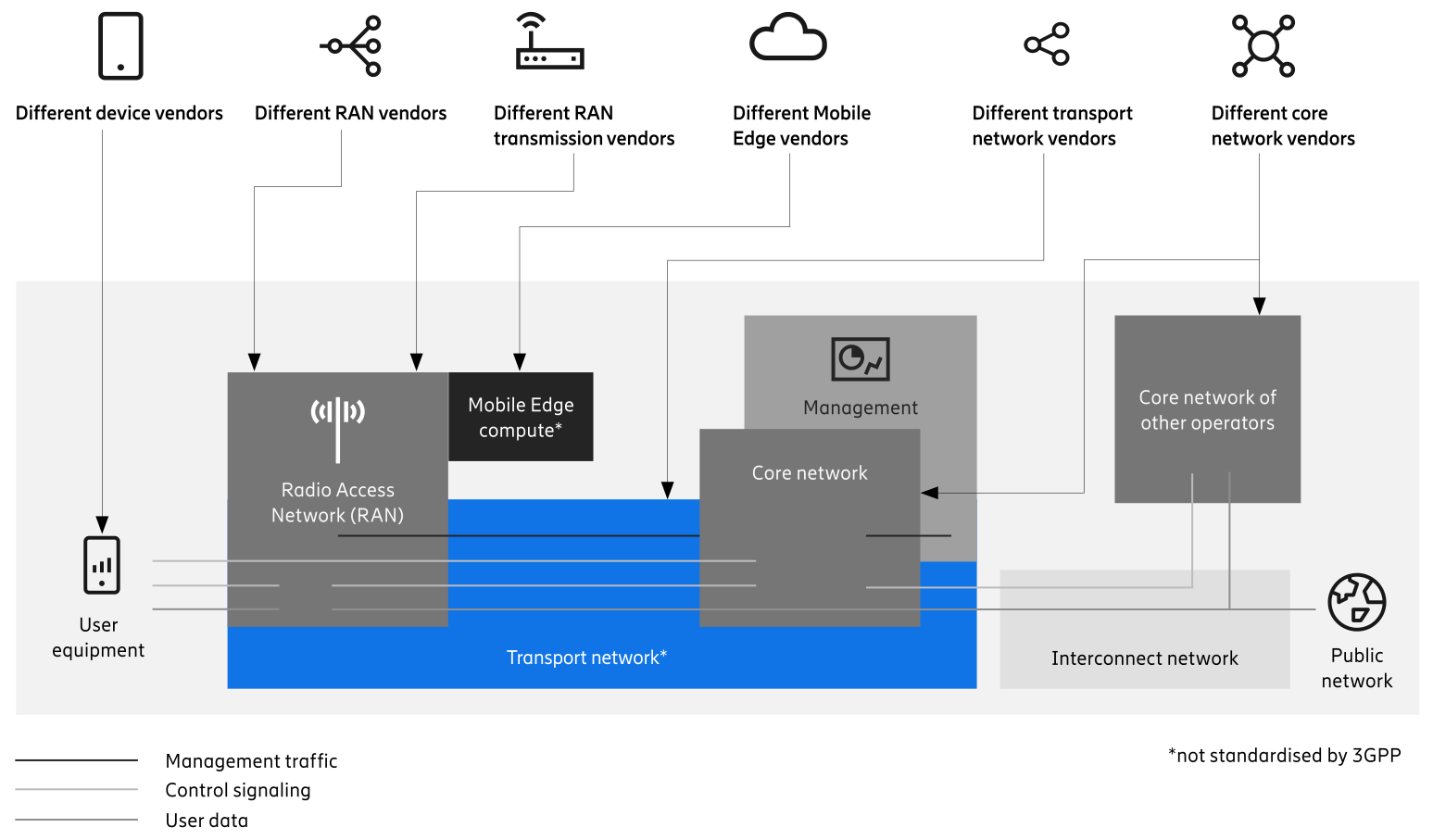
5G expands the scope of mobile services from consumers to industries to drive massive digital transformation and support wider economic decarbonization. This transition is happening more quickly than previous technology shifts and continues to interconnect an array of emerging technologies, creating the biggest open innovation platform ever.

Today, the 3GPP-5G standard empowers a 5G ecosystem with 700 unique actors around the world, supported by new partners from adjoining industry verticals and tech sectors such as 5G-ACIA (5G Alliance for Connected Industries and Automation) and 5G-AA (5G Automotive Association).

The introduction of cloud-native network architecture and open network APIs continue to enable new possibilities for open source innovation, today developed through key fora such as O-RAN and the Linux Foundation’s CAMARA project.

Learn more about 5G standardization

3GPP-enabled diversity and multi-vendor openness in the era of 5G

3GPP-enabled diversity and multi-vendor openness in the era of 5G

Explore selected 5G standard milestones

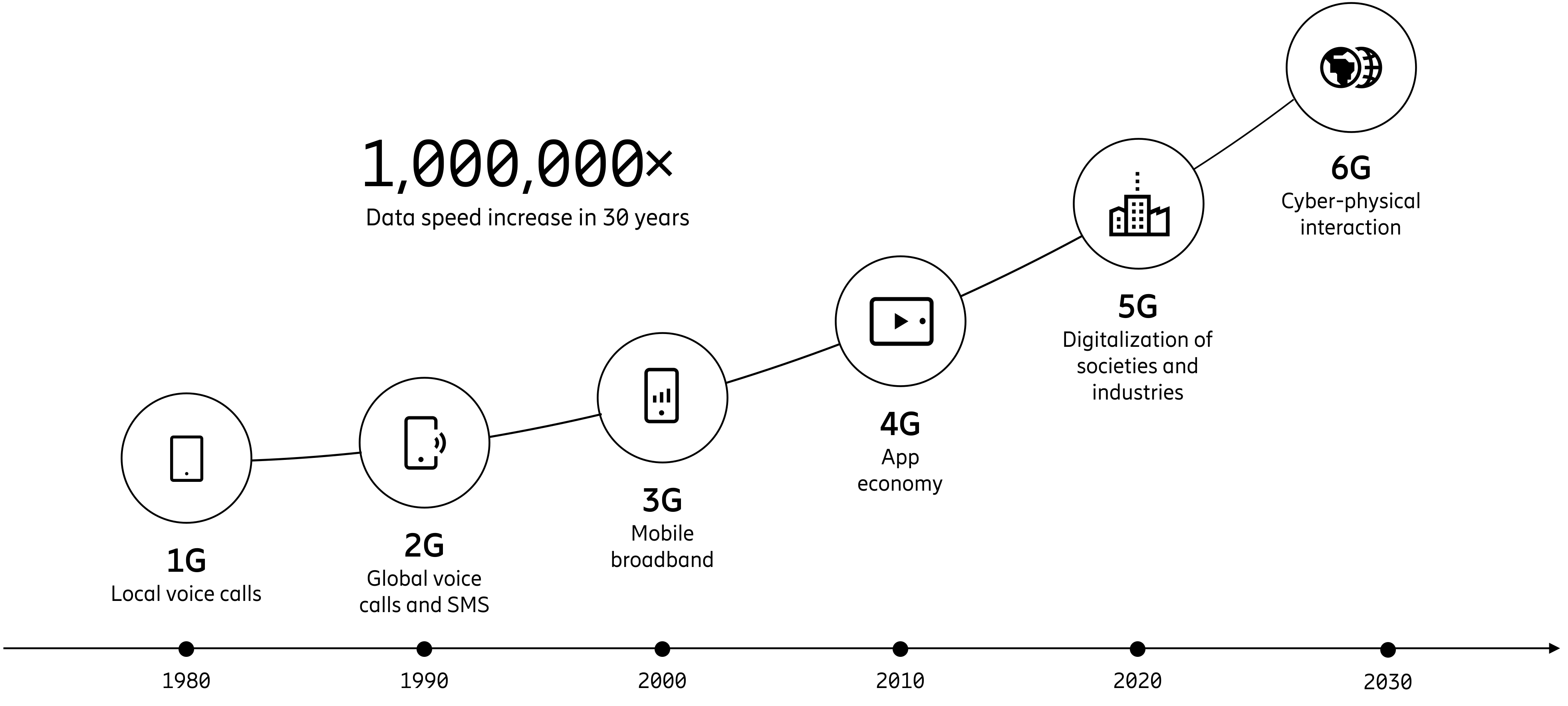
1G to 6G: follow the journey to today’s standards

Mobile networks are an engine for growth, and every generation starts a new wave of innovations. As a world-leader in groundbreaking innovations and their subsequent implementation as global standards, Ericsson has become a trusted partner and recognized leader within 3GPP and other major standardization organizations. The diligent effort in this area has been instrumental in building the world of tomorrow through the continuous updating of vital standards to adapt to new requirements in the world of communications.

Today, Ericsson occupies a unique position both leading and assisting in the development of these standards for all major mobile and fixed communication systems, creating the largest innovation platform for consumers, industries and society.

Follow the mobile evolution from 1G to 6G with Erik Dahlman, Senior Expert Radio Access and receiver of the Ericsson Lifetime Achievement Award 2022.

Key milestones on the standards journey

The very first telecommunication systems NMT (Nordic Mobile Telephony), AMPS (Advanced Mobile Phone System) and TACS (Total Access Communication System) were proprietary systems jointly developed by the major, mostly-incumbent service providers.

With high associated costs limiting their appeal mainly to business users, early systems prompted much learning around the coverage and cost prerequisites needed to drive future mass market adoption.

The mass production of network equipment and user devices with 2G enabled strong economies of scale, helping to gradually lower subscription and device prices for users and drive a rapid growth period for mobile.

The launch of GSM (Global System for Mobile Communication), PDC (Personal Digital Cellular), D-AMPS (Digital Advanced Mobile Phone System) and cdmaOne in this period made data an integrated, albeit limited part of mobile communication systems. Despite relative advances and growth, cross-industry collaboration remained limited and efforts to standardize were still largely guided and governed on a per-region basis, through many different and competing standardization bodies.

For the very first time, 3G saw the unification of most major regional standards into one truly global standard: the 3GPP (3rd Generation Partnership Project). This would take the industry a major step forward in facilitating a global, interoperable market with associated economies of scale benefits, effectively ending the incompatibility and non-interoperability of local mobile systems and devices.

3GPP initially comprised the major standards bodies of North America (Alliance for Telecommunications Industry Solutions, or ATIS), Europe (The European Telecommunications Standards Institute, or ETSI), Japan (The Association of Radio Industries and Businesses, or ARIB, and Telecommunications Technology Committee, or TTC) and Korea (Telecommunications Technology Association, or TTA) – and was later joined by partners in China (China Communications Standards Association, or CCSA) and India (Telecommunications Standards Development Society, India, or TSDSI).

Ericsson served as one of the key initiators of 3GPP and has maintained a strong presence ever since.

While peak rates improved on the speeds achieved by GSM and other 2G networks, the 3G system was still based on circuit-switched technology inherited from the voice-based systems, making it difficult to reach high network capacity. It wasn’t until the introduction of HSPA (High-Speed Packet Access) in later stages of 3G that the needle began to shift on peak rates and network capacity.

The launch and evolution of 4G’s Long Term Evolution (LTE) firmly established the global success of MBB, and the paradigm shift that entailed. It became the first truly global standard, receiving widespread buy-in particularly in innovation-rich US markets which further increased the potential for economies of scale.

The introduction of advanced commercial mobile devices paved the way to new app-based business models, spurring the introduction of numerous creative third-party companies, which then set off an explosive evolution of lucrative mobile data services.

6G standardization: delivering extraordinary performance and a multi-purpose platform

Future 6G networks will bridge physical things, people and activities into a fully cyber-physical world where massive data and intelligence is communicated, computed and actioned in real time.

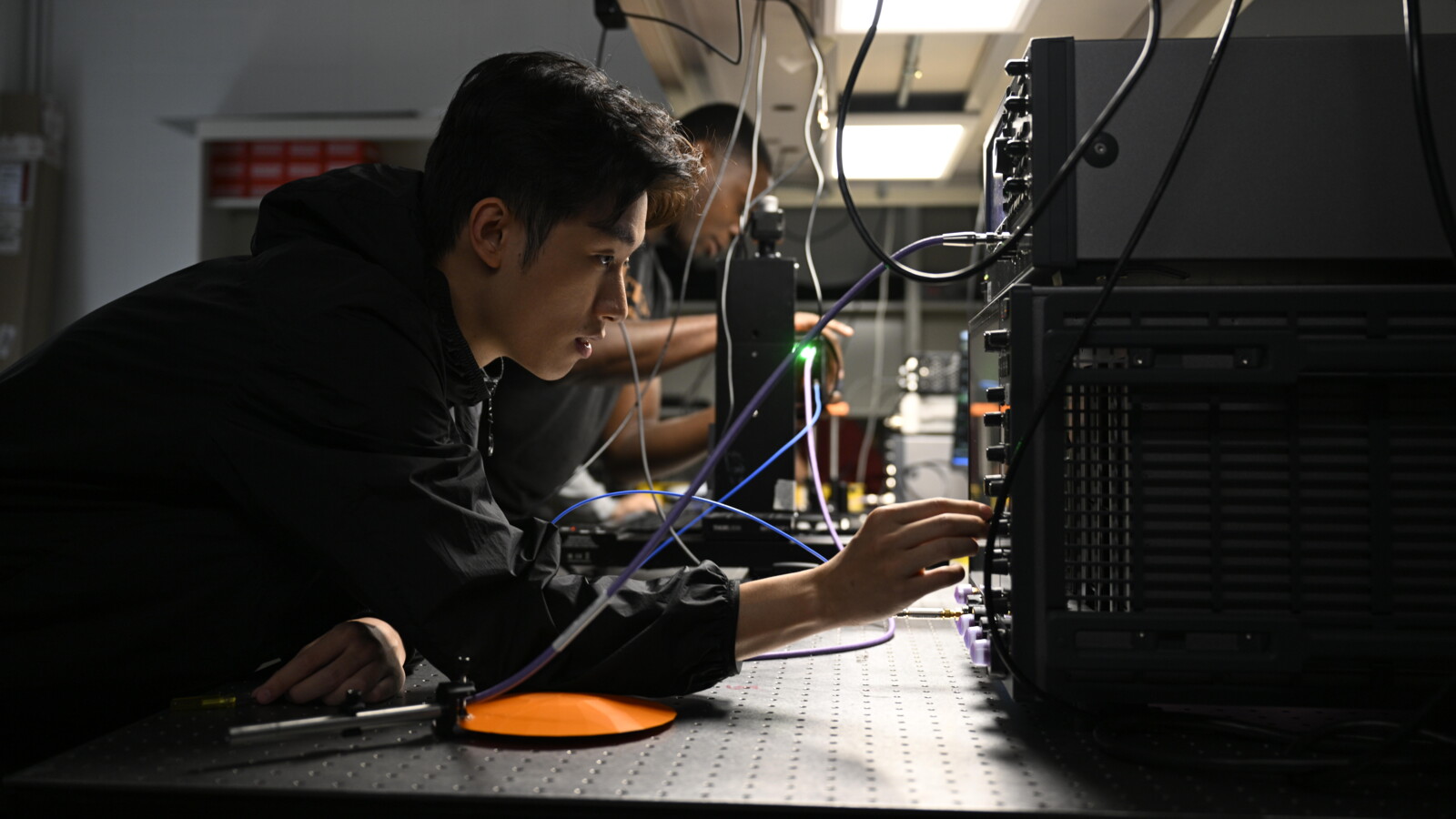
As with previous generations, 3GPP will drive standardization of the new 6G standard together with other fora such as the O-RAN Alliance. Work on the first 6G standard began during 3GPP Release 19 in 2024 with requirement related work. With 3GPP Release 21 in 2028, the first 6G technical specifications are expected to be complete. By 2030, the first commercial 6G systems are expected to be available on the markets.

""

Get up to speed on 6G standardization

Ericsson and 3GPP: 30 years of leadership

The technology that Ericsson offers is the result of substantial investments in technology research and standards development made for many years. These investments have made Ericsson a leading innovator and the driving force in the development and evolution of each mobile generation, as well as the industry’s largest holder of 5G standard essential patents.

This is reflected and facilitated by our unrivaled impact across open standards fora such as 3GPP. Since its inception in 1999, Ericsson has contributed more to the development of 3GPP open standards than any other vendor. Today, as we move beyond 5G, we remain as committed as ever to leading our industry into the next era of mobile together with 3GPP partners.

Learn more about our impact on 3GPP standards

# 1.00
most technical contributions since 3GPP founded
80000.00
Ericsson contributions in total
37.00 %
leading share of co-authored contributions to 5G standard
USD 100.00 bn
invested into technology R&D over three decades
# 1.00
Leading portfolio of 5G standard essential patents

Learn more about our impact in 3GPP

Standardization leadership in O-RAN Alliance

Explore our impact on the O-RAN Alliance, and specifications in the areas of RAN automation, cloudification, and disaggregation.

Standardization leadership in 3GPP Release 15 & 16

Explore our impact on fundamental 5G (3GPP Rel-15) and initial 5G evolution (3GPP Rel-16).

Standardization leadership in 3GPP Release 17

Explore our impact on the evolution of 5G (3GPP Rel-17) across new industrial and consumer domains.

Featured articles

Related topics

Articles and blogs