How might a team looking after remote islands stay in constant contact? How might heat-sensitive drones help firefighters to detect danger? Often immersed in time-critical situations, critical service workers need a quick and reliable way to communicate efficiently, with optimized applications to carry out their responsibilities effectively. The solution? Next-level mobile connectivity - and we’re already seeing how it can help save lives today.
Communicating in times of crisis
Traditionally, critical service workers have stayed up-to-date and connected with their team by relying on Land Mobile Radio (LMR) technology. Whilst undeniably, it has helped saved countless lives, LMR is limited to a certain extent. Drawing upon a push-to-talk (“walkie talkie”) functionality, it cannot exchange other types of data, such as pictures and videos.
Moving forward, modernizing current critical communication capabilities should be a top priority. By using a single, secure, and resilient mobile network across all related operations, locations and activities, public safety workers can take advantage of the innovative technology that we have today to help bring about a superior level of safety and protection for individuals.
From making critical operations far easier to co-ordinate and execute, to allowing first responders to access key intelligence and get the critical support they need, the potential of mobile connectivity in the critical networks’ domain is beyond significant - and the good thing is that we’re already seeing this evolution take place.
Innovative technology in critical action
By leveraging current infrastructures, such as 3GPP 4G/LTE networks and setting their sights on 5G, several service providers are starting to see the potential of using optimized critical network capabilities to offer essential mission-critical mobile connectivity and broadband services to governments and public safety agencies.
In our unique trial with Teracom for instance, we used Teracom’s high mast infrastructure to connect deployable high-performing mobile networks for mission-critical communications, supporting critical services in remote areas. This opens up the exciting possibility for Teracom to offer reliable and next-level mobile-broadband enabled communications solutions to local and critical service agencies, which in turn, would help revolutionize public safety operations in the area.
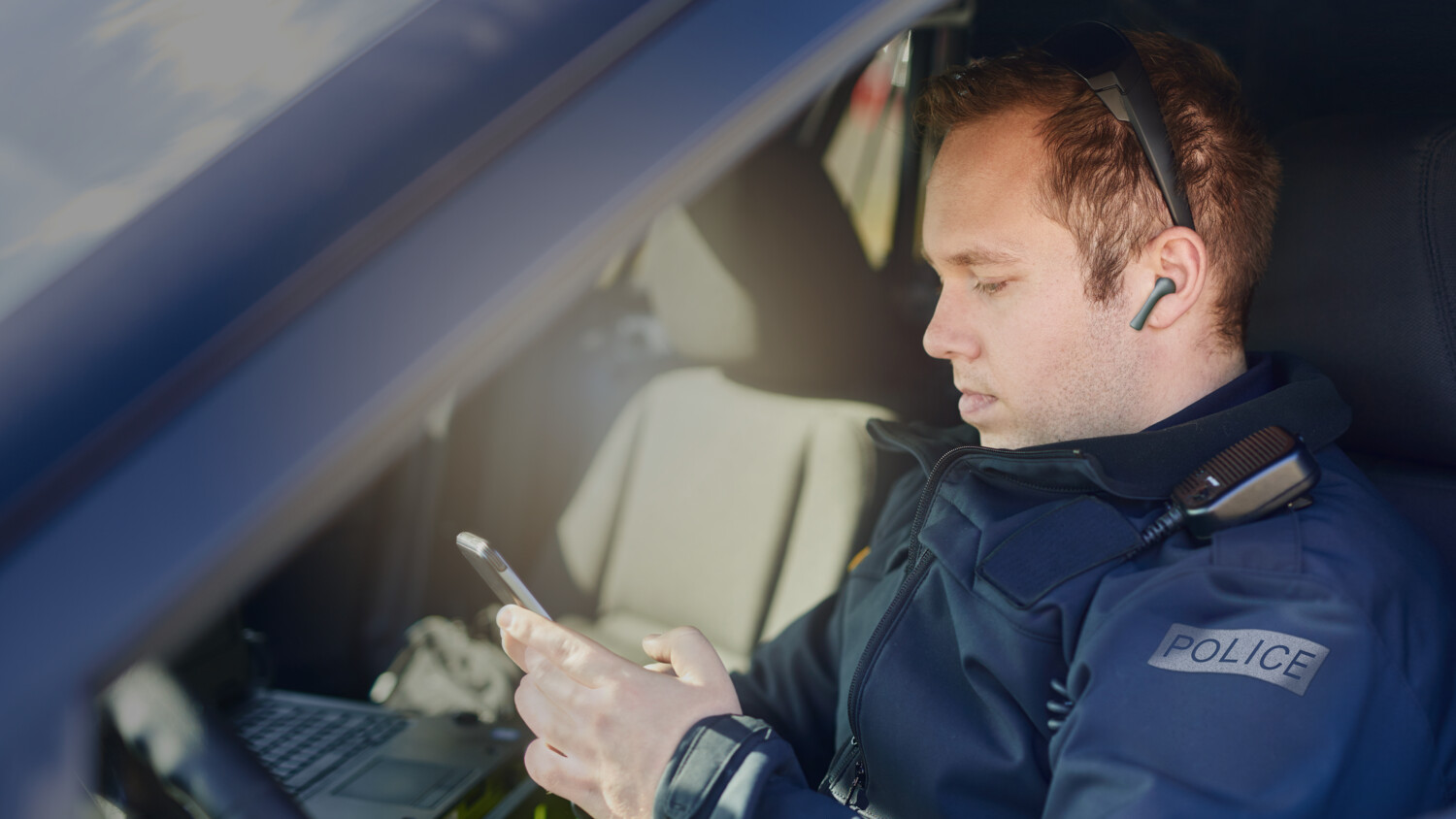
In fact, even in remote and as geographically diverse areas as the Faroe Islands, we’re seeing these solutions put to the test today. The first in Europe to use our Mission Critical Push-To-Talk technology as a primary tool for critical communication, the Faroe Islands Police service now have a clear pathway from analogue technology to LTE and 5G and can take advantage of comprehensive voice, data and video services for group communication.
Whether they’re on land, at sea or in the air, they can now maintain frequent and safe communication with their team via group voice and video call connectivity, which could ultimately make that all-important difference in such a treacherous landscape.
Saving lives with 5G technology
But what if I said we could go even further that that? Whilst LTE is the current platform for mission-critical mobile broadband and looks set to be so for the near future, that isn’t to say we can’t start preparing for future 5G-powered mission-critical networks now. Just like what we’re seeing from the Virve 2.0 initiative by Finnish state-run body, Erillisverkot.
Drawing upon Ericsson’s 3GPP Core IT systems to enable instant, reliable and stable communication for emergency responders today, Erillsverkot is also on a journey to introduce 5G services to their nationwide public safety network in the years to come.
It’s exactly this kind of forward-thinking that will drive the next big developments in the critical services industry, and with 5G set to be one of the biggest innovation platforms we have ever seen, the scope for bettering public safety couldn’t get any more impressive.
5G’s critical capabilities
With 5G’s higher capacity, mobility and lower latency, and optimized abilities, such as its support for an increased number of connected devices, we can unlock new, and lifesaving use-cases in the field. This is because 5G allows us to reap the full benefits of today’s innovative technology, like the Internet of Things (IoT), Artificial Intelligence (AI), Augmented and Virtual Reality (AR/VR), to further improve first responder command, control, and communications capabilities.
To put this all into perspective, let’s explore a few of these potential use-cases.
Putting 5G to the test
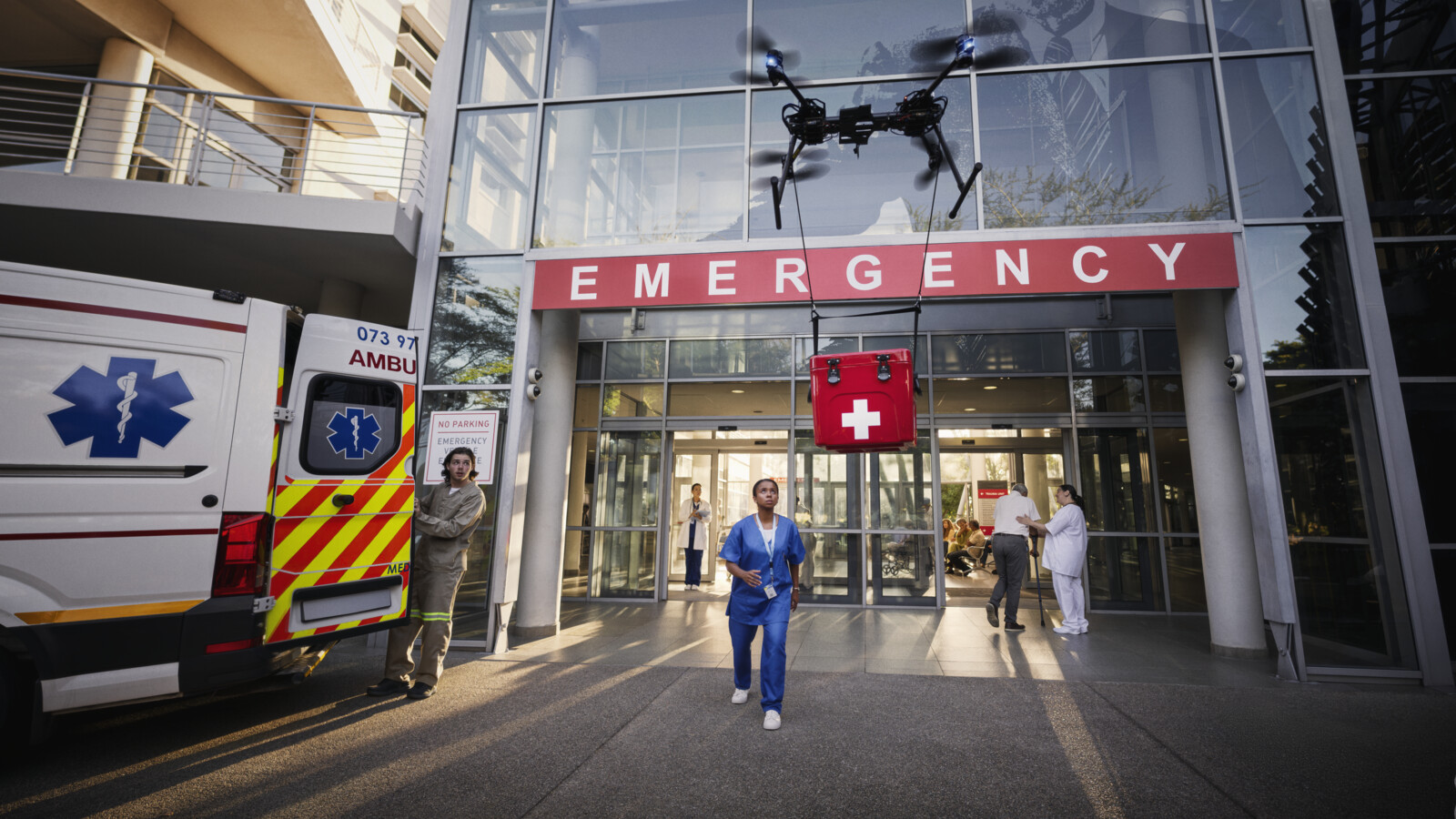
Drones emerge as having real scope for benefiting from 5G. We’ve already seen how drones can leverage 4G LTE technology to deliver defibrillators over 3000 miles away in Canada’s Renfew County – but we don’t need to stop there. With 5G, we could see drones dispatched to crime scenes to give a broader, birds-eye view of the situation without officers having to put themselves at unnecessary risk. 5G-powered AR and heat sensors in drones could also allow for underground fire detection during wildfire fighting, a task that’s unfortunately been prevalent in the US and Australia in recent years.
Connected ambulances are also another hugely interesting area of potential. Here, emergency medical technicians could draw upon 5G to obtain near-real-time traffic information to choose the most optimal routes for travel, which could ultimately help speed up response and treatment times. It could also allow the seamless sharing of patients’ status virtually with the hospital, as well as triage with a team of medical professionals at the emergency facility.
Another eye-catching use-case is also that of firefighters responding to emergency situations involving burning buildings. 5G could power VR technology to help rapidly locate victims by using a 3D layout of a building shown in their helmet visors – and, if that wasn’t fascinating enough, a near-real-time video of the situation could also be streamed back to commanders.
Looking to the future
What’s clear, is that we’re living though a time of real innovation and technological developments that is revolutionizing Mission-Critical Communications. Whether it’s through leveraging LTE technology today or drawing upon the power of 5G connectivity tomorrow, at Ericsson, we’re dedicated to driving a positive impact on public safety - and I’m excited to see where the future takes us.
Learn more
At Ericsson, our offering draws from our leading Mission Critical Networks and Solutions portfolio with enhanced features and capabilities to ensure mission-critical grade performance.
Discover our journey to mission-critical 5G here.
Related content
Faroese Telecom and Ericsson
Teracom and Ericsson
This is how 5G NR for public safety could save lives
Bring on the private networks with critical capabilities