










5G cloud gaming – can your BSS capitalize?

Head of BSS Product Marketing, Ericsson Digital BSS

Head of BSS Product Marketing, Ericsson Digital BSS
Head of BSS Product Marketing, Ericsson Digital BSS
Unlocking the power of 5G AR/VR gaming
As communication service providers (CSPs) switch on 5G, consumer demand for innovative services like cloud gaming is rising faster than expected, according to the recent Ericsson ConsumerLab (Consumer and Market Insight) report, Five ways to a better 5G. To fully unlock 5G’s revenue potential and minimize the risk of missing out on revenue opportunities, CSPs should proactively accelerate their plans to launch digital service packages like 5G gaming.
To support these services, CSPs also need to ensure Business Support Systems (BSS) are on the path to automating the high volume of operational transactions that will likely result from new 5G use cases. The BSS architecture needs to be robust enough to support critical functions like ordering, charging, rating, metering and billing—not just for gaming, AR and VR—but also enterprise-wide for B2B and B2B2X services and emerging value chains.
As the Ericsson eBrief, Getting creative with 5G business models states, “To fulfill 5G consumer use cases, BSS needs to enable differentiated service offerings bolstering the value of a 5G connection and supporting the business”. This eBrief cites four main BSS objectives: improving monetization, enabling faster time to market, facilitating a better customer experience (CX) and managing the partnership ecosystem.
Consumer demand for 5G is rapidly outpacing what was seen for 4G LTE
At this rate there will be “3.5 billion 5G subscriptions globally by 2026, accounting for 40 percent of all mobile subscriptions,” according to estimates by the Ericsson Mobility Report June 2021. The market appeal of 5G stems from its innovative, next-gen nature, which goes far beyond its beefed-up bandwidth, mobility, and connectivity. 5G is ushering in exciting and novel digital bundles and packages, while enriching existing wireless functionality.
With its exceptional broadband capacity coupled with powerful cloud edge computing, 5G can create highly realistic, graphical augmented reality (AR) and virtual reality (VR) worlds that people can experience in real-time.
This advanced platform also opens the door to marketing 5G mobile cloud gaming, VR and AR apps as packages that bundle hardware and software, such as third-party VR headsets, 5G SIM cards (for security), and AR and VR game content, with 5G devices and wireless plans.
Immersive AR/VR packages can give customers access to VIP events, such as the best VR seat in the house for a live sold-out concert, a virtual stadium seat at premium sporting events, or in live cloud gaming events. In this way, immersive digital services and 5G cloud gaming enrich connectivity offerings, underscore the value of 5G connections and promote greater customer loyalty.
Are you ready for 5G cloud gaming?
Unlike 4G LTE’s music and video streaming, the 5G realm is bigger - with greater bandwidth, data transfers, video usage, and customer expectations. The Ericsson Mobility Report June 2021 forecasts that by 2026, 5G networks will carry more than half of the world’s smartphone traffic; video-rich applications will drive mobile data traffic growth; and 5G IoT connections will steadily increase to support devices, such as VR headsets and cloud gaming.
Far from being a technology in search of a market, consumers are excited about 5G’s immersive media and entertainment capabilities. According to the Five ways to a better 5G report, new customers could be enticed to take up 5G wireless plans sooner in order to access these services. Also, “5G users are more engaged with using high bandwidth immersive digital services than 4G users [and they] have also started to use enhanced video apps involving streaming of multi-angle views and 360-degree video content. New services like cloud gaming and AR apps also see (below) a two hour and one hour per week average increase respectively by 5G users.” In fact, immersive video apps like gaming, AR and VR already contribute to 20 percent of the total time 5G users spend on digital services.
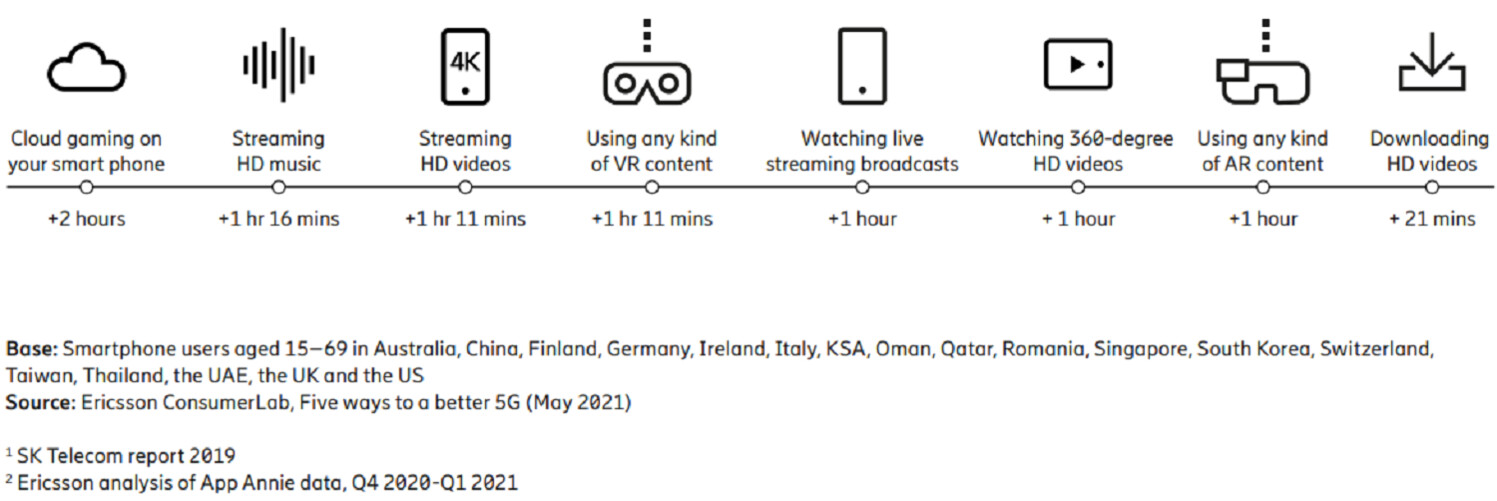
Figure 1: Average increase in time spent per week by 5G early adopters on activities compared to 4G LTE users
Source: Ericsson Consumer Lab - Five ways to a better 5G
The ConsumerLab report cautions that 70 percent of early adopters are dissatisfied with the availability of innovative services and are left wanting more. CSPs need to keep this pent-up demand in mind when designing and launching new 5G digital service packages and bundles.
While the huge revenue potential of 5G digital services mobilizes some CSPs, the Ericsson Mobility June 2021 Report indicates that some CSPs want to put on the brakes to guard against 5G traffic surges that could overwhelm their networks. Rather than offering unlimited data, many service providers impose daily allowances and or cap usage in family and share plans to improve network efficiency and monetization.
The emerging 5G landscape may seem as immense and intricate as the virtual reality worlds being created for gaming and entertainment. Besides bread-and-butter calling, messaging, and streaming, CSPs must now embark on new territory, and think outside the box as they provide new digital service packages and bundles.
New business models for fun and profit
To deliver 5G cloud gaming, AR and/or VR apps, CSPs need to adopt new business models and form strategic partnerships with providers of cloud gaming platforms, exclusive AR/VR games, VR headsets, and other new devices and content.
Telecom BSS must scale to handle the cascade of operational transactions, such as real-time tracking of orders, enhanced billing, Event Data/Detail Records (EDRs), catalog-driven and converged charging, as well as third-party billing, commissions, and revenue sharing with partners that new use cases will generate. To reduce exposure to potential risks or losses (due to bottlenecks in critical monetization processes such as charging and billing), Ericsson Digital BSS helps CSPs manage operational complexities across the value chain, giving the flexibility and agility necessary to deftly market and monetize 5G digital services.
To offer high-value gaming packages, CSPs will need to team up with companies, developers and other established industry players who have proven gaming platforms, VR headsets and the games that gamers want. Rather than re-inventing the wheel, CSPs can move 5G gaming services to market faster by licensing and leveraging the intellectual property of strategic partners, while cooperating to deliver an exceptional customer experience (CX).
The Ericsson eBrief entitled Getting creative with 5G business models describes three business use cases that CSPs can adopt to quickly onboard and market new digital services. These are: Immersive AR/VR gaming, Fixed Wireless Access (FWA) for private homes, and the 3D Video on Demand (VoD) experience. For these use cases, CSPs can either develop new services in-house, or, more likely, work with third-party developers and partners.
Welcome to the 5G gaming future
Regarding the AR/VR gaming use case in particular, the eBrief specifies, “Here, the CSP bundles third-party products and services to provide a complete AR/VR gaming experience through a dedicated network slice and edge cloud capabilities. It markets the bundled solution directly to gamers who get a 5G SIM along with an AR/VR headset…The CSP has an agreement with the headset provider that develops and hosts games on its platform and various gaming developers sell their games through the headset provider’s application…5G Edge Cloud empowers wireless headsets to offload computation, storage, and the tasks of graphics to the cloud.”
The eBrief details the CSP’s role in the AR/VR gaming value chain (see below) which we’re summarizing here. In terms of B2C service fulfillment, the CSP sells the AR/VR gaming subscription package to the consumer, complete with the VR headset and 5G SIM (and base subscription plan). The customer then accesses the games through the headset provider’s store. In terms of B2B, the CSP contracts with the headset provider for an AR/VR gaming license and large supply of headsets. The headset provider enables access to the games on its platform, promising a guaranteed quality of service (QoS) and support.
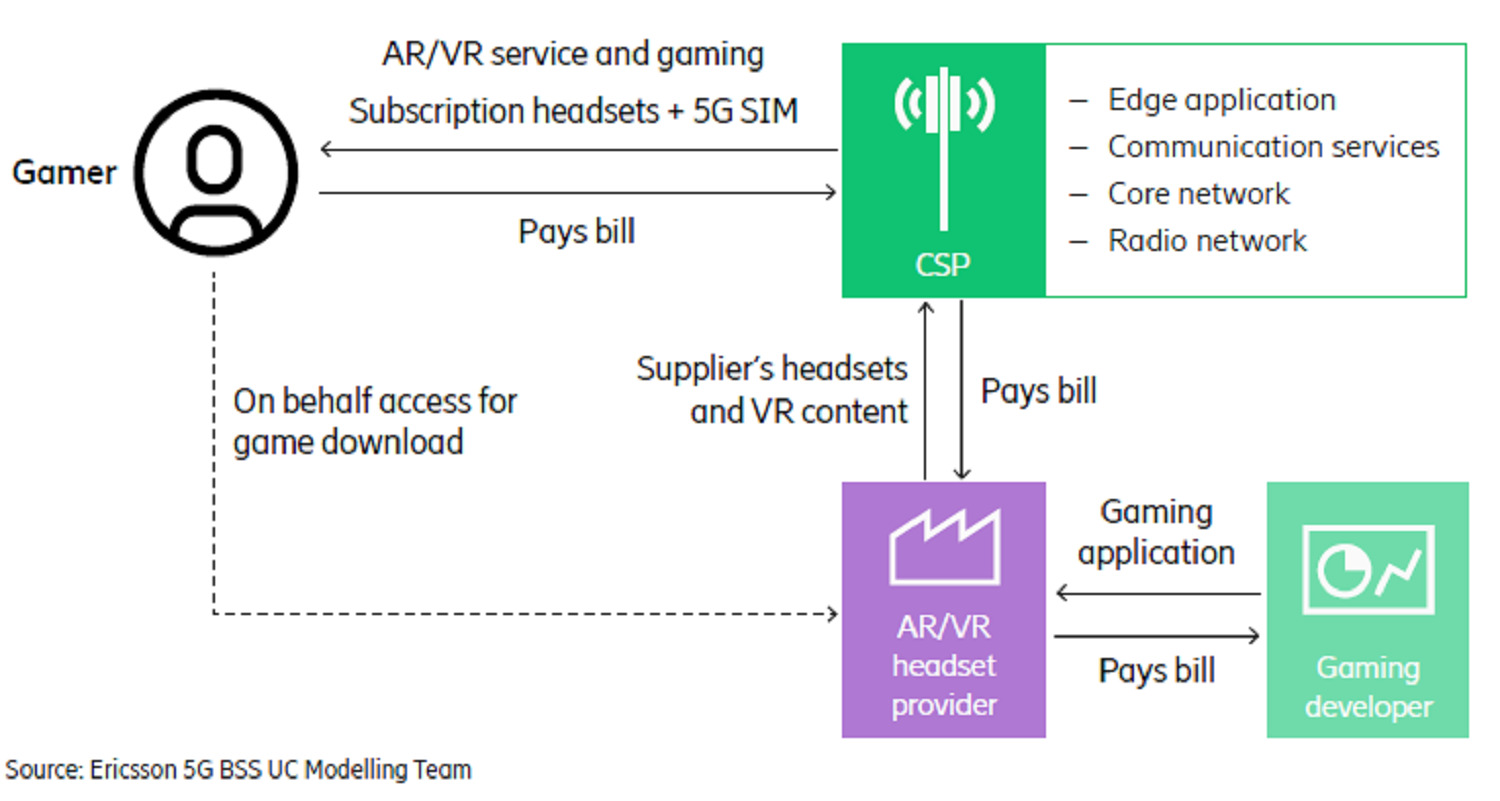
Figure 2: Engagement model – AR/VR fun: Immersive gaming
Source: Getting creative with 5G business models | eBrief
While the promise of 5G immersive digital services is vast, there are still many tech-forward 5G use cases that are yet to be defined. Ericsson urges CSPs to adopt a scalable BSS architecture that enables them to handle a stepwise transformation with flexibility and agility, so they can meet current and future challenges smoothly.
Ericsson Digital BSS does this by supporting faster time to market, improved monetization, better partner management of complex data, event, and revenue exchanges and ultimately, a more satisfying customer experience.
Understanding customers’ needs and effective marketing are also vital to winning big in 5G gaming. The Ericsson ConsumerLab report explains, “If the value of 5G technology had been better marketed, in terms that were more relevant to consumer needs, an additional 22 percent of consumers globally who already owned 5G-ready smartphones in 2020 could have upgraded to a 5G plan.”
Intelligent customer recommendations are key to capturing revenue opportunities
To make sure that specific products reach the correct audience based on their established behaviors and usage habits, AI (artificial intelligence) continuously learns about the customer base, by intelligently:
- Identifying the target group for a new offer or upselling/cross-selling opportunities along the purchase journey
- Finding gamers using regular 5G subscriptions, including those with 5G enabled handsets
- Building a customer segmentation strategy to find subscribers with high gaming traffic usage. Microsegmentation can split the users by region or monthly spending
- Pushing the offer notification through messaging or while gamers are browsing the service providers’ apps
Other intelligent customer interactions can be used to enhance the CX and relationship over time. Associated orders and similar products with a high probability of upsell/cross sell success can be promoted in context, and exposed as recommendations in any channel to enable personalized interactions.
Here at Ericsson, we are simplifying the utilization of AI and the optimization of customer journeys with our Digital Experience Platform (DXP). This cloud-based platform helps CSPs interact with subscribers through contextual journeys, while addressing the evolving demands of our digital society. It also provides consistent, secure, and personalized access to information and applications across many digital channels and touchpoints.
By seamlessly integrating with different BSS, OSS and Core Network backend applications to collect data, Ericsson DXP is able to build those intelligent matrices with the help of inherent AI and ML (machine learning) algorithms. It then exposes the recommendations using standard TMF Open APIs, making it easier for any frontend channel to present the information to subscribers. Because of this intelligence and personalization, customers will likely regard offer notifications from their service providers as much more relevant and significant.
Rapid market adoption of 5G—and new digital capabilities like cloud gaming and VR/AR apps—ultimately rests on customers’ perception of its relevance and value in the context of their everyday lives, coupled with a continuous and closed feedback loop on the CSPs' side that informs decision making with actionable insights.
Learn more:
Ericsson Consumer Lab - Five ways to a better 5G
Getting creative with 5G business models | eBrief
Capturing 5G monetization opportunities with 5G charging | eBrief
Ericsson Mobility Report June 2021
Mobile cloud gaming – an evolving business opportunity
How will 5G and edge computing transform the future of mobile gaming?
How contextual marketing can help you monetize 5G use cases