










MWC 2023 Chronicles: Navigating the AR/VR evolution and the metaverse's downturn
- English
- Français
- Mobile World Congress (MWC) 2023 witnessed a decrease in the focus on the metaverse concept, indicating a move towards practical and achievable advancements in extended reality (XR) connected through 5G technologies.
- The conference highlighted several practical and promising applications of XR technologies, including remote assistance, gaming, and immersive entertainment, that could improve user experience and transform various industries.

VP Emerging Technologies
VP Emerging Technologies
VP Emerging Technologies
The conspicuous absence of metaverse-related technology at MWC 2023 has raised questions about the future of the metaverse concept. As the VP of Emerging Technologies at Ericsson, I have been fascinated by the ongoing developments in this area and the potential implications, not just for the telecommunications industry, but also for society as a whole. In collaboration with my ‘co-author’ ChatGPT4, we discuss the future of the metaverse and explore the emerging tech trends from the congress.
The fall of the metaverse?
Returning to MWC 2023 in beautiful Barcelona was like a breath of fresh air! After what felt like an eternity of virtual gatherings – or as ChatGPT put it to me “pixelated purgatory of countless Zoom meetings” – being around real people again was a welcome change. It was as if we'd all finally emerged from our technological cocoons to spread our social wings once more.
However, one noticeable absentee from MWC was the metaverse. In contrast to previous years, where many booths were dedicated to the concept, this year's event saw a stark decline in its presence or serious stagnation in advancing content and the overall narrative. It seems as if the industry has moved beyond the hype, acknowledging that the once-celebrated vision of a fully immersive digital world has failed to materialize as expected.
This shift was further corroborated by recent decisions made by key industry players like Meta, who chose to divest from metaverse-centric developments. This move signaled a broader recognition within the tech community that the metaverse had not lived up to its lofty expectations (yet). Instead, the focus at MWC 2023 shifted towards more practical and tangible advancements in XR tethered via 5G technologies, which promise to have a more immediate impact on our daily lives.
This serves as a valuable reminder that technological progress is not always linear, and that sometimes, the most hyped innovations can fall short of expectations. The concept of the metaverse in the form of an immersive internet, first for enterprises and later for consumers, will of course live on and we remain fully committed to it!
As the industry moves forward, it is crucial to remain adaptive and open to new possibilities while being mindful of the lessons learned from past endeavors. MWC2023 provided an opportunity to refocus on technologies that have the potential to make a real difference; let’s look into these!
Taking the first steps: a 5G and AR enabled immersive internet
Over the past years, Ericsson’s Silicon Valley flagship lab, D15, has been integrating 5G into VR headsets. Such a native integration has many advantages as it enables incredibly advanced enterprise use cases. For instance, many designers can work and collaborate on high-resolution CAD design models at the same time. That is a real value add compared to Wi-Fi which only supports a few users when high quality is required.
It was thus quite surprising to see that almost all VR headsets were still connected to the internet via Wi-Fi. It really made me feel that Ericsson was light-years ahead when it comes to enabling high-quality immersive VR experiences. I do expect, however, more 5G-connected VR headsets to appear at MWC 2024.
Having said this, AR was a revelation at MWC 2023!
Quite a few companies showcased their latest AR devices and experiences. One company that stood out in particular was Qualcomm, which provided a reference design that enabled advanced spatial computing with AR. Said design included powerful processors, high-resolution displays, and sophisticated sensors, which allowed for more immersive and interactive AR experiences.
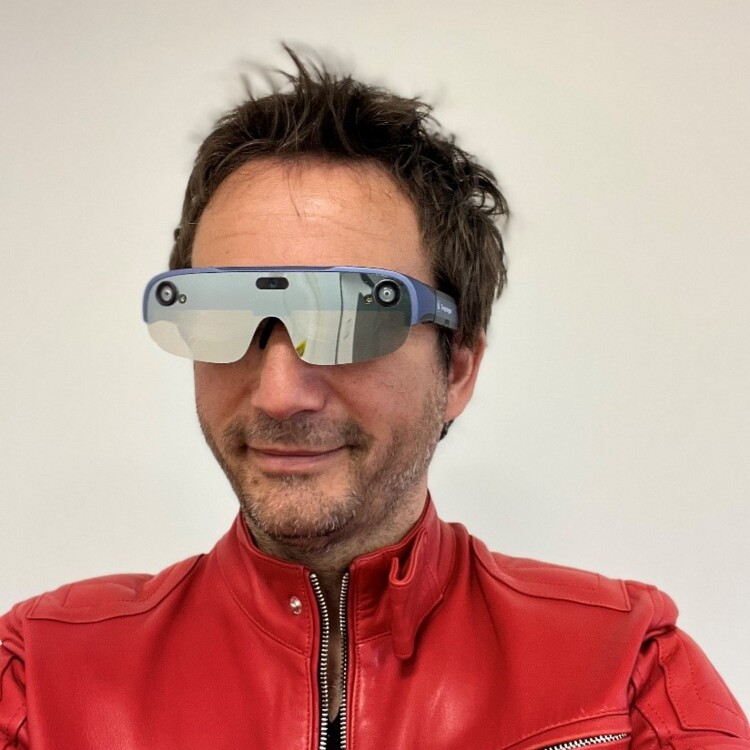
Mischa models Qualcomm’s new AR reference design, the Wireless AR Smart Viewer Reference Design powered by the Snapdragon XR2 Platform.
Many companies, such as Lenovo, were building their own AR glasses and experiences based on Qualcomm's reference designs, and the results were impressive. The AR glasses showcased at MWC were much more stylish compared to previous engineering iterations and undeniably useful to many enterprise B2B applications. They offered a range of features such as real-time translation and object recognition. With Qualcomm's reference designs, companies were able to build AR devices that were both powerful and affordable, making it easier for consumers to access and enjoy AR experiences.
Another key advantage of Qualcomm's reference designs was their ability to enable a 5G-tethered mode, which will prove useful in the future for rendering high-quality content at a nearby edge-cloud. This means that AR devices can offload complex processing tasks to the cloud, allowing for faster and more responsive AR experiences.
With 5G networks continuing to roll out around the world, this feature will become increasingly important, as it will enable AR devices to take full advantage of the high-speed connectivity that 5G provides. With the continued development of AR technology and the increasing availability of 5G networks, we can expect to see even more impressive AR experiences in the years to come.
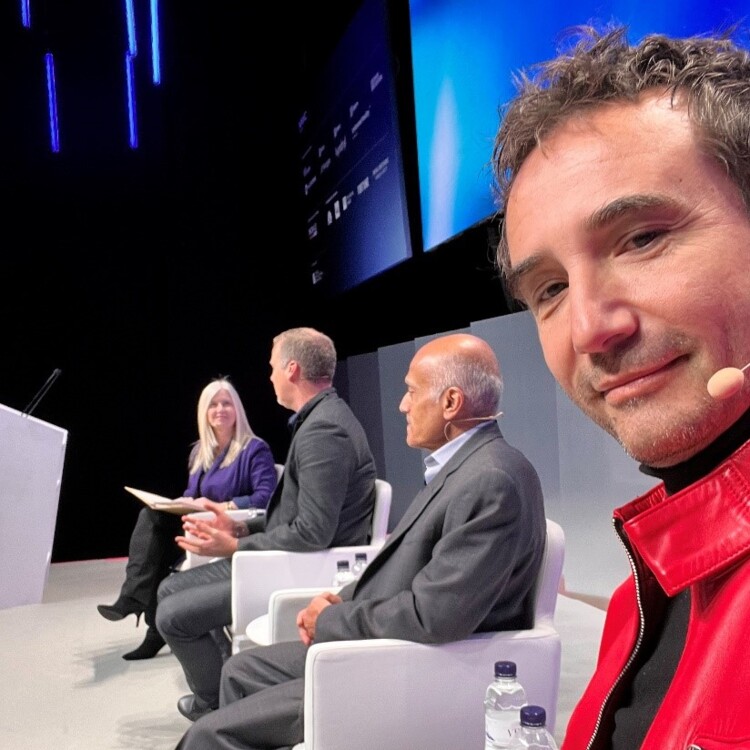
Mischa was a guest panelist at MWC for a discussion on XR, AI, and 5G
XR, AI & 5G for a new immersive experience
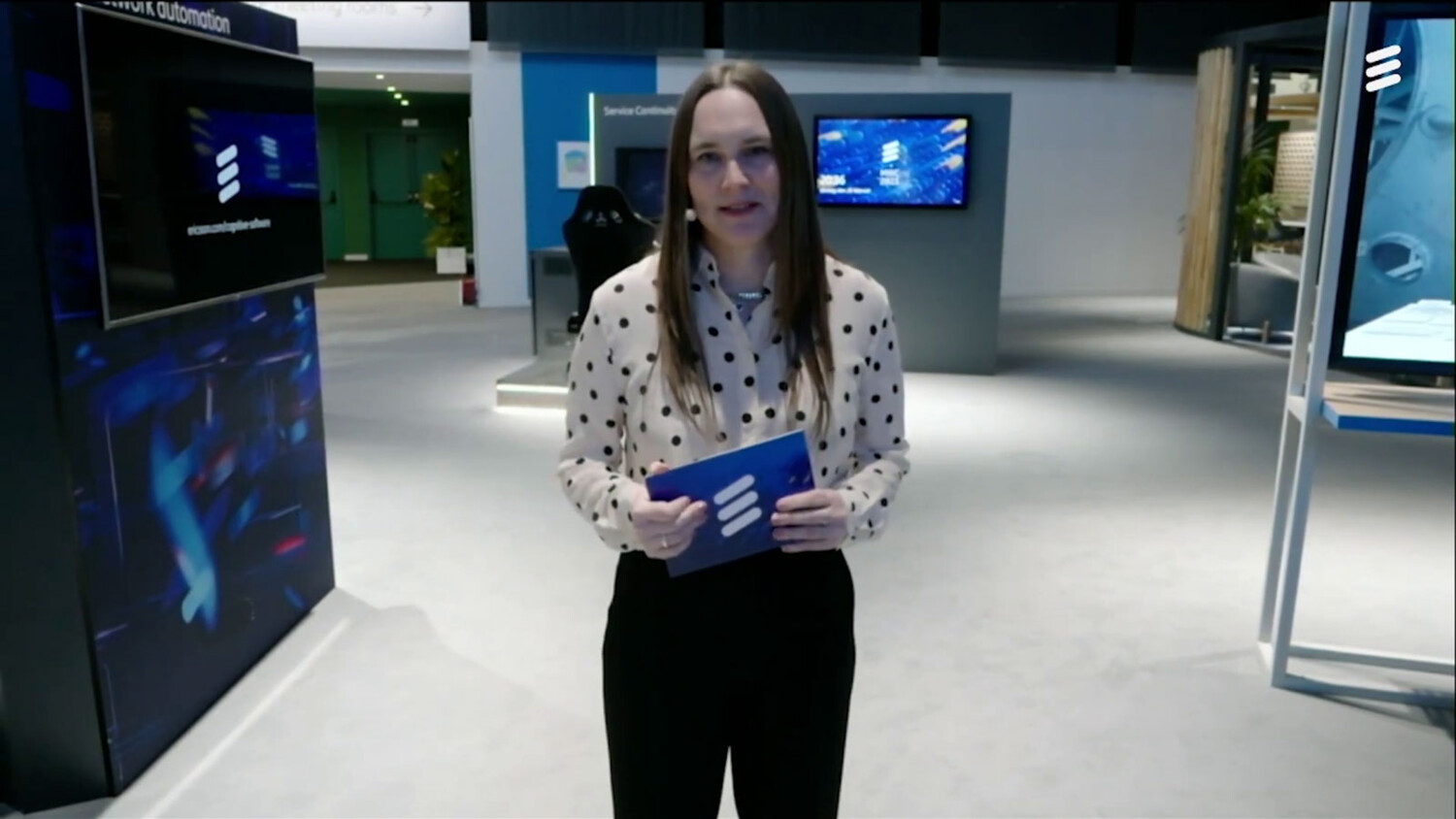
At MWC, I had the opportunity to be a guest panelist for a discussion on XR, AI, and 5G. The focus of the session was to explore the possibilities of new immersive experiences and address the fundamental question of what's next. Specifically, we delved into how we will work, play, and interact with the digital universe in the future. You can check out the video below to discover the insights shared during the discussion.
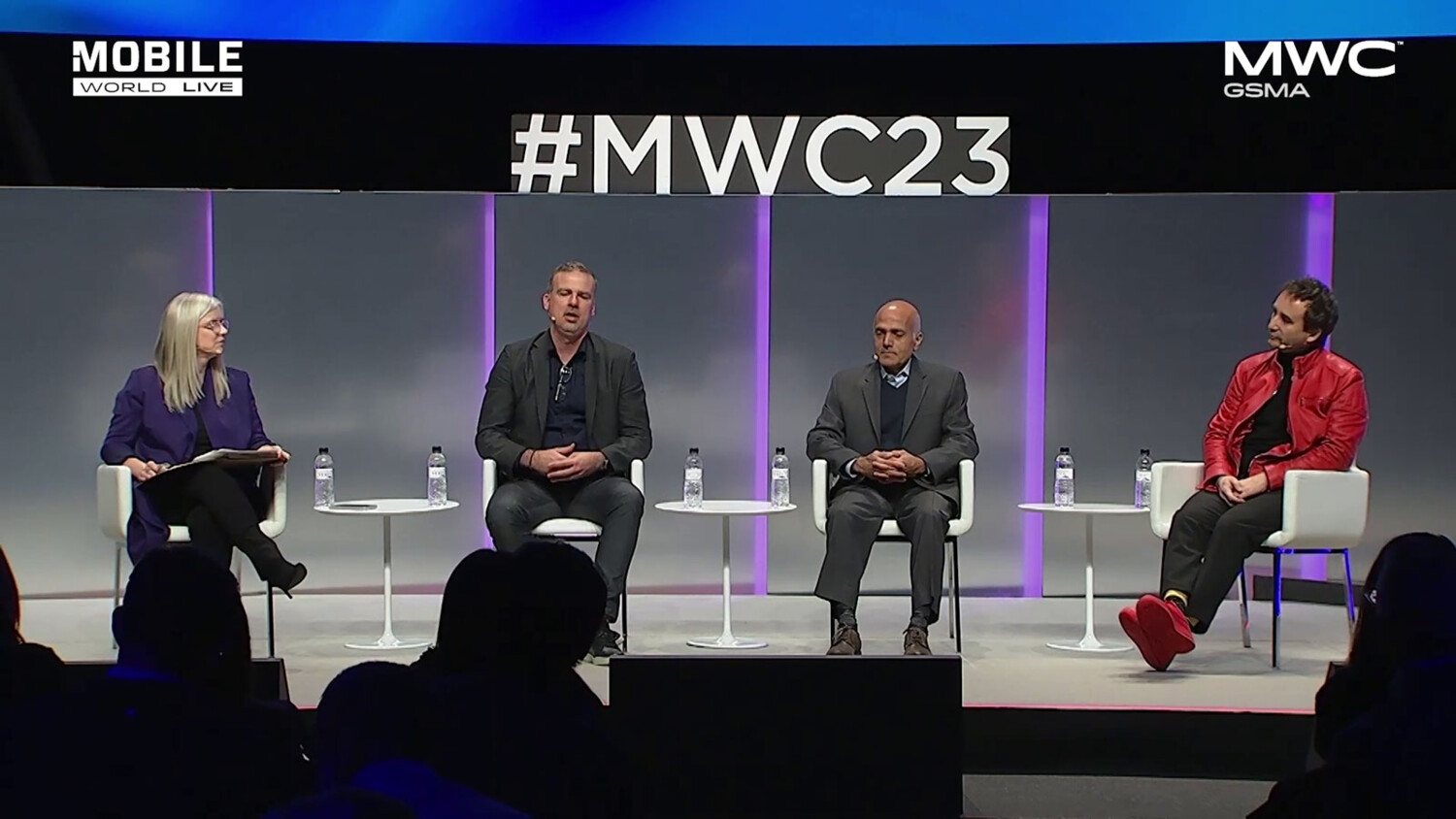
You can also discover more about the panel discussion here.
What we need is a strong consumer-grade AR experience
Enterprise applications will not move the needle on a global scale. Instead, we need impactful consumer AR applications with a corresponding demand for such AR applications. Our recent Consumer Report established that the appetite for a 5G-enabled AR consumer solution is growing. However, before we fulfill the demand for impactful consumer AR applications and reap the rewards of a 5G-enabled AR consumer solution, we must address the following three problems:
Firstly, whilst vendors like Ericsson have enabled a set of advanced features supporting AR applications such as bounded latency of 10s of milliseconds, not all operators around the world have adopted such features. In fact, 5G is not even fully rolled out globally. We will need to wait a few more years until AR over 5G will become a commercial reality for billions of consumers around the world.
Secondly, AR headsets need to be more stylish to entice consumers to use them daily. We are eagerly awaiting the XR devices Apple is rumored to release, as we expect them to be both trendy and consumer friendly. In the meantime, I found some slick AR glasses which I would be willing to wear throughout the day (image below). They are manufactured by Vuzix, a veteran company in all things AR glasses.
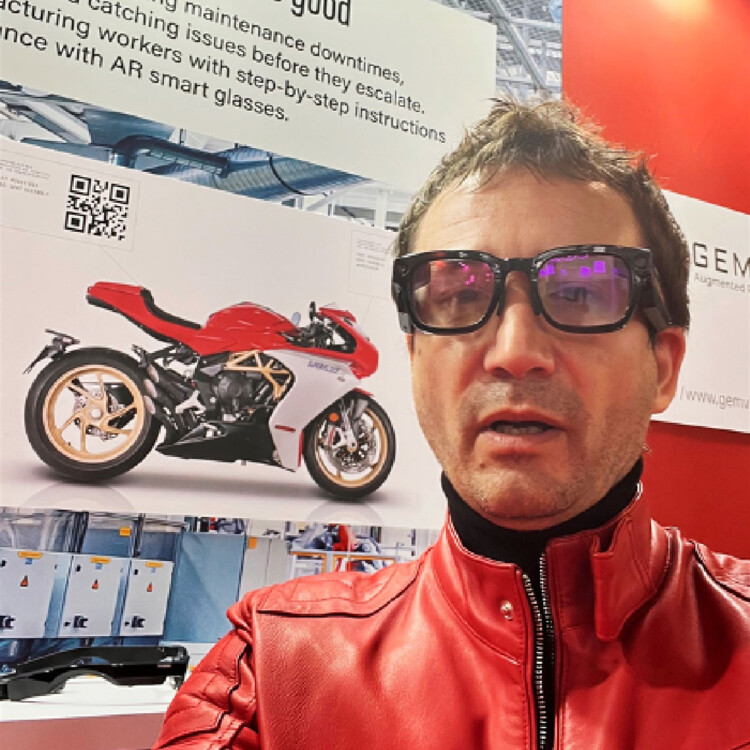
AR glasses manufactured by Vuzix.
Lastly, AR content needs to be enticing enough to make a strong consumer proposition. Indeed, without proper content, no one would use AR glasses – whether 5G native or not. Generative AI, the latest fad from Silicon Valley, may prove useful in generating new spatial content as well as catchy AR experiences.
Supporting future AR with network advances
Of course, it’s not only advances on the device and application side that will move the needle for AR, but it will also be dependent on advances on the network side of things.
Today’s 5G provides everything needed for a quality consumer-grade AR experience. However, within the next decade, network advances will take us even further into a cyber-physical continuum supported by new spectral deployments and countless sensor deployments.
At MWC 2023, Ericsson offered a taste of what is to come through cutting-edge demonstrations that included:
A digital twin use case that demonstrated the ability to create virtual replicas of physical objects and environments. This technology has the potential to significantly improve design and decision-making processes in the telecom industry by allowing testing of new capabilities without the need to deploy real hardware. Of note is the seamless integration of real-world data and digital simulation, with the digital twin serving as an interactive blueprint for innovation and problem-solving.
A sub-THz 100Gbps transmission demo highlighted the remarkable speed and capacity of 6G networks, showcasing their ability to push the boundaries of wireless connectivity and provide users with unprecedented levels of data transfer capabilities. This technological leap has the potential to benefit a multitude of applications, including real-time telemedicine, immersive entertainment experiences, and next-generation IoT devices, making the possibilities seem endless.
A further example focused on centimetric radio waves, addressing the ever-increasing demands of data-heavy applications at viable ranges. Harnessing this technology could enable a future where ultra-reliable and low-latency communication becomes the norm, paving the way for smart cities, autonomous vehicles, and advanced robotics.
Finally, Ericsson demonstrated a zero-energy joint sensing and communications system that allows devices to perform sensing and communication tasks simultaneously, without the need for batteries, using only RF-scavenging capabilities. This technology optimizes the use of energy resources and creates eco-friendly solutions that can meet the evolving needs of our connected world.
Looking ahead – the future unfolds
The shift towards advancements in XR tethered via 5G technologies and the absence of metaverse-related technology at MWC 2023 suggest that the metaverse may not have lived up to its initial hype. Despite this, the appetite for a 5G-enabled AR consumer solution is strong, but challenges such as the lack of a strong consumer-grade AR experience, high device costs, and the need for more compelling content still need to be addressed. Only time will tell if the one step backward (current metaverse narrative) and two steps forward (AR and 5G) will have any meaningful impact in creating an immersive internet for both enterprises and consumers.
What I do know for sure, though, is that there is much to look forward to with 5G continuing to be the backbone of our digitized society, and with rapid advancements being made in the industry. For instance, my "co-author" ChatGPT4 only recently burst onto the scene but is already fundamentally changing the way we communicate.
Our decision-making process is already set to be further overhauled by digital twin use cases, while the use of centimetric radio waves has the potential to usher in a new era of smart cities, autonomous vehicles, and advanced robotics. Combined with zero-energy joint sensing and communications and sub-THz 100Gbps transmission, society is set to become further digitalized and sustainable.
Overall, the future looks bright, with 5G and other advancements paving the way for a more connected, immersive, and sustainable society.
Read more Ericsson about 5G and immersive technologies
Blog post: Why the metaverse needs 5G
Blog post: An exploration of 12 metaverse use cases, one exciting use place at a time
Learn more about the rise of immersive technologies in the 5G era
Discover more insights from Mobile World Congress 2023