










Scaling up with cloud-native 5G: valuable insights and takeaways
- English
- 日本語
- Over 40 communication service providers (CSPs) globally have launched or deployed 5G standalone in public networks.
- Cloud-native 5G Core has been launched to support these networks. Additionally, Tier-1 CSPs have launched cloud-native Evolved Packet Core.
- This blog explores valuable insights and key learnings from running cloud-native core networks at scale, including how to resolve 3GPP standard ambiguities, improve 5G service offerings and achieve multi-vendor field integration.

Solution Marketing Manager

Sales support Manager, Packet core

Solution Marketing Manager
Sales support Manager, Packet core
Solution Marketing Manager
Sales support Manager, Packet core
Readiness of running cloud-native core networks at scale
The telecom industry has successfully navigated the initial phase of 5G roll-out, witnessing widespread deployment of networks and devices across various regions. Now we are entering the next phase, characterized by a steady shift to 5G standalone (SA). In May, at least 40 CSPs globally had either launched or deployed 5G SA in public networks 1.
With Ericsson’s commercial live cloud-native dual-mode 5G Core supporting the 5G SA networks of Tier-1 CSPs’ since 2020, along with our commercial live cloud-native Evolved Packet Core supporting Tier 1 5G non-standalone (NSA) networks since 2019, we’ve gained extensive experiences and learnings from the initial cloud-native core networks. Some of these cloud-native networks currently serve more than 20 million subscribers, enabling unique insights based on quality measurements and the achievement of key performance indicators.
Below we share some of these key learnings and insights.
3GPP standard ambiguities require parameter tuning
With hardening in large-scale commercial deployments in collaboration with Tier-1 CSPs, we have identified several ambiguities in terms of parameter settings within the 3GPP standards. Working closely with our customers, we have gained valuable insights into resolving these ambiguities through parameter tuning.
Re-visiting 5G service offering with improved 5GC architecture to simplify the solution
Together with large Tier 1s we have deployed the 3GPP R16 solution for hybrid core, which involves anchoring 4G/5G NSA session with the 5G Core (5GC). A re-visit of the 5G service offering with improved 5GC architecture has been beneficial to maximize 5G service communality between NSA and SA devices as well as modernizing user profiles, policy and charging for efficient future evolution.
Tuning the cloud infrastructure maximizes and secures telecom grade characteristics
Cloud infrastructure needs to support telco-grade workloads with their specific characteristic requirements. Based on our learnings, we find it crucial to secure upfront, as it is challenging to do so as an afterthought when running live traffic with deployed telco applications.
Multi-vendor field integration is easier than expected
Interoperability in multi-vendor environments is a key agenda for all CSPs. A significant learning from our experience is that to ensure successful integration, it is crucial to plan and conduct interoperability testing well in advance of field integration. Through our collaboration with service providers in live commercial 5G Core networks, we have verified approximately 30 5G Core interfaces across equipment from 20 different vendors.
Over a two-year period, interoperability tests with our end-to-end 5G SA were completed early with all major chip set and device vendors. All resulting in multi-vendor field integration with devices, RAN and 5GC interworking easier than expected.
Evolved Packed System (EPS) Fallback is the first introduction step of 5G Voice – expect three months for network tuning
When it comes to voice services, we have conducted extensive fine-tuning. Currently, EPS Fallback is the solution for smartphones to access the 5G SA network for data services until Voice over NR (VoNR) is introduced. Compared to VoNR, EPS Fallback requires less effort for the build-out and tuning of the 5G SA network since it leverages the already well-tuned 4G Voice over Long-Term Evolution ( VoLTE ) network for voice services.
However, the introduction of EPS Fallback is not without challenges. The 5G-to-4G mobility procedure during call setup adds some call setup time compared to legacy VoLTE and 4G/5G dual-connectivity, which uses the 5G NSA architecture. Nonetheless, other important key performance indicators (KPIs), such as data session setup time and data peak rate, perform better with EPS Fallback than with 4G/5G dual connectivity, thanks to the improvements brought by the 5G SA architecture.
Currently, we have 18 commercial references for 5G Voice, incorporating EPS Fallback, and among them, four also offer VoNR for commercial services.
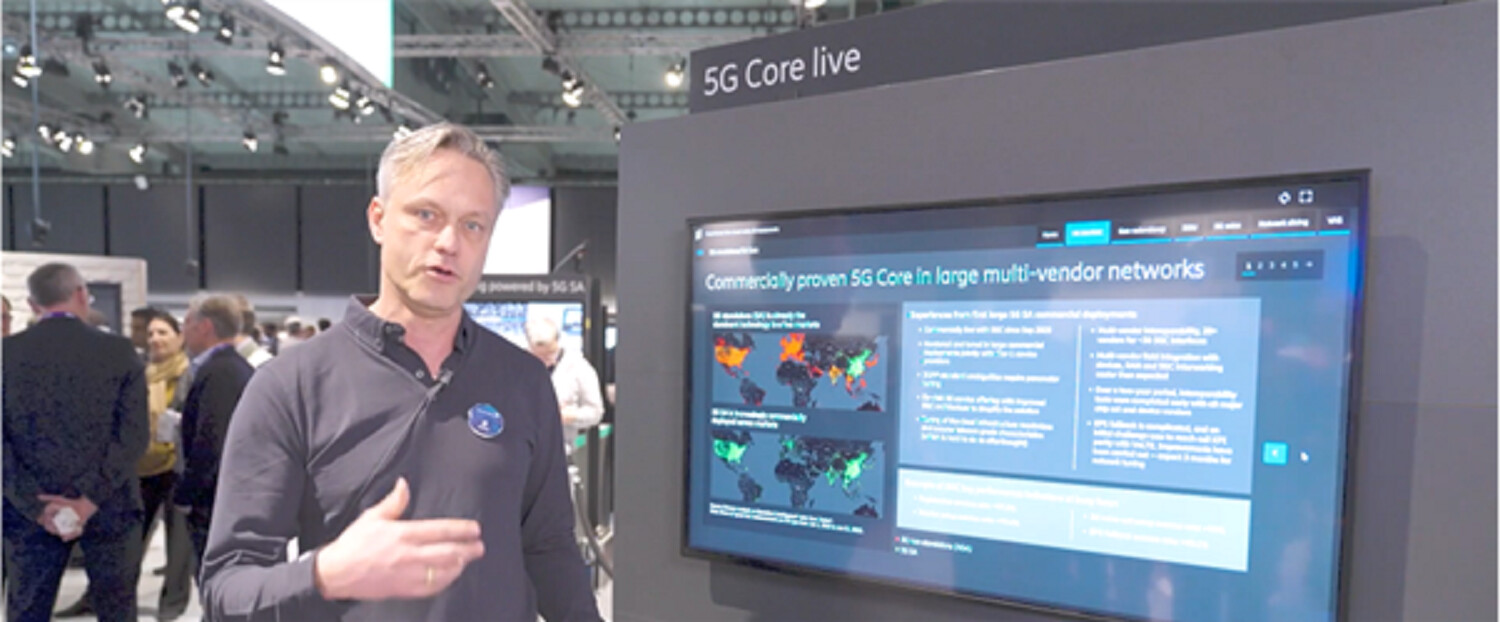
At Mobile World Congress in Barcelona earlier this year, Krister Boman, Strategic Product Manager 5G Core, Ericsson, shared key learnings and insights from cloud-native commercial deployments.
Watch the short video to learn more about experiences from 5G Core deployments:
Don’t forget the key functionalities
Of course, we cannot overlook the importance of basic core functionalities and new innovative functionalities in cloud-native core networks at scale. Let’s delve into some of them:
In-service software (ISSU) upgrade
ISSU and life cycle management of cloud-native products enables new ways of working, such as performing upgrades during daytime and eliminating costly nightly maintenance windows. This transformation journey encompasses the three Ps: People, Processes and People, and is essential, rather than optional. ISSU plays a critical role in managing the numerous changes in cloud-native core networks. Our measurements indicate an average signaling success rate of above 99.98 percent during ISSU application upgrades.
Turning now to infrastructure, let’s examine the rolling upgrade of containers-as-a-service (CaaS). Worker node draining facilitates the rolling upgrade of Kubernetes along with other cloud infrastructure upgrades or maintenance. We recommend conducting the drain procedure during a maintenance window, with traffic migration being optional. The use of Pod disruption budgets allows for the controlled drainage of worker nodes. During the CaaS rolling upgrade on Ericsson NFVI while running Ericsson dual-mode 5G Core applications, we have observed a successful average signaling rate above 99.99 percent.
Geographical redundancy
The N-way active model serves as the primary geographical redundancy model within the 5G Core service-based architecture (SBA). In this model, all instances are active and handle traffic by replicating data used in the Network Function (NF) Set model. This approach aligns with the mobility pooling model utilized in 4G networks.
For user plane functions where NF Set is not standardized, the NF active/standby geographical redundancy module is used.
Value-added service consolidation with the UPF can reduce cloud infrastructure by up to 50 percent
Value-added services, or “Gi-LAN,” consolidation play a crucial role in the context of network infrastructure and service delivery by bringing simplicity, scalability, flexibility, enhanced security, and improved network performance to service providers, enabling them to deliver high-quality and innovative services to their customers.
Value-added services consolidation is a unique feature in Ericsson Packet Core Gateway, included in our dual-mode 5G Core solution. The VAS consolidation includes software probes, integrated Packet Core Firewall, network address translation (NAT) optimization, transmission control protocol (TCP) optimization, adaptive bitrate streaming (ABR) video shaping, congestion aware and radio-friendly and large flow shaping.
The normal configuration for major CSPs is to have the UPF as a standalone component, while value-added services are implemented in separate boxes. However, when NAT, TCP optimization and firewalling are provided by different suppliers and deployed in different boxes, it results in a significant amount of East-West traffic. The Ericsson Packet Core Gateway addresses this issue by consolidating these services, allowing for the processing of all UPF user plane traffic, firewalling and TCP optimization in a single location. This reduces East-West traffic significantly. Our results indicate this approach can lead to a reduction in the cloud infrastructure by up to 50 percent.
Service providers are recognizing these advantages in their commercial live networks:
- Consolidating VAS function into the Packet Core Gateway provides simplicity, scalability and flexibility
- Consolidate functions requires less effort to deploy and operate in comparison to external solutions
- An integrated firewall offers a more flexible security solution
- Software probes enable secure and efficient issue detection and pinpointing
- Optimization enhances end-to-end network KPIs
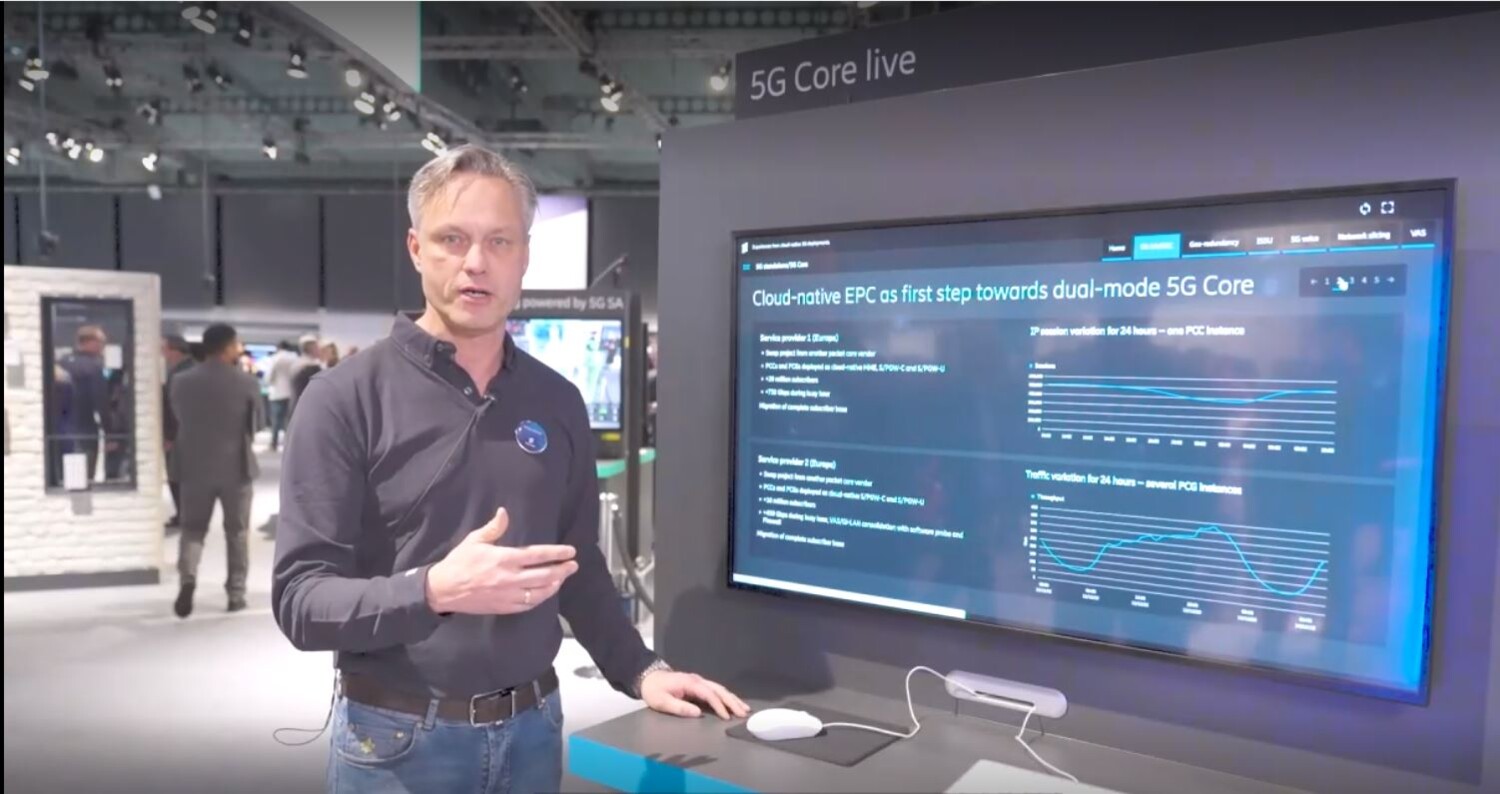
Watch Krister Boman, below, discuss the scaling up of cloud-native in core networks and the consolidation of value-added services.
A proven one core network solution
In summary, Ericsson’s dual-mode combines EPC and 5GC network functions into a common cloud-native platform, enabling efficient and seamless migration to 5G. This solution has been successfully handling commercial live traffic since 2019, with some of these cloud-native networks currently serving more than 20 million subscribers.
Overall, the experiences gained from working closely with leading CSPs in running cloud-native core networks at scale have provided valuable insights, key learnings and successful deployments. These experiences ultimately pave the way for an efficient and seamless migration to 5G, empowering service providers to deliver high-quality and innovative services to their customers.
Read more:
The cloud-native 5G Core network guide series
5G Core - get more insights and inspiration
1) GSA: 5G-Market Snapshot, May 2023