- English
- 简体中文
The basics explained



Benefits of autonomous networks






How it works: from intent management to closed-loop assurance
Business intents are expressed, requested and confirmed through an intent management loop that takes place across each autonomous domain. New services are proposed, evaluated and requested (via the orchestration function) based on their suitability to satisfy the intent. Through a separate closed cognitive loop, the process of intent assurance then begins.
Autonomous network agents are put to work to interpret intents and assess the current network state. This takes place through an assurance agent that collects, analyses and leverages network data to monitor and assess the health of the newly activated service. If the intent is not met, a closed loop activity is triggered.
When a closed loop activity is triggered, utility-based evaluation helps the system determine the most valuable course of action, even in the face of conflicting requirements or new conditions. This allows for dynamic prioritization and decision-making aligned with business goals.
Through an actuation agent, the network takes corrective action – generating the required modification requests through the orchestration function. Based on current resources and topology, the service(s) is re-designed, calculating the appropriate execution plan that will be used to alter the resource configurations in the network.
Follow the journey to autonomous networks




The AI pillars of autonomous networks




Dive deeper into autonomous technologies




Autonomous architecture: go behind the intent-based, multi-layer approach
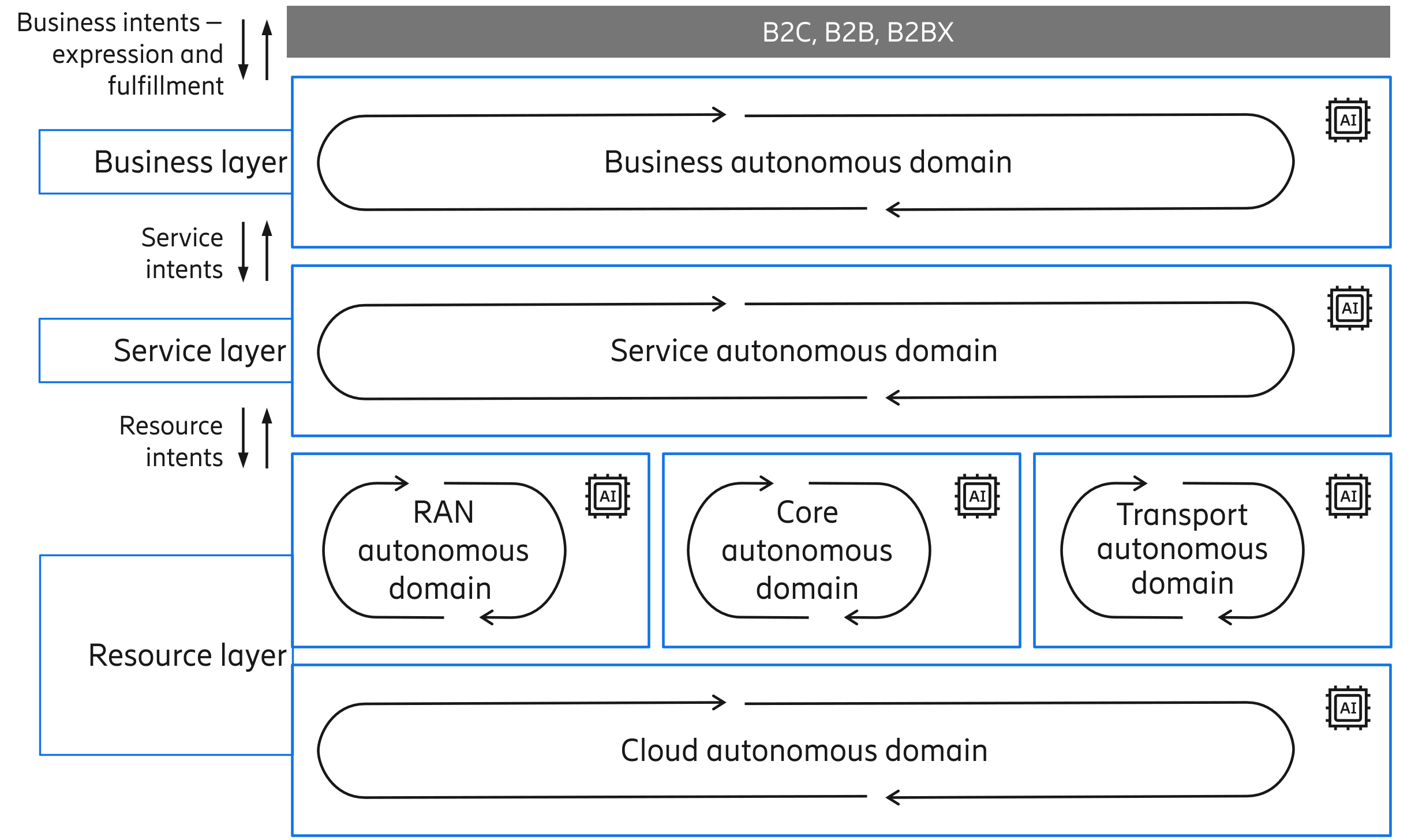
The role of intent at each layer
At the business layer, intent captures customer expectations and business goals, replacing traditional service level objectives (SLOs) with dynamic, goal-driven requirements. These intents are defined during service ordering and negotiated through APIs, then passed to the service layer for fulfillment. Here, the focus is on intent-based assurance that monitors service performance, predicts SLA violations and takes corrective actions based on business value.
At the service layer, business intents are translated into actionable service and resource requirements. Here, the service orchestrator dynamically selects and configures services based on intent. The system continuously monitors compliance and only acts when requirements are not met. This layer decouples service logic from specific resources, allowing more flexible and AI-driven orchestration. It enables real-time autonomous healing, optimization and service adaptation, ensuring that services evolve with changing conditions and demands.
In the network domains in the resource layer, intent is handled at two levels: the management layer and the network function layer. For example, the RAN domain’s intent manager ensures compliance with service-layer requirements using analytics, orchestration and AI agents. If deemed necessary, existing service instances can be reshaped to use new or more efficient resources. Intent-aware RAN functions monitor real-time performance and adjust configurations or control loops to meet evolving requirements. This and similar implementations for the other network domains enable the network to self-optimize and evolve based on overarching business objectives.
Accelerate your journey to autonomous networks with Ericsson
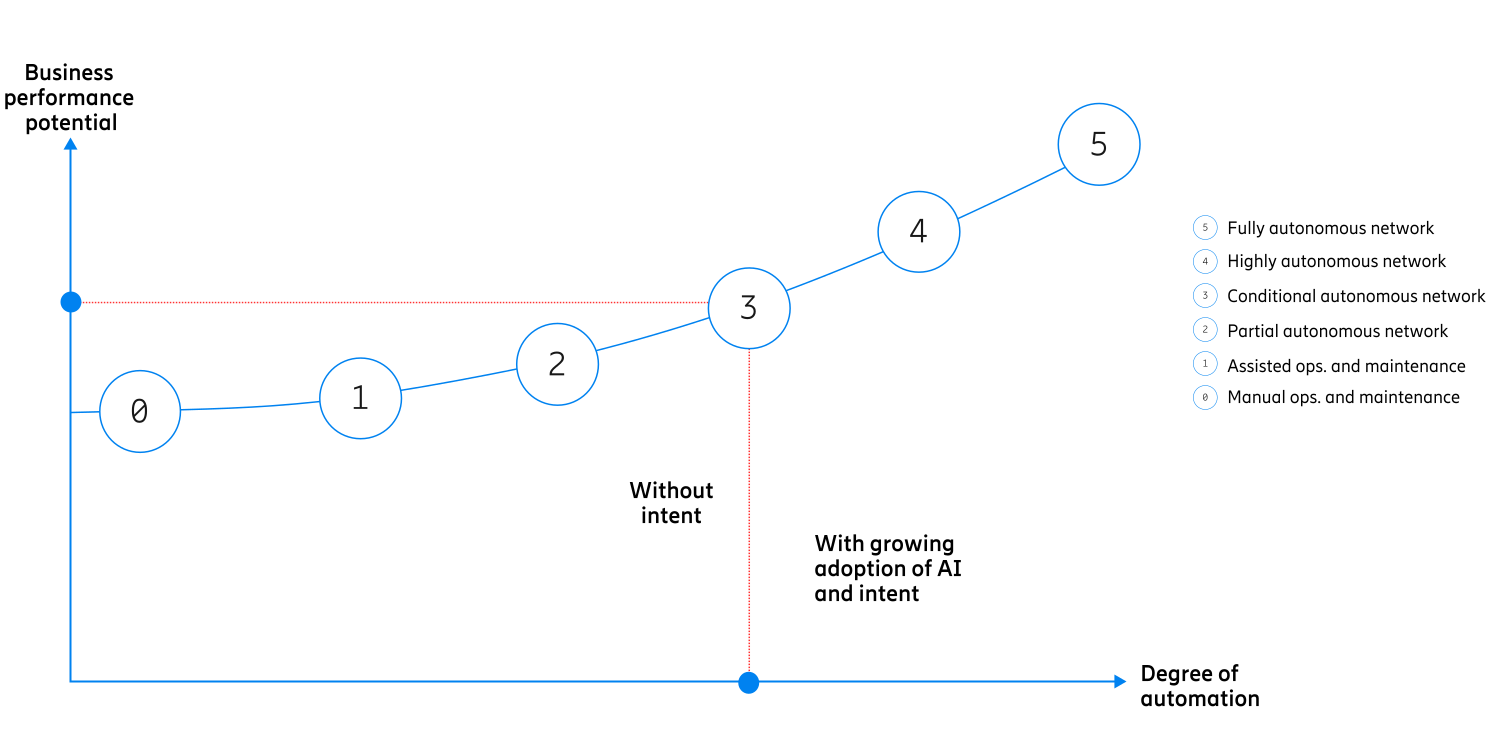
Explore our OSS/BSS e-brief to find out what’s needed to advance your journey.
CSPs’ transformation journeys toward autonomous Core networks

Setting the direction for your autonomous network
Embarking on the journey toward autonomous networks requires a carefully crafted strategic roadmap that harmonizes technological advancements and investments with your overarching business goals.
By setting a strategic direction, you can effectively navigate the complexities of transitioning to autonomous networks, ensuring that your technological investments are aligned with and drive your business goals. This balanced approach not only facilitates innovation but also guarantees that your network evolution is sustainable and value-driven.
Deconstruct new services
Transforming business outcomes into precise functional requirements is crucial for transitioning from "best effort" services to guaranteeing premium Service Level Agreements (SLAs). This involves:
- Understanding business goals: Clearly define what success looks like for your organization and how autonomous networks can support those objectives.
- Mapping requirements: Break down these goals into specific technical and operational requirements that the network must fulfill to deliver on premium SLAs.
- Iterative refinement: Continually refine these requirements as your business and technological landscape evolves.
Choose the right path
Selecting the optimal route towards autonomous networks requires alignment with your unique business objectives. Considerations include:
- Business alignment: Align network capabilities with strategic business priorities, such as improving customer experience or reducing operational costs.
- Scalability and flexibility: Choose a path that allows for scalability and adaptability to future technological advancements.
- Risk management: Evaluate and mitigate potential risks associated with the transition to higher levels of network autonomy.
Invest for value
Developing an investment strategy for 5G autonomous networks requires a guiding framework that ensures alignment with long-term goals. Key elements include:
- Strategic prioritization: Prioritize investments based on potential ROI and alignment with business objectives.
- Technology assessment: Continuously evaluate emerging technologies and their potential impact on your network strategy.
- Value realization: Focus on realizing tangible benefits from investments through improved network performance and new service offerings.