











Media research and standardization
Media codecs are essential for many of the most exciting technologies, such as high-quality streaming and video conferencing, immersive VR/AR and games, remote control, and AI-driven applications. Ericsson's substantial R&D investments have resulted in numerous global standards, which are widely implemented in devices and services that provide these technologies worldwide.
Media is a cornerstone of the modern digital economy
Media currently represents more than 75 percent of all traffic in both mobile and fixed networks (Ericsson Mobility Report, November 2025). Video streaming, audio services, video conferencing, interactive gaming, and emerging agentic AI applications all rely on high-quality, low-latency media delivery.
While traditional media consumption benefits from high-resolution video such as 4K Ultra High Definition with High Dynamic Range (HDR) and high-fidelity stereo audio, emerging formats offer richer and more immersive experiences for AR/VR applications.
Next-generation experiences demand greater network efficiency
Uncompressed media would require extremely high bitrates, which makes compression necessary for transmission and storage. Modern audio and video codecs can reduce data rates to below one percent of the original without impacting end-user quality.
As media experiences become richer and more interactive, continued innovation in media technology is crucial to support growing media traffic volumes while ensuring high quality and optimized network performance.


Ericsson is driving innovation in media
Ericsson’s substantial R&D investments have resulted in numerous global standards widely implemented in devices and services worldwide. Any device or service implementing these standards is using Ericsson’s patents, accessible via our consumer electronics patent licensing program.
Media codecs
Media codecs – compression systems for audio and video – are fundamental to streaming media over the Internet. They reduce the amount of data required to store or transmit media signals, while preserving as much perceptual quality as possible.
Audio and video are processed by separate, specific codecs. The required bitrate can be reduced to less than one percent of the original.
Codec efficiency is a major factor. For video it has roughly doubled every decade, for a given quality. Modern codecs also enable richer experiences like 3D video and immersive audio as well as a wide range of optimizations.
Media transport
Media transport involves several aspects, including identifying source and destination, dealing with transmission errors, optimizing routes through the network, security and encryption, synchronization, and a variety of other operational needs.
The most prominent media examples are audio and video. Once audio and video codecs have generated a bitstream, specialized media transport technologies are needed for reliable content delivery over the network.
The compressed bitstream is divided into packets and sent using methods designed to adapt to changing conditions. Technologies such as adaptive bitrate streaming (MPEG-DASH/HLS), L4S, QUIC, and RTP help ensure secure and uninterrupted content delivery even across networks with variable bandwidths.
QoE and QoS
Ericsson contributes heavily to methods for measuring Quality of Experience (QoE) and for translating between Quality of Service (QoS) and QoE, something that is crucial for evaluating how well media codecs and delivery systems perform.
QoE describes the quality as perceived by the user and is highly dependent on context and content. QoS, on the other hand, measures technical parameters, such as bandwidth, latency, and packet‑loss.
By understanding how QoS influences QoE, technical media transport systems can be optimized to improve the end‑user experience, regardless whether someone is watching a video or taking part in a video call.
Video coding technologies
Ericsson has been a key contributor in shaping today’s video streaming technology landscape. Ericsson’s innovations form the foundation of leading video codecs such as AVC/H.264 and HEVC/H.265. In particular, the HEVC/H.265 codec, which has seen widespread deployment in recent years, significantly optimized the streaming of high-quality video formats like HD, 4K, and High Dynamic Range (HDR).
Beyond video codecs, Ericsson has been a leading contributor to video streaming standards such as the MPEG File Format and MPEG DASH (Dynamic Adaptive Streaming over HTTP), which revolutionized how video is streamed over the Internet. These and many other contributions from Ericsson have enabled the delivery of new and immersive entertainment experiences for consumers on any device on any network worldwide.
Video streaming has been improved by substantial advancements in codec efficiency over the past two decades. This trend continues, fueled by the growing use of video across all sectors of the digital economy, the emergence of new immersive formats, and user- or computer-generated content. There is also a push for more content interactivity, which relies on low-latency streaming capabilities. Meeting these new requirements demands the continued evolution of video codecs and streaming technology, both in terms of compression efficiency and flexible functionality.
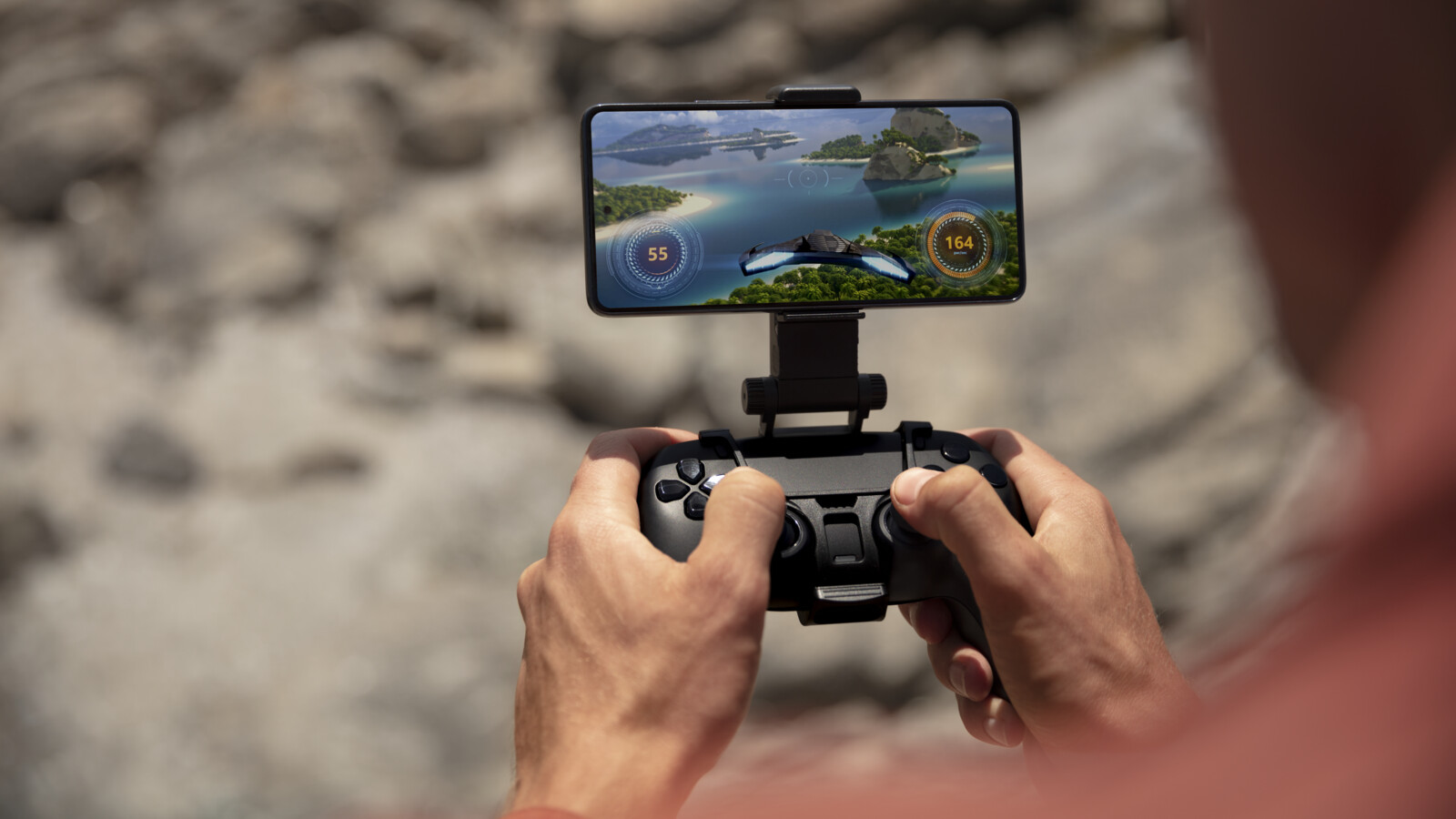
To address these requirements, Ericsson, along with several other leading companies, finalized the development of the Versatile Video Coding (VVC) standard in 2020. VVC/H.266, standardized by MPEG and ITU-T, achieves 50 percent greater compression efficiency compared to HEVC/H.265 and surpasses all previous video coding technologies. In addition to its improved compression performance, VVC offers versatile and flexible functionality that can be tailored to specific application needs, whether enabling volumetric 3D video streaming, ultra-low latency mobile gaming, or machine-to-machine communication.
Ericsson is one of the top contributors to major video compression standards, including H.264 (AVC), H.265 (HEVC), and H.266 (VVC). As a result, Ericsson’s technology is included in virtually every device that renders video.

Audio coding technologies
Ericsson has been a strong contributor of audio technology for several decades, supporting the whole spectrum of use cases from conversational services to ultra-low latency, high-resolution audio, and advanced immersive rendering.
Audio coding has been a core technology in mobile communication systems since the earliest digital generations, for example the GSM system. Without speech signal compression, service coverage would never have been sufficient to ensure the commercial success of these systems. Ericsson is one of the main contributors to all 3GPP-standardized audio compression systems, including AMR (Adaptive Multi-Rate), AMR-WB (the wideband variant of AMR), EVS (Enhanced Voice Services), and IVAS (Immersive Voice and Audio Services).
With each new generation, audio bandwidth has increased, allowing a larger portion of the audible signal to be transmitted. This has led to more natural-sounding conversations. The later codec generations (EVS and IVAS) transmit the complete audible spectrum, delivering transparent quality – meaning audio on the receiving end is indistinguishable from the original audio at the transmitting end.
Earlier codecs were highly optimized for speech signals, resulting in compact representations for speech but disappointing quality for music or general audio. The latest generation codecs (EVS and IVAS) are equally optimized for speech and other audio types, such as music and background sounds, effortlessly delivering HiFi audio experiences.
Beyond mobile devices, it is essential that the quality delivered by the mobile system is preserved in accessories like wireless headphones or earbuds, with minimal additional latency. To achieve this, Ericsson contributed to the development of LC3 (Low Complexity Communication Codec) for Bluetooth LE (low-energy) audio, significantly improving audio experiences over Bluetooth connections. The enhanced version, LC3plus, is standardized in ETSI and provides high-resolution, ultra-low latency audio suitable for various applications, including professional microphones, high-end audio speakers, and similar devices.
With the new IVAS codec, cellular systems are prepared for immersive audio content. Now, it is about delivering not only crystal-clear audio but also the complete sound scene for an authentic “being there” experience.
As the share of streamed audio content over mobile networks continues to rise, over-the-top content with associated audio makes up a major part of today’s network traffic. While legacy codecs are generally sufficient for mono and stereo audio, the new MPEG-I Immersive Audio standard offers high-quality immersive audio for advanced 6 Degrees of Freedom (6DoF) rendering of dynamic XR scenes. This enables entirely new experiences, where listeners can move naturally within scenes and perceive accurately rendered audio based on their current position and pose.
Enhanced voice services (EVS)
The EVS codec, standardized by 3GPP, provides efficient coding of fullband mono speech and audio (up to a 20 kHz audio bandwidth) with high robustness for delay jitter and packet losses. The main applications include high-quality telephony, teleconferencing, and audio streaming. Today, EVS is implemented in nearly all new mobile phones and devices that support voice services.
Low Complexity Communication Codec Plus (LC3plus)
LC3plus is a new high-quality speech and audio codec standardized by ETSI. The main applications are robust short-range transmissions and scenarios requiring ultra-low delay and high-resolution audio streaming. LC3plus is used in devices that require clear, high-quality audio, such as wireless speakers and headphones.
Immersive Voice and Audio Service (IVAS)
The IVAS codec, standardized by 3GPP, provides low-latency coding of all common spatial audio formats (stereo, multi-channel, ambisonics, and objects), enabling immersive communication, live audio streaming, and XR applications. IVAS also supports a new metadata-assisted spatial audio format for optimized spatial audio capture on mobile devices and provides immersive rendering for both headphone and loudspeaker listening. The codec is fully backward compatible with EVS and AMR-WB, ensuring interoperability with legacy devices.
Ericsson played a leading role in IVAS standardization, making significant technology contributions to the codec candidate that was developed through public collaboration and selected by 3GPP as the official IVAS codec in August 2023.
ISO/IEC MPEG-I Immersive Audio
The MPEG-I Immersive Audio standard is a high-quality system for rendering and representing spatial audio with 6 Degrees of Freedom (6DoF). It offers a variety of tools and effects for creating realistic spatial audio scenes, including early reflections, reverberation, Doppler effect, and acoustics coupling of connected rooms. Additionally, it provides new efficient representations of volumetric audio sources and supports procedural audio with allowing real-time generation of audio signals, for example the sound of a car engine changing with RPM and load, or wind sounds.
MPEG-I Immersive Audio gives content creators the ability to design dynamic audio environments of the highest quality in compact format representations, rendered for both loudspeakers and headphones. Its 6DoF capabilities makes it ideal for complex XR scenes, offering a truly immersive experience as users can move freely within the scene.
Ericsson is among the companies that provided the reference model in the MPEG-I standardization and continues to support the ongoing development of the ISO/IEC MPEG standard.
Learn more
Articles, blogposts, and news
Research papers
Explore some of our peer-reviewed research papers