











Five paths to resilience
Different starting points mean enterprises take different paths towards resilience.
Enterprise approaches resilience
Companies differ in how they carry out their business objectives depending on their size, service/product type, industry sector and capital available, among other factors.
In this study, we identified five paths to resilience that the surveyed companies have taken. The foundation of these paths is based on how decision-makers perceive their companies. The five groups are “Employee-led”, “Agile and cost-efficient”, “Automation first”, ”Sustainability pays off”, and “Innovation through digitalization.”
Despite several differences between these paths, some characteristics are also shared. As shown in figure 10, innovation is, to varying degrees, a key component in all five paths, as is proactive risk management and being environmentally sustainable. Digitalization is another key component for all paths except “Employee-led.” In the following sub-chapters, we will take a closer look at these 5 paths.
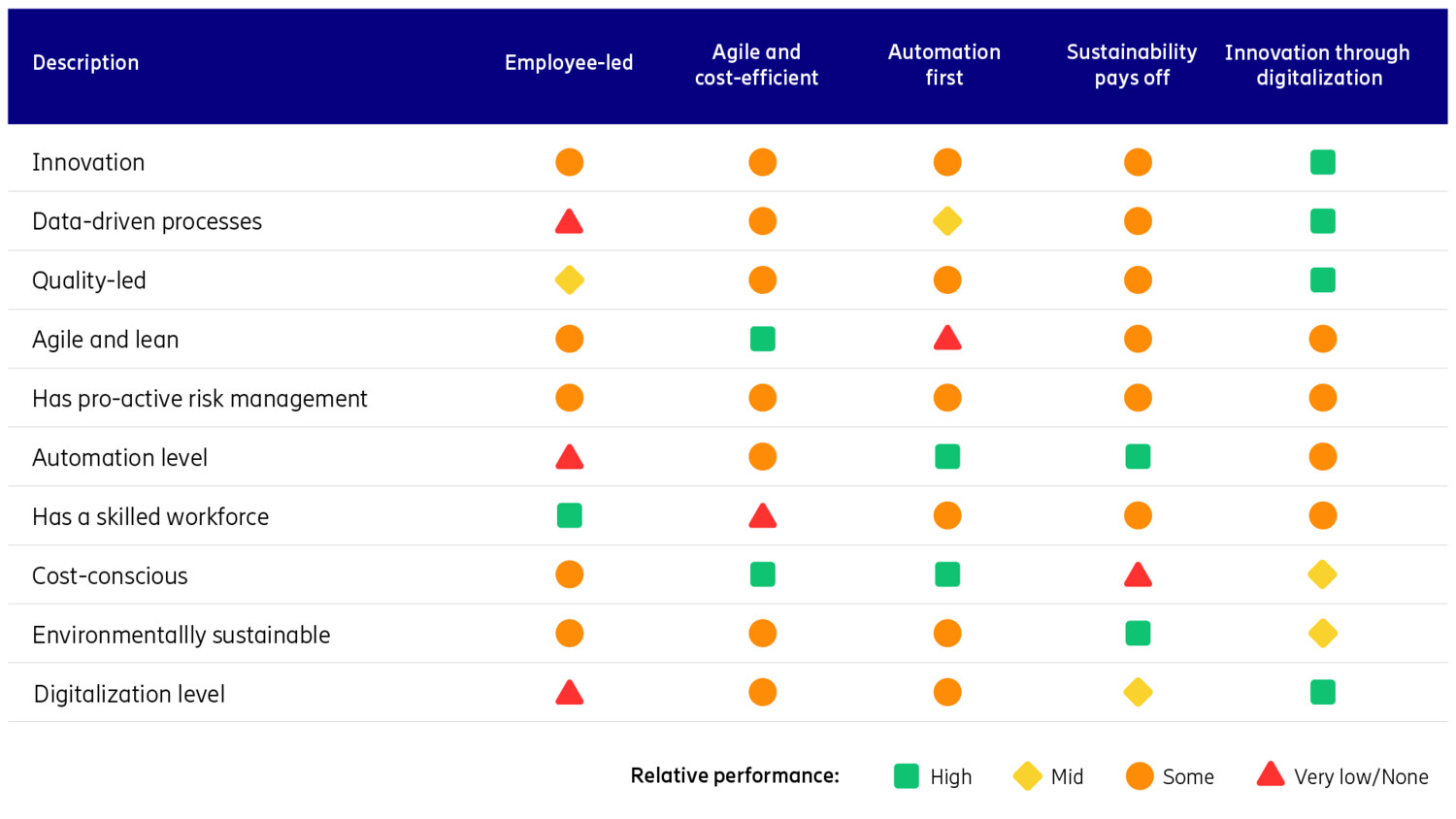
Figure 10: Overview of key characteristics for each of the five paths to resilience.

Employee-led
About 1 out of 5 surveyed enterprises focus more on employees, their skills, and work quality. Having the financial muscle to invest in employees with the right skills and upskilling existing employees can lead to further financial strength, thus creating a virtuous circle.
Amongst those taking the employee-led path, resilience is often defined as being financially strong. Enterprises on this path put as much trust as enterprises in other paths into ICT solution areas such as cloud, 5G and telepresence to increase their resilience. On the other hand, they are less trusting of AI, AR/VR and remote-controlled vehicles and machines. These enterprises have, on average, the lowest share of high-resilience ratings – more than 10 percentage points lower than the path with the highest share.
It is worth mentioning that these relative differences are rather small – at most, an 11-percentage point shift between agreeing to a great extent and agreeing to some extent. Almost none disagree on any of the resilience characteristics, regardless of their path.
Agile and cost-efficient
Only 9 percent of the surveyed enterprises have taken this path, where key differentiators are cost-efficiency and being lean and agile. Offshoring and geographical relocation are key resilience strategies, which can be linked to their focus on cost-efficiency.
They have a higher-than-average assessment of the risk of disruptive events but are fairly average in the extent of their digitalization efforts. They put as much trust as others into ICT-enabled solutions such as 5G, AR/VR, telepresence and remote control solutions as resilience enablers. When it comes to AI and cyber security solutions, a lower share of enterprises on this path put their trust there.
Though the enterprises following this path are agile (quick to react to changes), they are perhaps not as proactive as other enterprises when it comes to resilience. Similar to the employee-led path, enterprises on this path tend to rate themselves as less resilient compared to most other paths.


Automation first
One out of four of the enterprises surveyed, mainly larger, more traditionally oriented enterprises, are more focused on cost efficiency and automation. Through a continued focus on automation rather than technological innovation, resilience can be achieved while keeping productivity up.
They also tend to put their trust in ICT solutions such as 5G, AR/VR and remote-control solutions as resilience enablers. At the same time, fewer have confidence in cloud, telepresence, AI and cyber security solutions.
Nearly half of enterprises taking this path came out of the pandemic better-off than before, which is 12 percentage points higher than the average enterprise. This also fits well with their high estimation of their resilience, as this path has the largest share of high-resilience rates – more than 10 percentage points higher than the path with the lowest share.
Sustainability pays off
One out of 5 surveyed enterprises followed a path focused on being environmentally sustainable. This is also the only path where enterprises act less cost-consciously, implying that making sustainability a top priority means accepting that it could come at a short-term cost for these companies.
These enterprises have a somewhat higher trust in remote control and AR/VR solutions and average trust in 5G as resilience enablers. They show a relatively lower level of confidence in cloud, telepresence and cyber security solutions.
Nevertheless, they also came out of the pandemic better than the average company. This path has the second-largest share of high-resilience-rated companies, 5 percentage points higher than the path with the lowest share.

Innovation through digitalization
One out of 4 of the surveyed enterprises had improved their profitability by following a path that is as cost-conscious as other paths and where focus on innovation, data-driven processes and data mining are key defining features. Enterprises on this path are typically not traditional at all.
They also put significantly higher trust into almost all of the resilience-enabling ICT solutions, such as cloud, AR/VR, telepresence, e-commerce, AI and cyber security. They also highly value 5G, especially its high speed and low latency capabilities and indoor and outdoor coverage. Enterprises on this path are on par with the rest regarding remote control solutions. They are also more active with regard to business model innovation, investing in digitalization and cybersecurity.
It can also be noted that while they do not describe themselves as being particularly environmentally sustainable companies, they nevertheless seem to have taken many steps to be sustainable, even more than enterprises on the “Sustainability pays off” path. By being forward-looking, innovative and utilizing digitalization opportunities wherever possible, this path enables a digital resilience that has helped these enterprises come out of the pandemic better off.
Comparing the incomparable
Individual enterprises choose their path based on their unique starting points and business focus, enabling them to make the most suitable and logical steps toward resilience. Therefore, it is neither simple nor perhaps fair to compare these five paths with each other. Nonetheless, the illustration below is a high-level summary comparing the paths (figure 11).
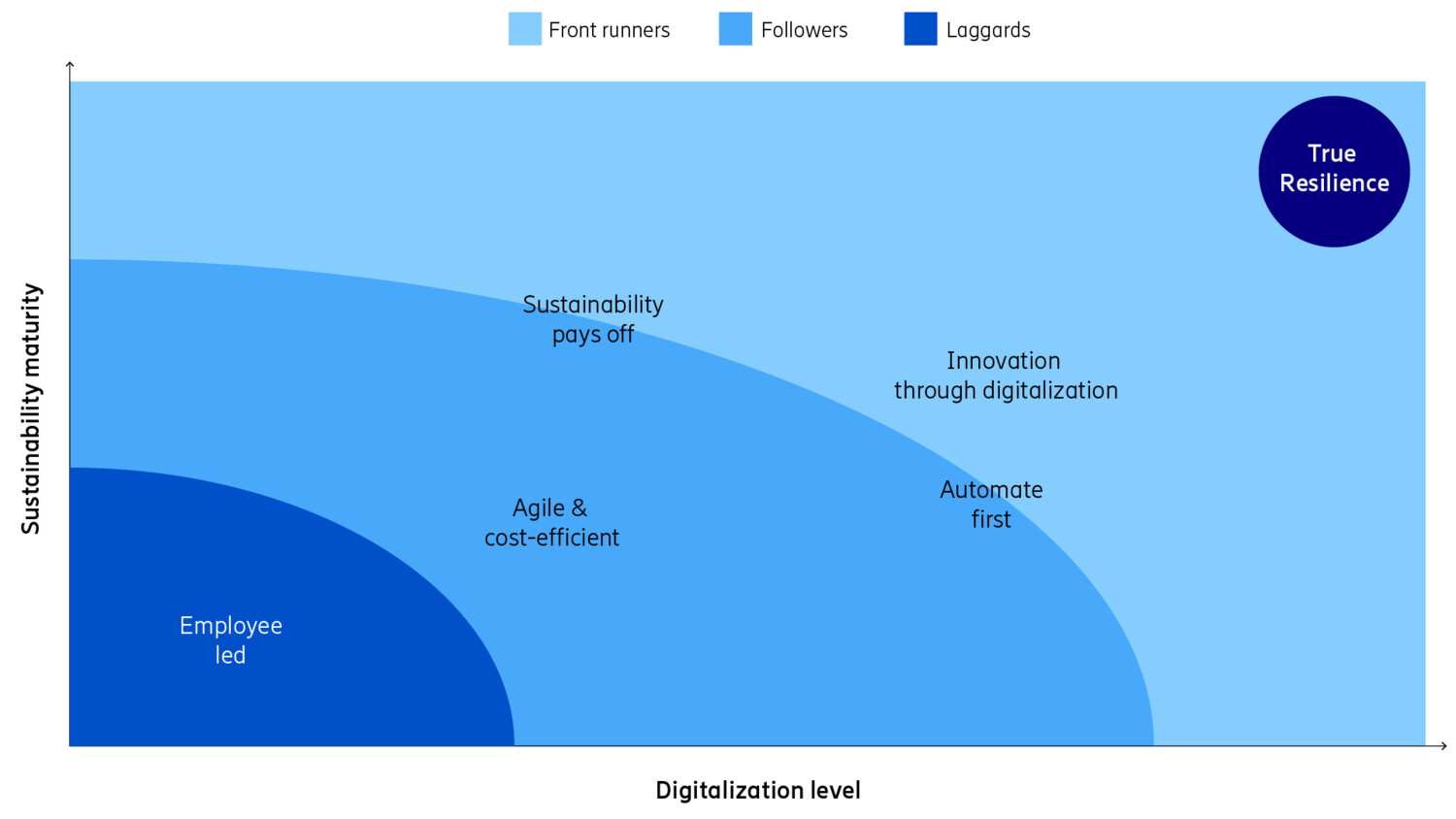
Figure 11: Plotting the five paths to resilience based on their respective average digitalization level and sustainability maturity.
By plotting out the paths on a chart with sustainability maturity on the y-axis, and digitalization level on the x-axis, the end goal of true, long-term resilience ends up in the upper right corner – based on the understanding that no long-term resilience will be possible unless we, as a society, manage to become environmentally sustainable.
Enterprises on the “Innovation through digitalization” path appear as front runners on this journey, followed by “Sustainability pays off” and “Automate first”, both on the border between followers and front-runners. Enterprises on the “Agile & cost-efficient” path are firmly in the follower space, and enterprises on the “Employee led” path remain laggards.