









How to deliver an ambitious 5G venue experience without a major fiber upgrade

Head of Account Solutions, Americas
Head of Account Solutions, Americas
Head of Account Solutions, Americas
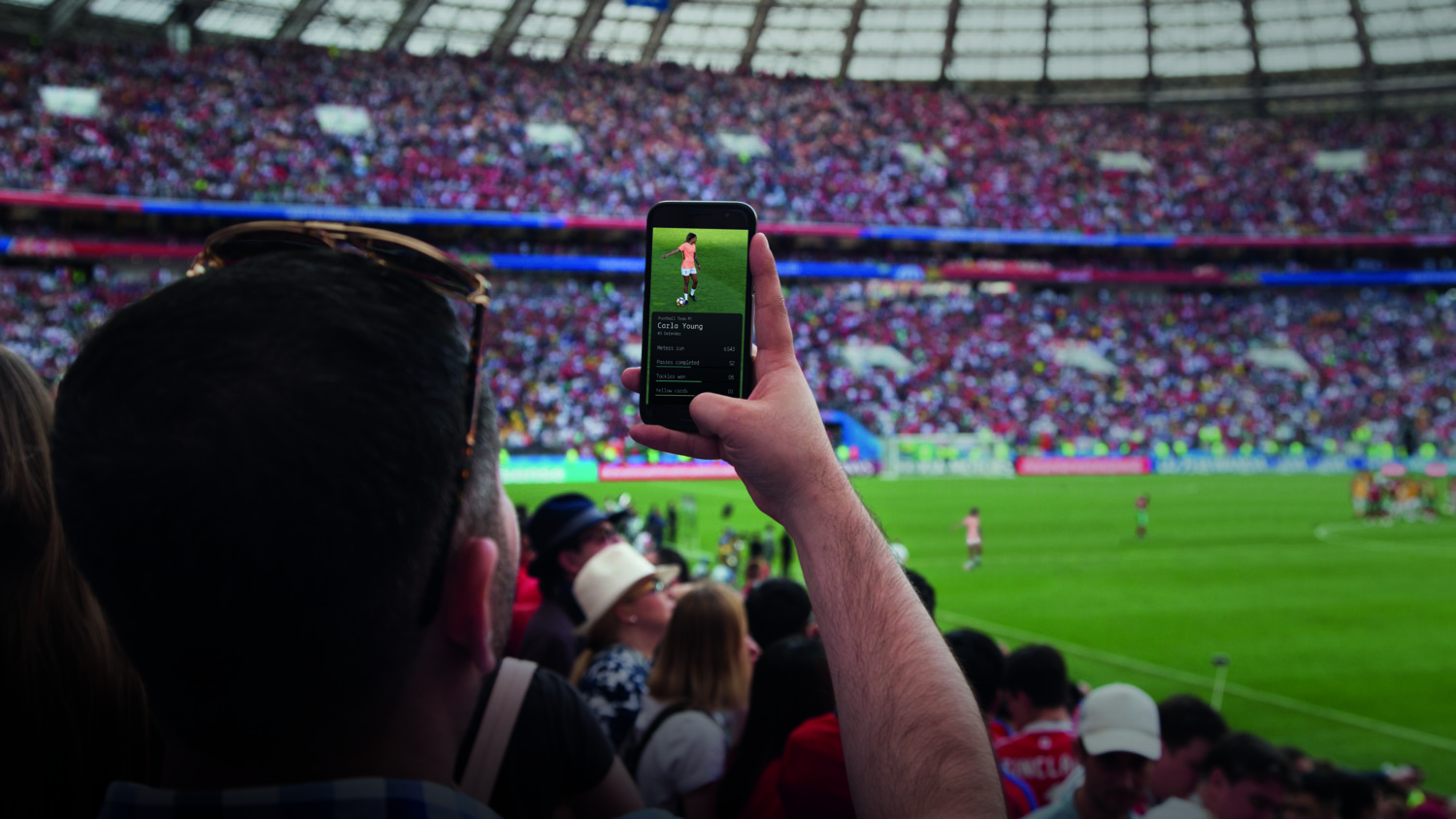
There is a simple reason why this happens. There are just too many people trying to access and use the same spectrum at that location, overloading the radio site. It’s a simple case of mismatched supply and demand.
The remedy is equally simple. Communications Service Providers (CSPs) just need to make more radio capacity available at that location, and, “voilà”, problem solved! But, as we all know this is easier said than done.
Background
There are several approaches CSPs have taken to address this situation and keep subscribers happy. In some cases, the CSP deploys temporary cell sites to augment the permanent network by using Cell on Wheels (COWs) or Cell on Light Trucks (COLTs). In other cases, users have the option of looking for a Wi-Fi connection (but that’s a topic for a different blog). A third approach, becoming increasingly popular, is RAN densification. In other words, deploying small cells in these targeted locations and implementing dynamic spectrum sharing to boost RAN performance. Sounds good, right?
But adding new micro radio/Remote Radio Units (RRUs) and associated gNBs to specific locations like stadiums, venues, malls, campuses and the like comes with a new set of challenges. One of the main challenges being connectivity—basically, how to connect all these small cells to the network from these specific locations. It’s harder than you might imagine.
Here’s why. Many venues, stadiums, malls, hospitals, corporate HQs, and the like were designed and built over 30 years ago. For example, the average professional American National Football League stadium is 31 years old. College football stadiums are even older, averaging 54 years old. National Hockey League stadiums 30 years old, and Major League Baseball stadiums average 50 years old. When most of these structures were designed and built, 2G mobile network service was not available to consumers! As such, these locations lack the digital infrastructure, especially fiber-optic cabling, needed for connectivity of the latest RAN technologies. Moreover, no two buildings are the same, so what might work for one location may not work so well in another.
In response to subscriber demands for enhanced mobile network coverage and performance, distributed antenna systems (DAS) have been widely deployed for decades in these types of locations. The main benefit of DAS for the property owner is that DAS are carrier-neutral. This means that the system can be shared by multiple CSPs, and have proven to scale with a variety of RAN and private network frequencies.
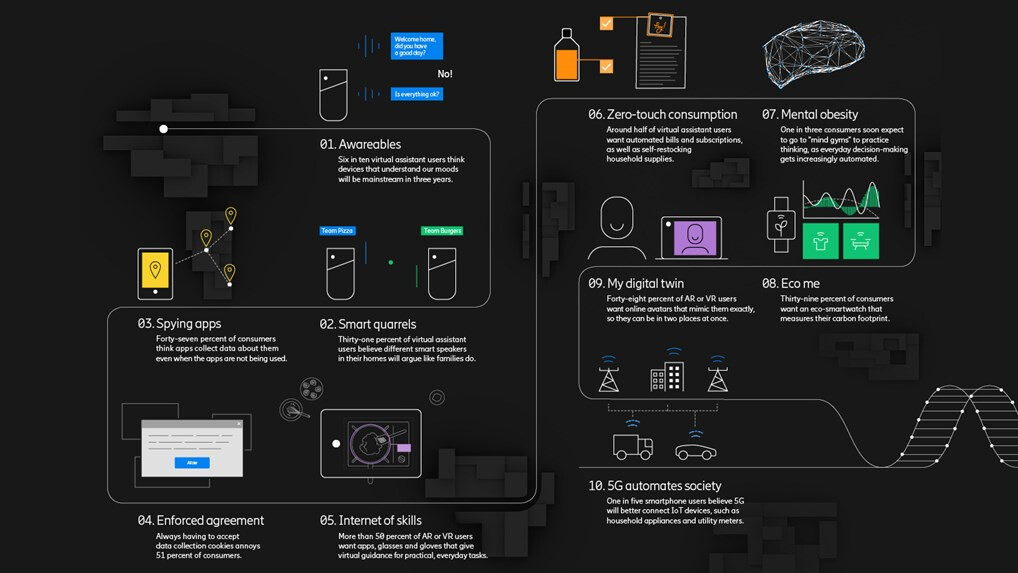
But 5G technologies, like 5G NR in millimeter wave, mid- and high-band radios, and higher order MIMO Active Antenna Systems (for example, up to 64T64R) will struggle to be enabled by a passive/active DAS. This means the promise and benefits of 5G, from enhanced mobile broadband, to new applications riding on top of the network like Internet of Things (IoT), real-time AR/VR and immersive media may not be possible to provide on existing DAS systems. For more on 5G use cases see: Consumer lab
So … what to do?
With RAN densification and centralization bringing outdoor small cells and indoor RAN options to venues, stadiums, malls, hospitals and corporate HQs, what’s the best way to connect all these RAN components? The good news is that while these physical buildings are older, most pre-dating the availability of wide scale mobile service, there have been upgrades to their fiber-optic cable plant over the years. However, with the advent of advanced LTE and 5G, oftentimes there are not enough extra fiber pairs available for the new RAN additions.
Based on Ericsson’s experience in designing and deploying RAN networks for venues, stadiums, malls, hospitals and corporate HQs, we’ve solved this RAN connectivity problem with the Optical Fronthaul 6000. For example, we recently upgraded the Baku Olympic Stadium to ultra-high capacity using Ericsson Elastic RAN transported over an Ericsson Fronthaul 6000 network. Ericsson’s Fronthaul 6000 serves all RAN connectivity with a superior and flexible 5G optical platform. It is a flexible and cost-efficient solution for Ethernet, CPRI and eCPRI transport, separately or together. It offers market-leading fiber density, 25G capacity and negligible latency to achieve leading-edge 5G radio performance, even in the densest deployment areas, where RAN centralization plays an increasingly important role.
Ericsson offers several options for RRU fronthaul based on performance, scale and cost. When building your venue fronthaul network, you need to use the right tool for the job. The options in the fronthaul toolkit include:
In actual deployments, it is not uncommon to use a combination of several technologies to fulfill the needs of a specific venue.
Passive optical fronthaul. Passive optical fronthaul is ideally suited for deployments optimized for space and power (for instance, small cells), as it is small and very cost effective. Passive solutions are flexible and can be mounted out of sight in a pole, handhole or small cell enclosure. Passive fronthaul does not require any additional power, and colored optics are simply plugged directly into the RRU and corresponding gNB, connected via an optical add/drop filter. The filters are protocol and bitrate agnostic and can transport any mix of CPRI, eCPRI, and/or Ethernet service. However, for optical connectivity fault and performance monitoring you must rely on the radio and baseband to monitor the passive optical infrastructure. Passive fronthaul also requires good planning, administration and installation to ensure that the ports and wavelengths align correctly.
Active optical fronthaul. Active fronthaul is commonly used for larger sites with many radios, or where fiber monitoring and management is critical. Typically, in an active solution, the transponder converts up to 24 gray services to specific DWDM wavelengths and multiplexes them onto a single fiber strand. This makes it easy to convert previously installed radios to Dense Wavelength Division Multiplexing (DWDM) without requiring change to the optics in the radios already installed. The main benefit of active fronthaul is the integrated optical performance and fault management capabilities and a clear demarcation between the DWDM transport domain and the gray optics radio domain.
Semi-passive/active fronthaul. This is a hybrid deployment solution that balances the benefits and challenges of both approaches. Here an active transponder is placed at either the central site where the gNBs are located (semi-passive) or at the remote site (semi-active). In semi-passive solutions, the pluggable DWDM SFP+ are inserted directly in the radios and the transponder is placed at the gNB hub. A semi-passive configuration allows for simplified OA&M for the transport network providing single point of access for DWDM operations, and compatibility with any baseband and router interface, while keeping the cell site small. In semi-active fronthaul, the pluggable DWDM SFP+ are inserted in the baseband at the hub and the transponder is placed close to the RRU locations. A semi-active configuration allows for cost and footprint saving at the gNB hub site which may be important for colocation cages or when communication room space is limited. It retains many of the advantages of a fully active solution simplifying OA&M at remote sites compared to passive solutions.
See how Ericsson’s Fronthaul 6000 is delivering 5G RAN connectivity today.
Related content
Optical fronthaul: DWDM for optical RAN connectivity - Ericsson
Building efficient fronthaul networks using packet technologies