










The future IoT ecosystem will fuel monetization of data-driven use cases

BSS Sales Manager

Product Marketing Manager
BSS Sales Manager
Product Marketing Manager
BSS Sales Manager
Product Marketing Manager
IoT applications are growing in complexity and generating high volumes of data. This creates the need for improved data ingestion and processing capabilities – where new data can be translated into valuable insights. With the help of IoT partners, communication service providers (CSPs) can support their customers to make data-driven business decisions and generate value from the data collected from the IoT ecosystem.
But exactly what role should the CSP play in the IoT ecosystem? What are the data platforms of choice for efficient management of data-driven services?
IoT is an immediate opportunity for CSPs to seize
The adoption of IoT continues to grow in many industries. Based on an Analysys Mason survey of 108 CSPs and IoT service providers worldwide, it’s projected that the total number of IoT connections worldwide will increase from 1.8 billion at the end of 2020 to 6.2 billion in 2030.
When it comes to cellular IoT, based on the Ericsson Mobility Report, the number of IoT devices with cellular connections is expected to reach 5.5 billion in 2027 compared to around 1.9 billion at the end of 2021 (See figure 1).
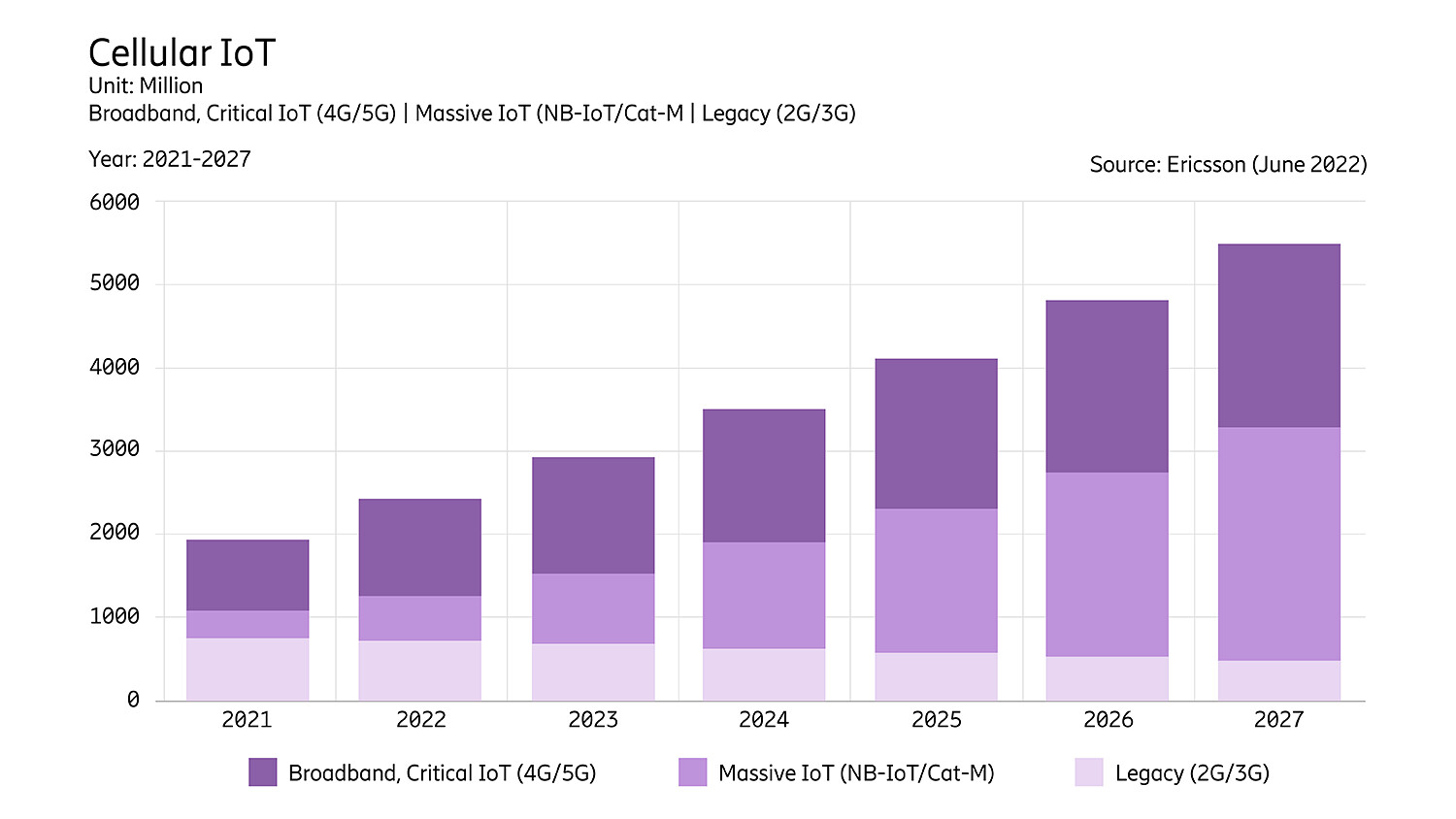
Figure 1: Cellular IoT devices worldwide.
Source: Ericsson Mobility Report
The questions that always arise in the IoT business revolve around answering how this will bring value to CSPs, and what their role is in managing this data. We’ll endeavor to answer these questions.
In terms of value, in the same survey, the total revenue from the value chain for traditional cellular and low-power wide area (LPWA) networks worldwide is expected to be around USD 247.5 billion by 2030. While this promises a substantial revenue increase in coming years, it indicates that the application layer accounts for two thirds of the total revenue (see figure 2).
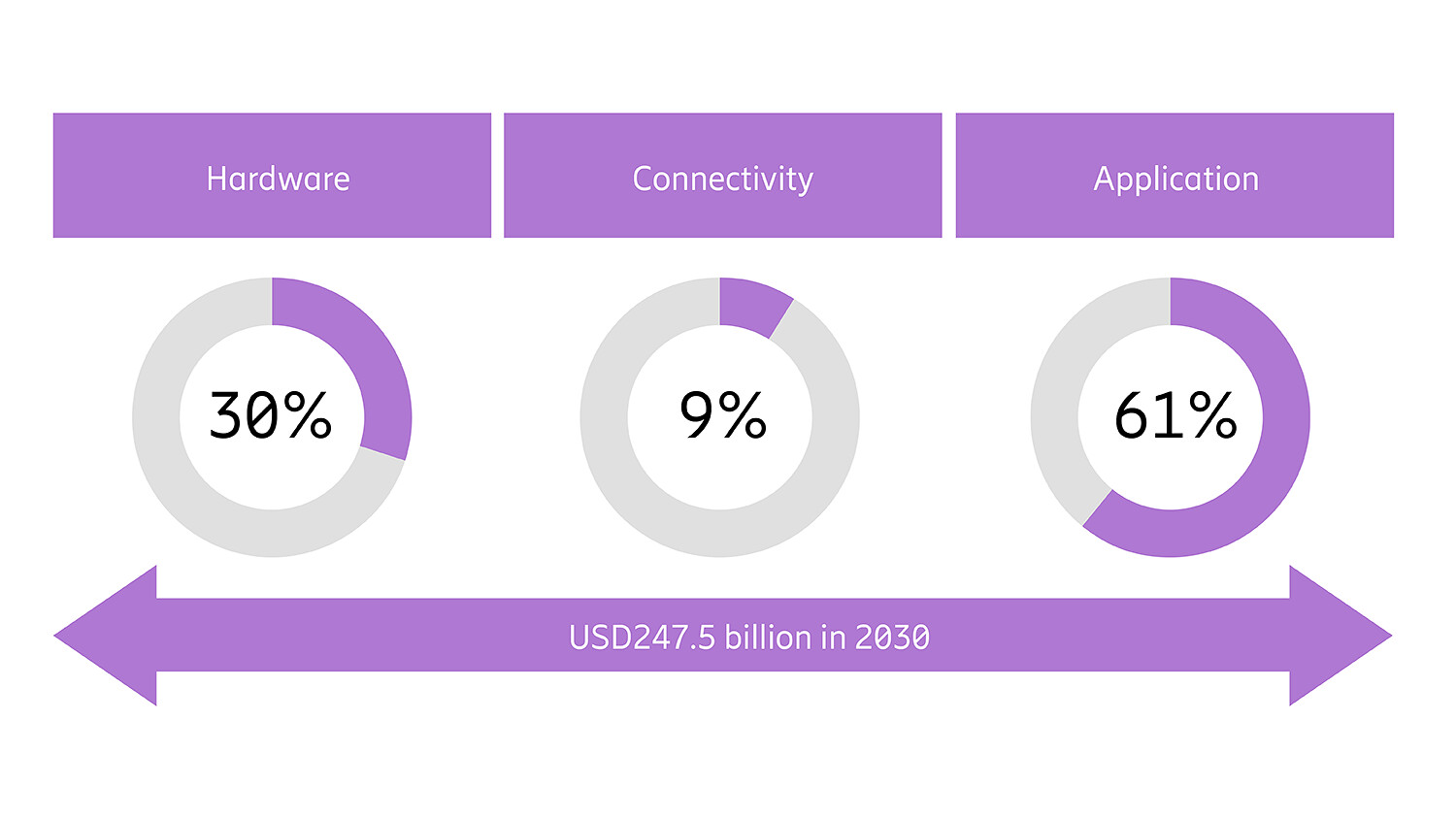
Figure 2: Percentage of total value chain revenue from each component for traditional cellular and LPWA networks, worldwide, Source: Analysys Mason, 2022
To seize this opportunity, it’s crucial for CSPs to strategically position themselves in the value chain. Playing the role of network connectivity provider could prove limiting, CSPs have an opportunity to rethink 5G and IoT ecosystems to offer services beyond connectivity in the pursuit of new revenue and to minimize the possibility of commoditization.
To enable the right and profitable business models, create unique services through partnerships and support new revenue flows by facilitating data-driven business decisions, BSS must evolve to:
- Enable CSPs to move up in the value chain with partner management
- Provide the needed mediation capabilities to make data-driven decisions and drive insights and analytics
Position well in the ecosystem with better partner management
To expand their role in the ecosystem and participate in the IoT value chain, CSPs must overcome a series of challenges, since most legacy BSS cannot cater for end-to-end partnering. This includes partner onboarding and verification, intuitive offer creation, partner settlement and full visibility of revenue for partners and CSPs through a comprehensive partner dashboard.
To bring the ecosystem together enabling flexibility, as well as support CSPs to move up in the value chain, Ericsson Digital Experience Platform (DXP) contains a partner management module which supports partner onboarding, partner verification, and authorization. A partner portal with partner dashboard, profile, account, and partner interaction information provides full control and visibility on revenue.
Partners need to be able to create their own offering directly in the product catalog, define and update them, while applying the relevant commercial attributes to that offering.
Advanced customer management across various channels and product configuration gives CSPs the option to choose extended roles beyond network connectivity, to build complex offerings for the enterprise segment and enables profitable monetization of IoT.
Let’s look at a manufacturing industry use case as an example illustrating how to approach this significant growth opportunity by enabling the right partnering. In this use case, a CSP provides 5G connectivity with network slicing to a manufacturing enterprise, which is under an agreement to use multiple devices and sensors to enable monitoring and measurement of specific assembly lines in remote factories. Through the DXP portal the enterprise onboards new IoT devices which links product offerings from the catalog to onboard the devices. Ericsson Billing supports the concept of an IoT business consumer, simplifying the contract setup and managing massive numbers of IoT devices assigned to a specific contract for an enterprise business.
This leads us to a valuable question: how will a CSP process and ingest this stream of unbounded data? And how will it prepare it for further analytical processing?
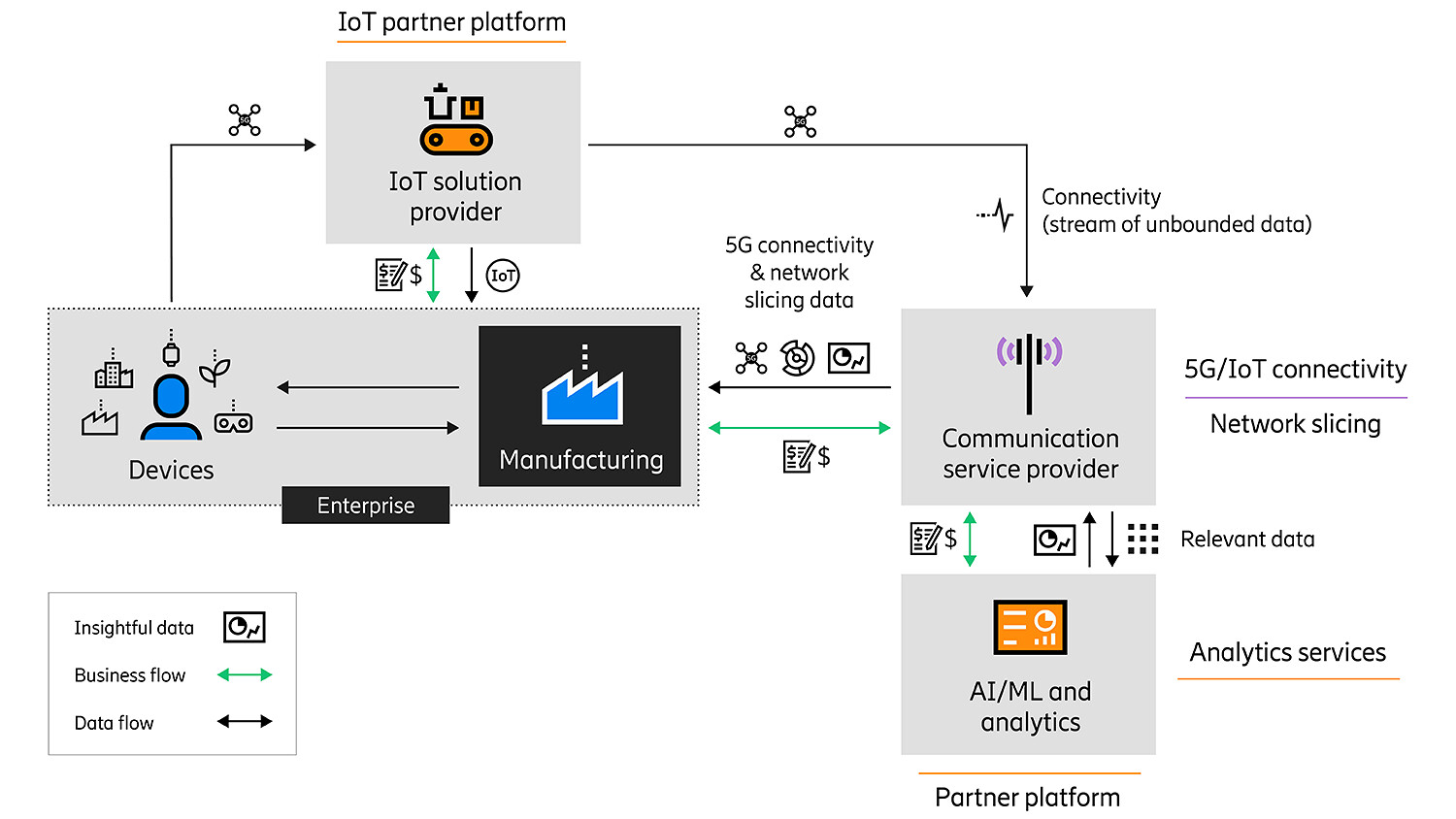
Figure 3: CSP position in the ecosystem - manufacturing as an example Source: Ericsson, 2022
Data management in an IoT ecosystem
With 5G and the diversification of IoT applications, data platforms receive more data. Both more in terms of volume and more in terms of variety. This brings significant data management challenges.
This data needs to be handled at scale and with speed. As many data sources generate data in different formats and with disparate types of information, the quality of final delivered data must be considered from the start.
Data ingestion is the entry point in the data engineering process and might span batch files, transactional events and streaming events. In contrast to batch files processing that may take minutes to hours, stream processing requires latency in the order of seconds or milliseconds. Disparate datasets need treatment and processing before they can be stored or injected in more specialized data pipelines downstream.
When evaluating data platforms for your IoT ecosystem, look for these key capabilities:
- Versatility: Addressing the diversity of data with different types of information and in different format types generated by the IoT devices and network is of utmost importance.
- Flexibility: Filtering irrelevant data and enriching data with metadata to support better analytics.
- Scalability: Responding to data fluctuation and high traffic peaks. As data needs grow, the system should adjust to handle the changing flow of information while maintaining efficiency.
- Real-time processing: Generated data should be ready to be consumed in real time, enabling use cases that operationalize machine learning (ML) models, for example anomaly detection in real time so that they can take preventive steps before it is too late.
Stream Mediation is a new capability in Ericsson Mediation which collects a massive scale of continuously produced data in real-time from the network and the IoT ecosystem using Kafka streaming. It processes this data using concepts such as sliding and tumbling windows. Both types of windows move across continuous streaming data, splitting the data into finite sets, with the difference being that tumbling windows are non-overlapping whereas sliding windows can be overlapping. The finite data sets are filtered, aggregated and correlated before they can be consumed by downstream systems such billing, analytics and/or AI/ML systems.
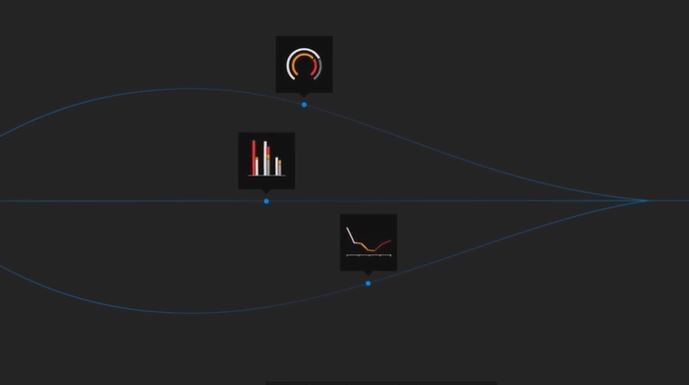
Ericsson stream mediation
Cloud native and scalable, Stream Mediation can respond to changing data ingestion requirements. It can be deployed close to any source of data. It collects, processes and sends only relevant data to the application, thereby minimizing its data storage requirements.
| Ericsson Mediation is a converged mediation system which resides at the boundary between the network and the business support systems to improve billing accuracy and granularity, support new competitive services, deliver revenue assurance for BSS systems and prepare data for analytics, IoT or other OSS systems, thereby acting as a key data monetization enabler. Source: Ericsson Mediation |
How can data impact business outcomes?
AI and IoT play a crucial role in improving production processes and reducing costs. Mobility, machine and application data generated in a factory, combined with external sources of data, feed into machine learning software to take real-time operational decisions such as predictive maintenance, fraud detection and energy consumption optimization. This data can also be used by analytics teams to extract strategic insights that help reveal bottlenecks and create better demand forecasts.
A typical industrial IoT use case is remote condition monitoring. Factories can monitor equipment in real time to spot potential problems, perform some maintenance remotely and leverage predictive capabilities by using AI or ML-based analytics of real-time and historical data from IoT devices.
For example, a machine operating outside of its normal temperature or pressure might require immediate proactive maintenance. The data generated by this machine needs to be delivered in real-time to an ML powered system to take the action necessary to automatically trigger the maintenance process.
However, AI benefits in IoT are not restricted to operational efficiency. Data fuels insights on customers and their behavior. AI can then analyze the data, extract customer behavioral patterns and suggest the best products and services that are most likely to satisfy the customer’s need at a specific point of time.
To realize the desired benefits in operational efficiency, revenue growth and customer experience, the relevant data must be gathered, processed and delivered in real-time to the right application.
Learn more
Report: IoT partner enablement in BSS: Readying CSPs for new IoT market opportunities
Webinar: IoT opportunities demand better partner enablement in BSS
Guest blog: Modern partner management systems are central to 5G IoT success
Blog: IoT partner enablement and monetization demand more automation in BSS
eBrief: Full steam ahead for Industry 4.0: Exploring BSS for smart factories
Report: Ericsson Mobility Report (EMR)