










Are service providers that haven’t launched 5G yet running late?
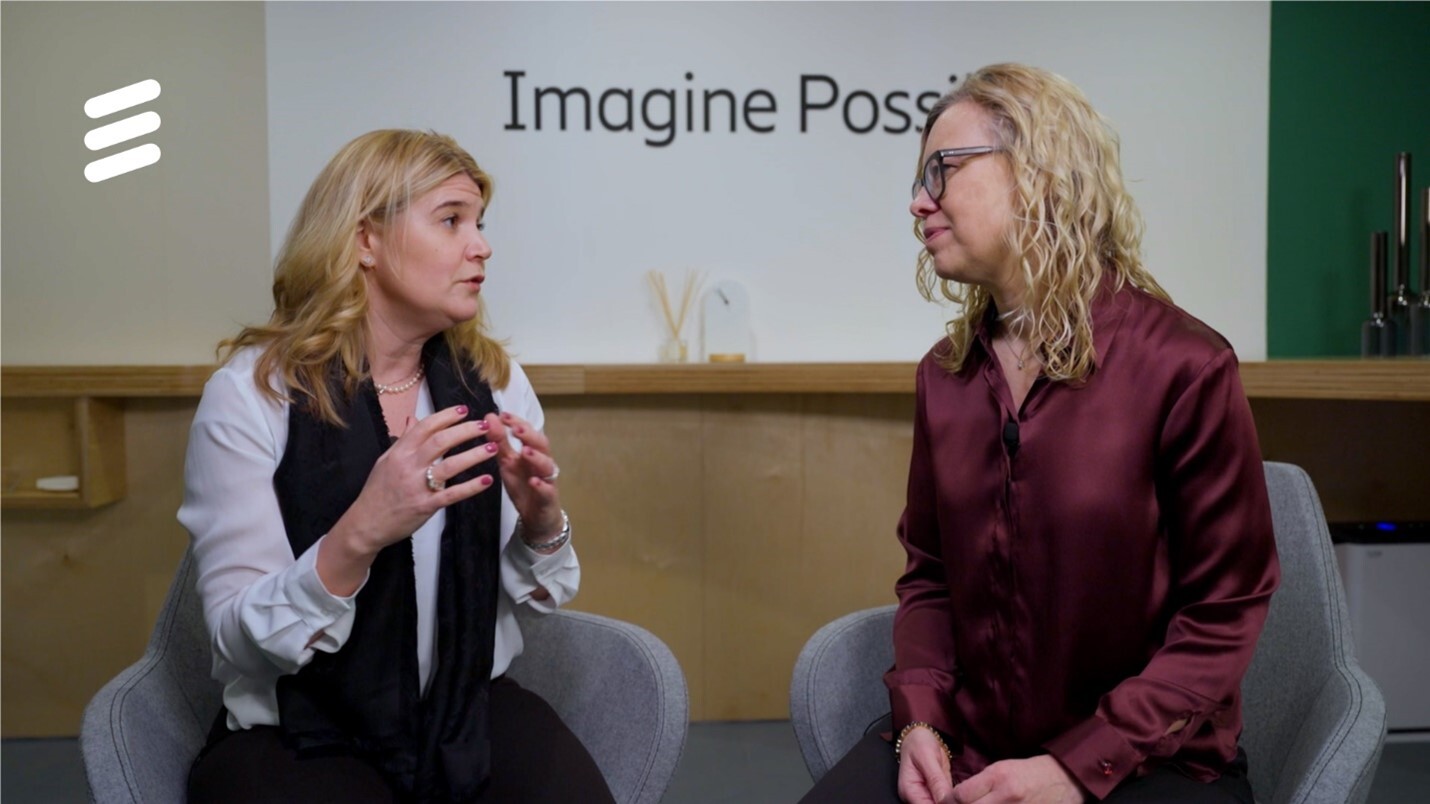
We’ve gained a lot of learnings from supporting operators all over the world to launch 5G. Cecilia Atterwall, Head of Marketing and Communications for Networks, and Eva Hedfors, Head of Marketing and Communications for Cloud Software and Services, explain how to leverage on these experiences.

Vice President Head of Marketing

Vice President and Head of Marketing and Communications, Business Area Cloud Software and Services
Vice President Head of Marketing
Vice President and Head of Marketing and Communications, Business Area Cloud Software and Services
Vice President Head of Marketing
Vice President and Head of Marketing and Communications, Business Area Cloud Software and Services
At the end of 2022, 5G exceeded 1 billion subscriptions globally (Ericsson Mobility Report Business Review edition), with more than 230 5G networks in the commercial service today – over 60% of them powered by Ericsson. Analysis of the top twenty 5G markets shows there has been a positive revenue growth trend since the beginning of 2020 that correlates with the increase of 5G subscriptions in these markets.
Ericsson partnered with Verizon, SK Telecom, and KT in launching the first commercial 5G networks four years ago, in 2019. Since then, a lot has changed in building the networks and introducing new services.
What does this mean for communication service providers that haven’t launched 5G yet? Are they running late?
Advantages of moving to 5G today
It is always good to be a frontrunner and ahead of the market but there are also clear advantages of deploying 5G today.
To start from the general point of view, operators beginning their 5G journey today can benefit from a lot of experience from previous 5G rollouts. A complete ecosystem, including fully evolved network solutions and 5G devices available now, provides an easier way to 5G deployments. And not only that – newcomers to the 5G market can count on a shorter time to market for both initial and more advanced 5G-supported use cases. As most of the 3GPP standard development is happening on 5G, we can say that the service providers moving to 5G today are, actually, at the sweet spot.
As 5G has matured, and standalone network technology with all of its components is now ready, the new architecture can be introduced early in the 5G journey for newcomers. The majority of service providers that embarked on the 5G journey in the beginning were using non-standalone technology to have 5G running on top of 4G. Non-standalone technology fulfilled the first requirement - a great coverage, but to benefit from higher capacity and premium services, TDD mid-band and standalone technologies are necessary.
Operators starting today can build their 5G standalone network with mid-band and massive MIMO, achieving a great capacity in an energy efficient way, and resulting in a network capable of catering to complex and premium 5G services.
The evolved portfolio enables them to harness previously unavailable potentials of 5G technology. For example, operators can today modernize legacy 4G sites with 5G achieving 10 times improved capacity and more than 30 percent energy savings with the Massive MIMOs and triple-band triple sector radios, recently added to our Macro 5G portfolio.
And what about the core network, when moving to 5G?
The 5G technology transformation involves two major changes in the core network – transition into 5G standalone architecture and the shift to the cloud-native in 5G core network – that increase the complexity. Since this transformation started, we’ve seen different customer strategies, and by now, a lot of useful insights are available for the current 5G adopters.
Based on the experience of previous implementations, and with the built-in flexibility in our dual-mode 5G Core, service providers starting their 5G rollouts now can benefit from any tactic they want when designing, building, and deploying their 5G networks. Ericsson is sharing the collected experiences in many ways, and a good starting point for reference reading is the popular 5G Core guide series.
“Now you can start with standalone 5G network right away, with less complexity, lower energy consumption, and cost efficiency in network operations,” Cecilia says.
5G monetization opportunities
Today, enhanced mobile broadband delivered with higher performance and better customer experience offers the fastest revenue opportunities for 5G. Fixed Wireless Access (FWA) is the largest 5G use case after mobile broadband: there is a vast unserved market in broadband connections for both households and enterprises worldwide, with over a billion premises lacking fast and reliable broadband.
Moreover, 5G enables new innovative consumer and enterprise use cases, such as Private Networks, live broadcasts, or mobile cloud gaming. And we shouldn't forget about 5G technology’s key role in mission critical solutions that empower public safety agencies and critical infrastructure industries. Future premium services enabled by 5G are, for example, AR/VR or immersive experiences.
Further on, we add new Slicing and Exposure capabilities to support these new use cases and service revenues enabled by 5G standalone.
As, figuratively said, all bits and pieces come together and get ready to be used, more use cases become available. A complete end to end solution including RAN nodes, 5G core and OSS/BSS is available in our portfolio for you to provide advanced services and seize monetization opportunities.
5G reduces costs and simplifies operations
So, 5G is enabling new monetization levers. But let’s look at it from a cost point of view.
To face the strong growth of mobile data consumption, operators need to invest in network expansion. By implementing the needed extra capacity directly on 5G standalone versus expanding the existing 4G network, you can reduce more than 50% the Total Cost of Ownership (TCO) as shown in the analysis published in our previous blog Is it still worth to invest in 5G in a flat revenue scenario?
Do you need more arguments that implementing 5G is the right way to reduced costs and simplified operations?
Ericsson has re-designed network services for the 5G age. Thus, skipping the transition phase from non-standalone to standalone network and benefiting straight from Intelligent Deployment and predictive and pre-emptive support with Service Continuity, service providers rolling out 5G now realize the full potential of 5G standalone technology faster and in a cost-efficient way.
Adding on the simplification when introducing 5G, operators starting now can benefit from AI and automation – something that frontrunners are looking at now, and that newcomers will be able to take the experience from. 5G standalone is a software game. And a big part of the maturity, experience, and insights we gained is around how to automate and lifecycle manage the new network. Early investments and focus in this area will pay off!
“If you move to 5G today, you're actually right at the sweet spot,” Eva says.