

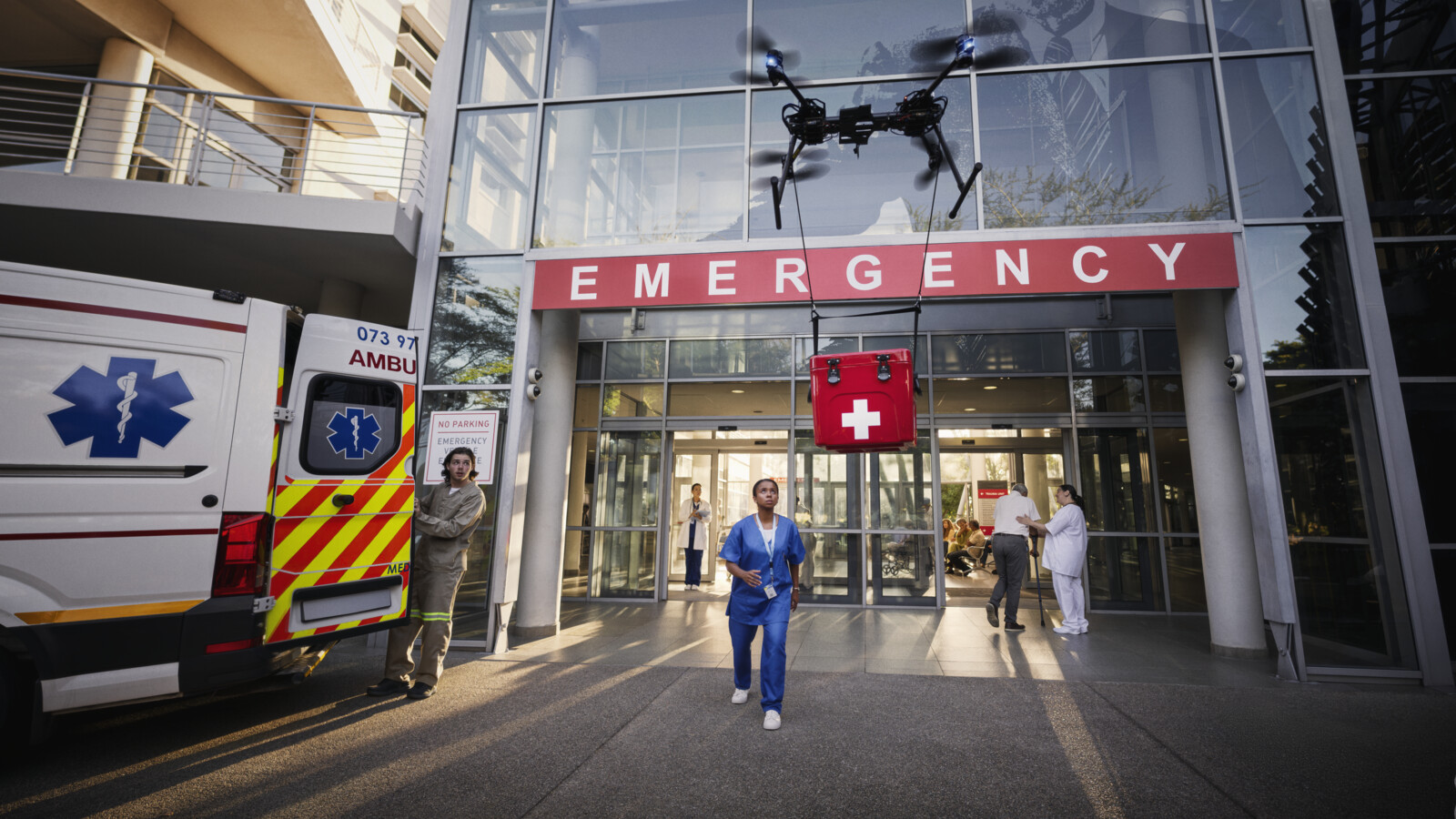








GenAI and mobile traffic: Is your network ready for the big surge?
- Widescale market uptake of AI-native, multimodal devices – including AI-native smartphones and wearables, autonomous vehicles and drones – will drive significantly higher uplink demand in coming years as they stream real-time video, audio, and contextual data to the cloud.
- Meeting this challenge demands a network evolution strategy that includes new and emerging uplink-performant FDD radio and MIMO solutions, software enhancements, and our industry-leading antenna systems – delivering best-in-test peak uplink throughput by far.

Strategic Product Manager, Business Area Networks

Solution Lead Antenna Systems
Strategic Product Manager, Business Area Networks
Solution Lead Antenna Systems
Strategic Product Manager, Business Area Networks
Solution Lead Antenna Systems
Generative AI and personalized agentic AI are driving a new wave of AI-native multi-modal applications that not only pull and consume data from the cloud, but also create it. To deliver truly personalized and context-aware interactions, these apps must continuously capture and transmit data back into the network.
In this new multi-modal reality, real-time video, audio streams, and spatial awareness signals must flow continuously to the cloud for inference and response. This means that uplink, historically a fraction of mobile traffic, will become our industry’s most valuable currency. The question isn’t whether your network can keep up, but how you evolve it and, as this article explains, the answer begins with your antenna.
So, what does this mean for your network strategy, and when will the surge hit? Read on as we examine likely scenarios.
The new wave of data-intense apps driving higher uplink demands
Emerging use cases such as AI-native smart glasses, personalized AI agents, multimodal AR/VR experiences, real-time assistants and advanced autonomous applications will each place diverse and evolving demands on your network.
Market penetration will play out in waves, from today’s niche deployments and early adopters to general mass-market adoption and eventually advanced autonomous scenarios in the 6G era.
Five AI-native apps that will place new uplink demands on networks
- AI-native smart glasses
Stream video, audio and spatial data to the cloud for real-time translation and navigation - up to 1.4 Mbps per session and around 5% more uplink per user. - Personalized AI agents
Always-on proactive assistance for consumers and enterprises, creating a persistent uplink load as contextual data streams from wearables and devices to the cloud. - Multimodal AR/VR experiences
Stream sensor and video data for real-time interaction and volumetric content in gaming and AR overlays, driving high uplink demand alongside downlink. - Advanced autonomous applications
Autonomous vehicles, drones and humanoid droids demand significant uplink for real-time telemetry, video feeds, remote intervention and compliance data – all mission-critical. - Real-time multimodal assistants
Combine video, voice and sensor data for context-aware use cases like customer service, logistics and healthcare support, driving continuous uplink demand.
The first wave: early adopters of AI-native apps that provide proactive assistance
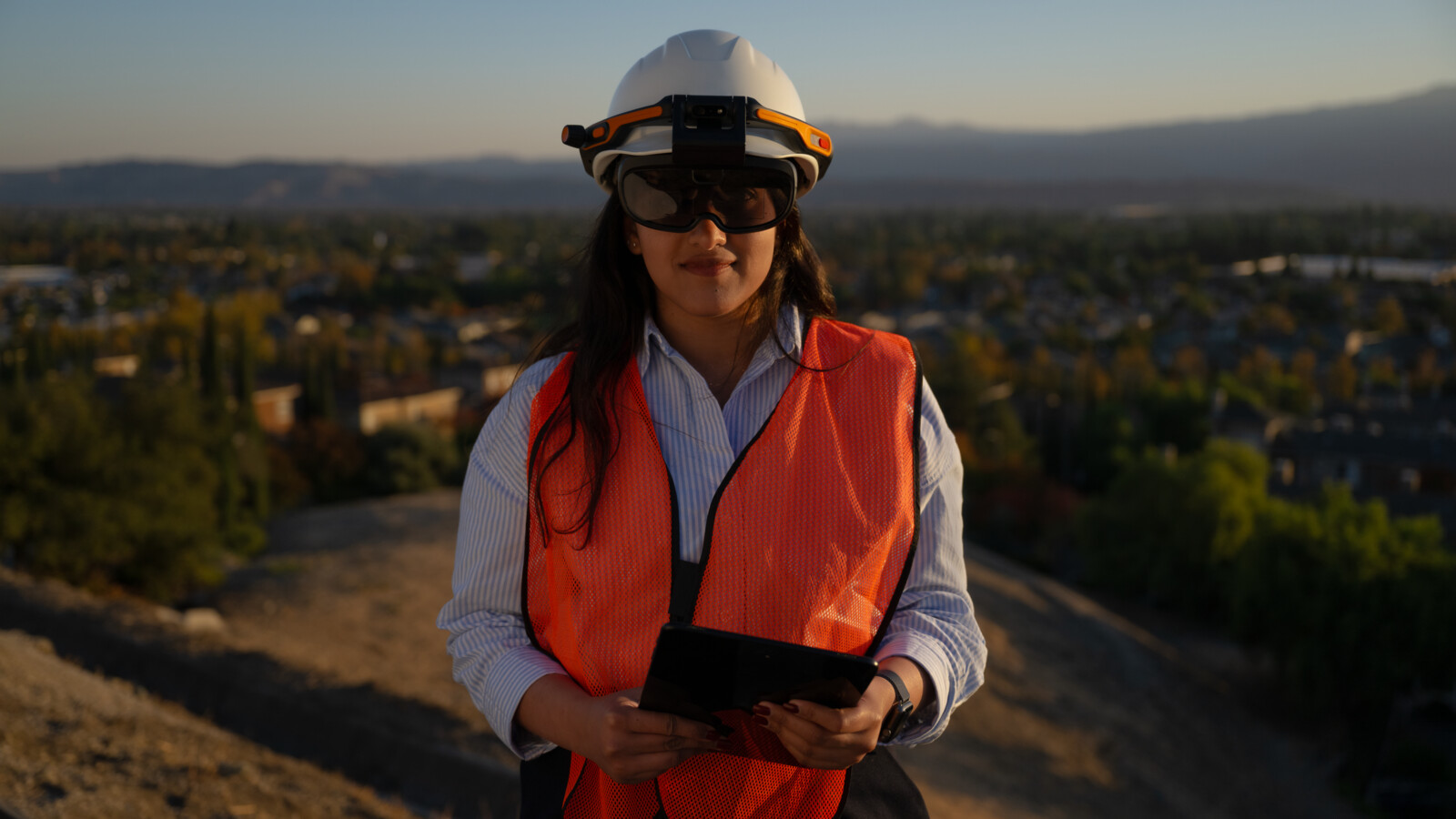
Early adopter tests AI‑enabled smart glasses and an AR assistant on a hillside jobsite, using a tablet for hands‑free, real‑time guidance—showcasing AI‑native apps that deliver proactive assistance on 5G and drive rising uplink traffic.
Driven by hardware advances and the integration of generative AI for real-time interaction, smart glasses saw a sharp uptick in 2025, with many more major OEMs preparing flagship launches for 2026.
Market penetration may still hover around one percent, limited to niche use cases and tech-savvy early adopters. But even at this scale, the impact on networks is noticeable.
Early adopters are using AI-enabled smart glasses for real-time translation, navigation and proactive assistance, alongside on-demand AI agents on smartphones and wearables – and with early AR overlays added in, the traffic profile begins to shift.
On-demand AI agents running on smart glasses can easily push uplink rates of 1 Mbps or more, while always-on assistants quietly consume bandwidth for hours each day. Even such modest usage can increase uplink demand by up to 5 percent per user. And with uplink currently accounting for just 10 percent of mobile traffic, that shift is significant. Ericsson's latest analysis of 55 service providers worldwide found that 43 already see uplink traffic growing faster than downlink – with AI-native smartphones alone driving HD video uploads of 1–3 Mbps per stream.
For service providers, the downlink-heavy model is already shifting: even before mass-market adoption, uplink performance is becoming both a differentiator and a challenge, forcing networks built for download speeds to rethink spectrum allocation, accelerate 5G Standalone, and lean on uplink-centric features like carrier aggregation and Massive MIMO.
Network takeaway
Uplink is already a differentiator today and CSPs who can leverage this edge at the antenna layer, where receive efficiency is won, can pull ahead long before the mass market arrives.
The second wave: mainstream market uptake of AI-native apps

Person using a tablet while interacting with AI-enabled smart glasses technology, illustrating the rise of AI-native applications, AR experiences, and increasing uplink traffic demand in mobile networks.
As mainstream usage shifts from short sessions to continuous, high-fidelity interactions, uplink requirements will continue to climb.
In this second wave, AI assistants in smart and AR glasses move from niche to mainstream, delivering richer, more immersive experiences at scale.
Advanced AI agents running multimodal video streams at higher resolutions and frame rates could push uplink demand into the multi-Mbps range per session. At scale, this translates into uplink traffic growing by 40–50 percent or more per user, against today’s baseline where uplink accounts for just 10 percent of mobile traffic.
This wave could happen sooner than you think. Market analysts already expect shipments of AR/VR headsets and smart glasses to reach 43.1 million units by 2029, growing at a 31.8% CAGR. Even conservative forecasts suggest 20 percent population uptake by 2028, a leap that will transform traffic dynamics overnight. Ericsson's own scenario modelling projects uplink traffic could run three times higher by 2031 – and up to five times higher in high-growth markets – as everyday AR use cases like turn-by-turn navigation and 'see-what-I-see' sharing drive a download-to-upload ratio of roughly 1:8.
Network takeaway
Raw capacity can’t keep up with mainstream uplink demand – uplink-optimized radios and, above all, superior antenna receive performance can turn rising network load into your competitive edge.
The third wave: autonomous vehicles and humanoid droids begin to emerge and scale

Connected autonomous vehicle illustrating the growth of AI-driven mobility, real-time telemetry, video uplink traffic, and next-generation mobile network requirements for autonomous transportation and robotics.
The third wave moves beyond wearables into autonomous vehicles (AVs), humanoid droids and enterprise-grade robotics – pushing our industry into industrial-scale uplink demand, driven by persistent, high-volume streams for real-time decision-making, legal compliance and remote interventions.
In this wave, uplink will no longer be measured in single Mbps, but in sustained multi-Mbps streams for advanced AV systems, especially when multiple cameras, LiDAR and multimodal AI inference are involved. Autonomous vehicles will generate telemetry bursts of 1–10 Mbps, drones several Mbps of video per onboard camera, and humanoid droids several Mbps of continuous uplink for remote orchestration. Factor in fleets operating simultaneously, and the aggregate uplink load will place significant demand on the network.
For service providers, the implications are profound: networks built for consumer downlink must evolve into industrial-grade, bidirectional platforms with deterministic latency, ultra-reliable uplink and massive capacity.
Network takeaway
Mission-critical uplink leaves no margin for error – only best-in-class antenna performance can deliver the reliability and receive sensitivity that autonomous fleets depend on.
Why uplink begins with your antenna
Uplink is the data that devices send back to the network – and delivering robust uplink performance starts with how efficiently the antenna receives that signal. Meeting high uplink demands requires a multi-dimensional network evolution strategy comprising of:
- Advanced uplink-boosting RAN software features
- Radios with larger antenna areas and an increased number of receive (Rx) branches to provide higher uplink coverage and capacity
- the Ericsson Antenna System, delivering best-in-test uplink performance through superior beam efficiency and PIM (passive intermodulation) stability, enabling better signal quality and uplink receive sensitivity
In data-intense marketplace where margins are thin and every decibel counts, our antennas can make the decisive impact on your network’s uplink performance – even before uplink-performant radios and software enter the picture.
These advantages are proven in the field, time and again:
- Up to 110% peak uplink throughput gains across 4G and 5G layers
- 21% uplink gains for cell-edge users, driven by an 11% boost in beam efficiency
- Proven improvements across multiple regions, including 50% uplink traffic gains for 5G SA in Europe, 64% average uplink throughput in the Middle East and 42% UL user throughput in Latin America.
These aren’t just incremental uplink tweaks, they are transformative and can give you a decisive edge in meeting tomorrow’s application demands where uplink will be the differentiating factor.
Learn more about our field tests and the impact on uplink performance:
- Leading tier-one European CSP network
- Northern European CSP network
- Middle East and Asia Pacific CSP networks featured in our latest catalogue
Read more
- The rise of uplink demand in AI-driven mobile networks
- The evolution of AI-enabled XR in mobile networks
- Uplink key to improving smartphone video conferencing user experience
- AI, cloud and mobile set to drive significant growth in uplink traffic
- Enhancing 5G uplink performance to enable differentiated services