











5G Standalone
5G Standalone (5G SA) unlocks new revenue opportunities and business models—bringing cloud ready architecture, real time responsiveness, and Network APIs to empower a new generation of applications. As communication service providers modernize their core and scale mid band coverage, 5G SA provides a competitive advantage in bringing new performance-based services to market.
5G Standalone explained
5G Standalone marks the real shift into the 5G era, delivering the performance, agility, and intelligence needed to support today’s rapidly evolving applications. Built on a fully cloud native 5G Core and 5G Radio architecture, it gives service providers a programmable, service based platform where new features and services can be created, upgraded, and deployed in hours rather than days—without disrupting live operations.
With capabilities such as network API exposure, automation, network slicing, and advanced traffic handling, 5G SA brings real time responsiveness, higher efficiency, and a foundation ready to scale new applications, devices, and enabling communication service providers transitioning into performance-based and platform business models.
5G Standalone: the facts
- Based on the 3GPP New Radio standard
- Runs on a simplified, RAN and device architecture
- Built on a cloud native, service based 5G Core
- Supports advanced capabilities such as network slicing, network exposure and automation

5G SA vs 5G NSA
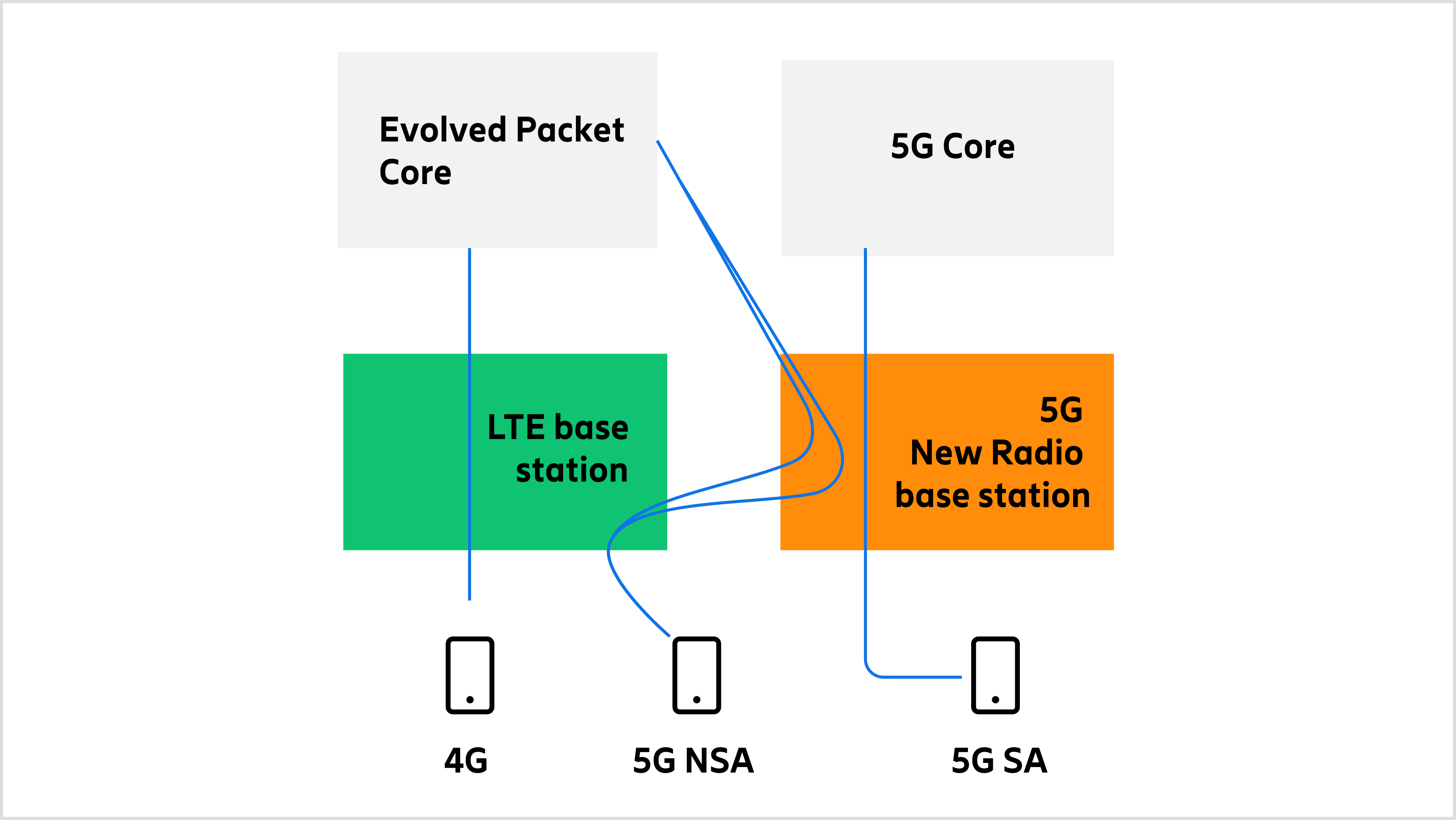
Early 5G networks have been based on 5G non-standalone architecture, using a 5G Radio Access Network that anchors to existing Evolved Packet Core networks. 5G Standalone, on the other hand, anchors to a cloud-native 5G Core network using service-based architecture. This lays the foundation for faster, automated, and more agile service orchestration, as well as enabling a host of powerful 5G performance- and service enablers.
Learn more in our article: Non-standalone and standalone – two standards-based paths to 5G
5G SA: key benefits and capabilities
Powerful user experience
Consistent low latency
5G Standalone enables ultra-low latency in the milliseconds, supported by lower handover interruption time and other enablers, to deliver close to real-time communication with zero lag.
Better spectral efficiency
Advanced Multi-Layer Coordination, and increased LTE offload to 5G spectrum enables higher uplink and downlink data rates. Ericsson’s 5G Standalone software toolkit enhances support for experience-based connectivity with high requirements on throughput, reliability, and latency.
Wider coverage
5G Standalone multi-band carrier aggregation, including uplink carrier aggregation, can leverage multiple 5G spectrum frequencies to significantly improve uplink and downlink capacity across wider areas.
5G voice
5G Standalone unlocks new 5G voice (VoNR) capabilities to enable near-instant call connections, lower latency voice communication, and higher quality audio through wider bandwidth.
Enhanced network efficiency
Higher energy efficiency
5G SA allow users to spend more time in 5G than 5G NSA, improving the energy efficiency of each gigabyte transmitted.
Advanced device support
Through RedCap device support and reduced signaling of the Inactive State feature, 5G Standalone enables reduced device latency, complexity, and battery consumption, laying the groundwork for use case evolution.
Service agility and scale
5G Core’s cloud-native service-based architecture and cross-domain service orchestration means microservices can be scaled, reused and upgraded with minimal impact on running services.
Enhanced end-to-end security
Advanced encryption and identity protection is delivered through the 5G Core-integrated Ericsson Authentication Security Module, providing end-to-end security of 5G Standalone networks.
Why move to 5G Standalone?
The shift to 5G Standalone is a strategic necessity for service providers seeking to stay competitive and realize the full value of 5G by delivering optimized, consistent performance across emerging consumer and enterprise applications—fueling differentiated connectivity. It bring clear advantages:
- Delivers ultra‑low latency, faster access to higher data rates, and more consistent user experiences across both consumer and enterprise applications.
- Elevates existing services such as mobile broadband, fixed wireless access, and 5G voice with better performance, stability, and scalability.
- Opens new revenue‑generating segments through capabilities like time‑critical communication, RedCap devices, advanced traffic handling, and support for massive IoT and new device ecosystems.
- Accelerates service agility and innovation through a cloud‑native, service‑based architecture that enables rapid feature upgrades and service deployment—often in hours instead of days.
- Provides a programmable network foundation with automation and exposure integration, creating the flexibility needed for next‑generation applications and business models.
Unlocking new revenue streams
5G Standalone rollouts are rapidly increasing among leading service providers worldwide, unlocking transformative new revenue possibilities across enterprises, consumers, governments, and public services.
Key revenue enablers




Featured insights




Featured business cases
The path to 5G SA: three routes to get there
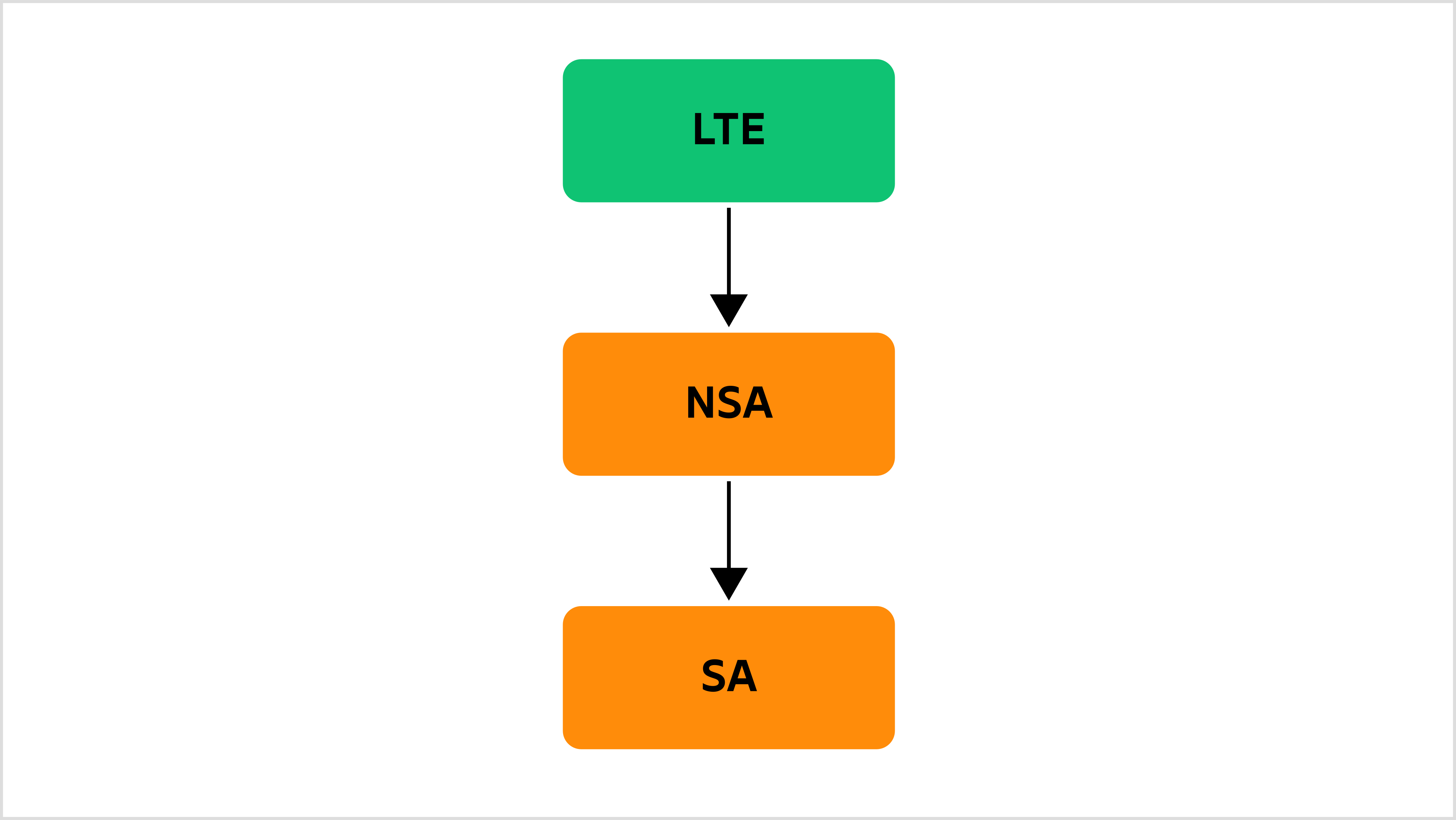
Route 1: LTE > 5G NSA > 5G SA
Service providers deploying 5G non-standalone architecture as an intermediate step to full 5G Standalone architecture. This has made it possible for service providers to switch on 5G services as quickly as possible, while using LTE as a fallback.
Learn more about Swisscom’s journey from LTE to 5G non-standalone
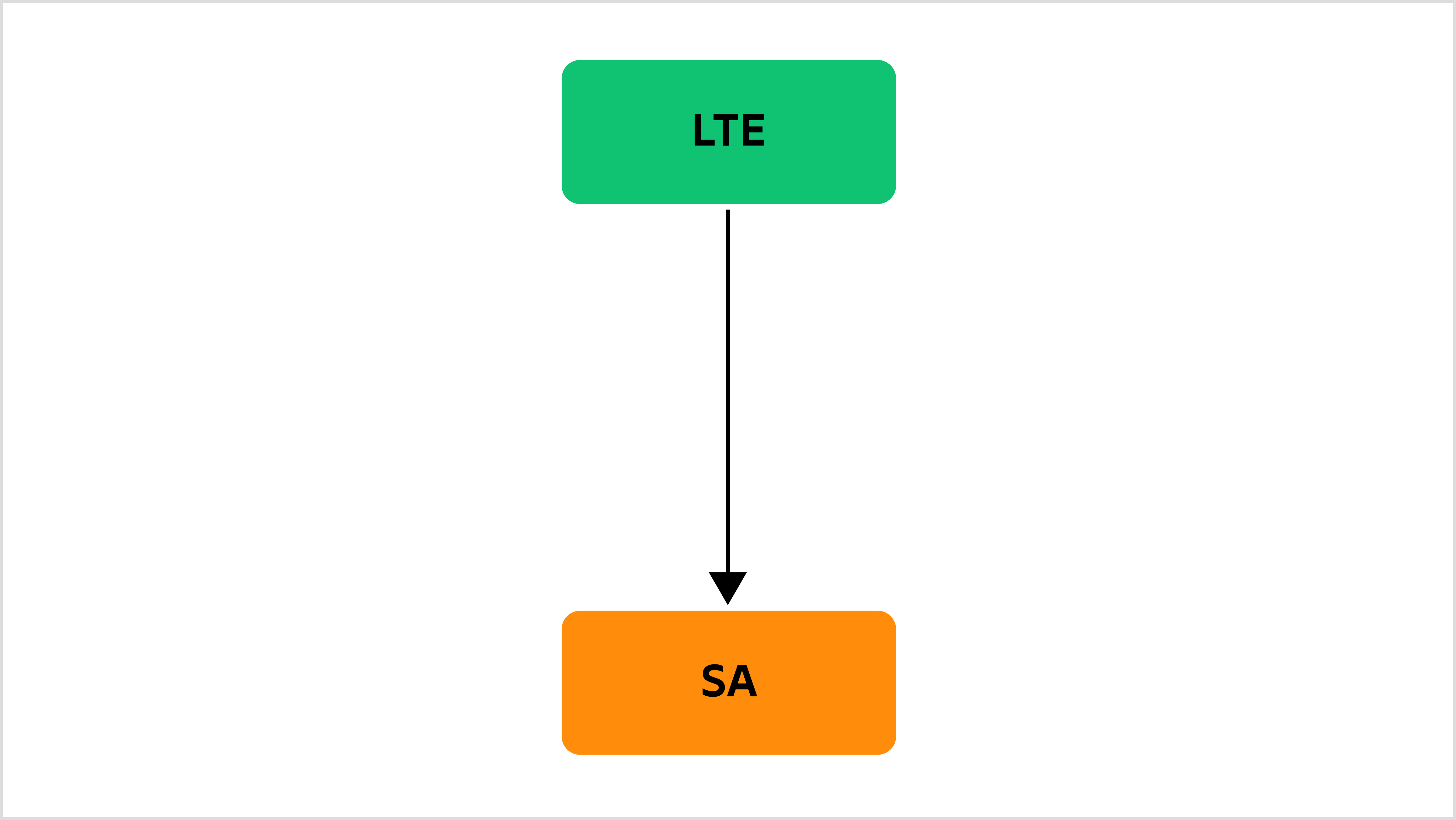
Route 2: LTE > 5G SA
Service providers that take the more direct migration route from LTE radio access and EPC networks to full 5G Standalone architecture from day one. One notable example is Indian service provider Jio that adopted a forward-looking 5G strategy from the get-go, providing differentiated services shaped by the inherent capabilities of 5G Standalone.
Learn more about Jio’s journey from LTE to 5G Standalone

Route 3: 5G SA
Service providers and enterprises deploying a cellular network for the very first time, for example public greenfield deployments, or private deployments of dedicated- or campus 5G networks.
Learn more about Helmut Schmidt University’s journey to a private 5G Standalone campus network
5G Core is the starting point for a migration to 5G SA
Begin your journey to 5G SA with Ericsson
As a 5G market leader, supporting network deployments around the globe, we’re here to help you plan for a smooth migration to 5G Standalone networks – tailored to your business and technology goals.






Related insights
