










Finding the right synchronization solution for 5G Transport: hard or easy?

Senior specialist Sync Solutions

Customer Solutions Sales Director

Technical Sales Manager Transport

Senior specialist Sync Solutions
Customer Solutions Sales Director
Technical Sales Manager Transport
Senior specialist Sync Solutions
Customer Solutions Sales Director
Technical Sales Manager Transport
5G NR sync requirements: Are they the same or different?
When searching the web about synchronization requirements of 5G networks, readers may find statements like, “end-to-end phase limit is reducing more than 10x” from 4G to 5G, or that “ultra-precise 100ns timing accuracy” is required at all base stations. Blindly following such statements could easily result in costly and unnecessary synchronization solutions.
Such statements usually come from a misapplication of absolute and relative timing requirements. The network-wide absolute time error requirement of TDD cell phase sync (+/-1.5µs) has not changed from 4G to 5G. Any lower time alignment error requirement of coordinated transmission or reception is only valid for collocated or intra-site deployments and therefore applicable within a single communications service provider (CSP) network and a group of selected cells with overlapping coverage. We explain this in more detail in this Ericsson Technology Review article.
So, the fundamental synchronization requirement has not become more stringent in 5G compared to 4G. Therefore, a CSP that has already deployed LTE-TDD will not experience much difference when switching to NR-TDD.
On the other hand, for many CSPs, 5G will be the first time they need to meet the tight timing requirements of TDD networks, with their very different needs versus FDD, and with a much smaller holdover window if sync fails. For these CSPs, addressing the new needs of time synchronization is a significant step.
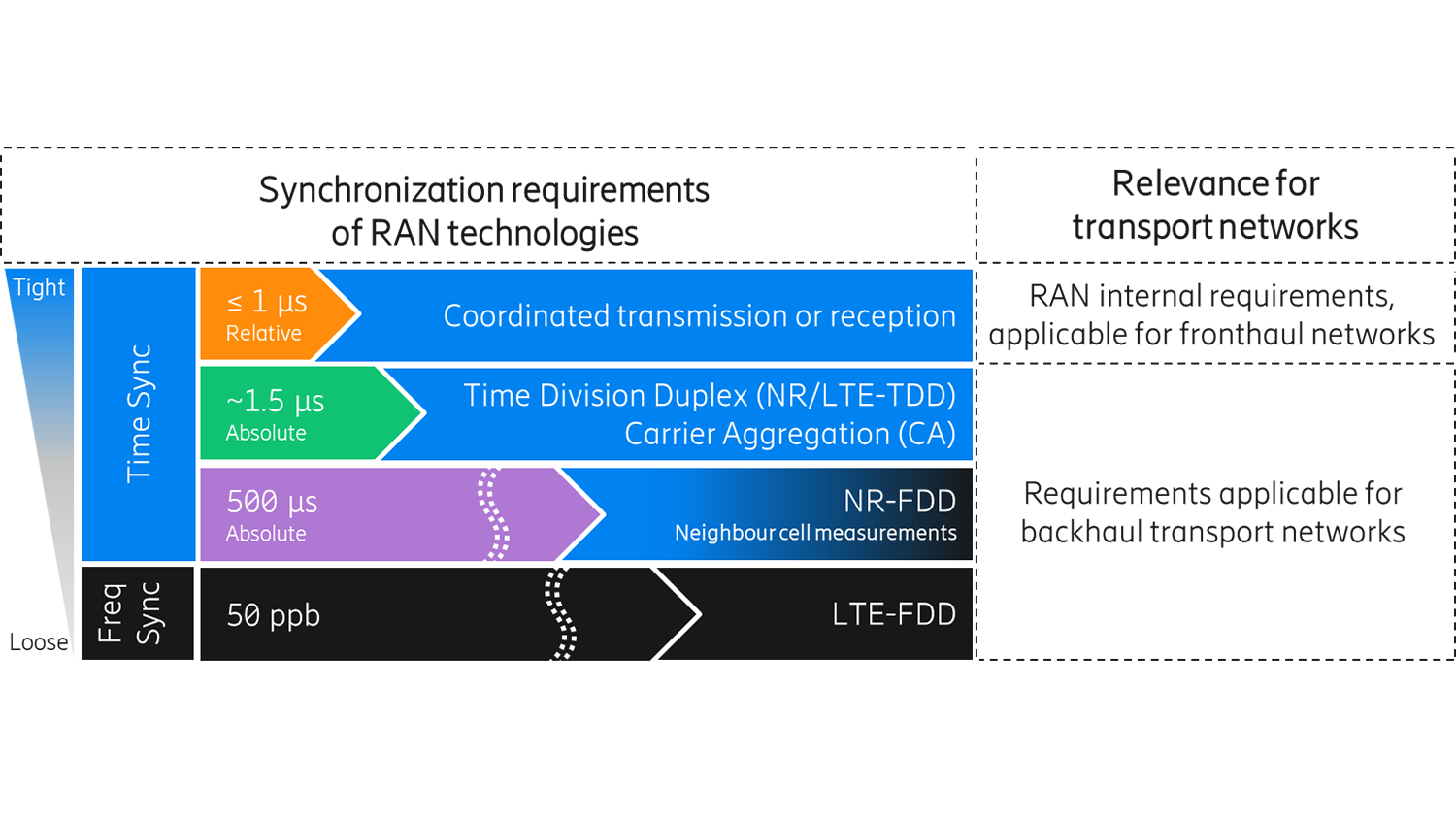
One novelty for all CSPs in 5G is that NR-FDD has a +/- 500µs time alignment requirement, on top of the 50ppb frequency stability requirement of LTE-FDD. This is an important step, yet it imposes no significant challenges from a Transport perspective.
GNSS: Do I need it everywhere?
The implication of 5G’s broader use of TDD is that TDD will be more widely deployed in the network than in the past (when penetrating from large cities towards residential deployments) as it can utilize the full potential of mid- and high-bands. Ultimately, this will increase the need for accurate timing across the network to a level where the concept of “GPS at all base stations” will not be scalable in a cost-efficient way. Growing concerns regarding the vulnerability of Global Navigation Satellite Systems (GNSSes) also motivates the use of alternative technologies.
Transport networks must therefore step up and become the main distributors of synchronization signals. Difficulties regarding this approach stem from the fact that accurate timing distribution requires hardware support in all transport equipment participating in the distribution. No matter how attractive it would be, time distribution without hardware support will never be accurate enough to meet TDD requirements. There is no free lunch.
The synchronization capability of transport equipment has evolved significantly during the last decade to enable flexible synchronization solutions. As a result, the capability of networks to support the Precision Timing Protocol (PTP) has improved with recent network modernizations. GNSS-based solutions can still be considered gap fillers until reliable and accurate time distribution in the transport network is rolled out.
What is a Transport synchronization toolbox?
Each network is different and has its own evolution. This requires flexibility in the supported synchronization features and options.
The synchronization toolbox is a comprehensive solution that contains various profiles (ITU-T G.8275.1 and G.8275.2) of the PTP in combination with GNSS and enhanced Synchronous Ethernet support. Performance of the synchronization solutions has also evolved. Support for the Class B performance level of ITU-T G.8273.2 recommendation is today a commodity (including microwave products), while Class C performance has become a critical requirement for packet based Fronthaul networks.
Not all options and combinations are suitable to meet the 5G timing requirements or provide an efficient and cost-effective solution. The right evolutionary path can be found using the following logic:
- First, evaluate Transport network readiness for full timing support (FTS). If the network is not prepared or the PTP support is scattered, then network modernization is required. By using the regular deprecation/upgrade cycle, FTS can be mandated in the new equipment to build sync capability through the entire Transport network. Meanwhile GNSS receivers can be installed at base stations with assisting reference to prolong holdover: either PTP in G.8275.2 profile or enhanced Synchronous Ethernet.
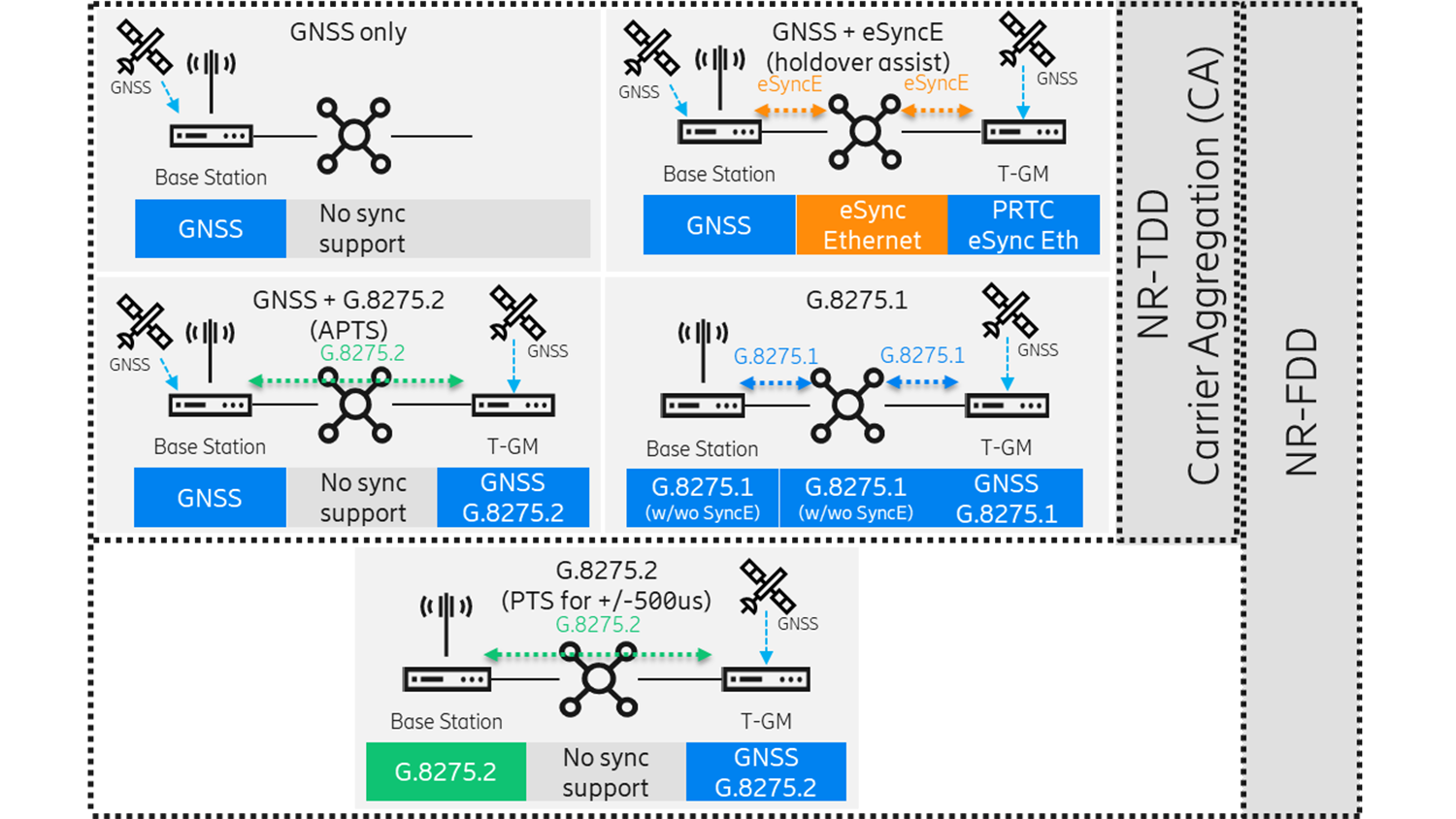
- Once the network is prepared for full timing support of PTP, timing distribution can be expanded in the Transport network. This increases robustness and redundancy as much as the Transport network itself is robust and redundant, while saving the cost of any further GNSS installations.
- In long-term strategic plans for synchronization, it is advisable to consider a GNSS-independent solution, which means deploying a few high-quality Primary Reference Time Clocks (PRTC) in the central part of the network that can operate without GNSS for long periods. By implementing G.8275.1 full timing support all over the network, time can be distributed redundantly and reliably from these PRTCs to all end points.
Completing the network rollout of the timing solution is just the beginning of the journey. Due to the critical nature of the timing solution, efficient means of monitoring and troubleshooting the synchronization network are essential – with tools ranging from PTP PM data collection to in-service time error monitoring.
Industry leading 5G Transport portfolio
At Ericsson, we understand the main drivers for synchronization in 5G RAN. Our Transport products are purpose-built to fulfill the strict requirements of 5G networks and offer a wide synchronization feature set to address all deployment scenarios.
The Ericsson Router 6000 portfolio provides full support for the G.8275.1 and G.8275.2 profiles of PTP with performance beyond Class C, enhanced Ethernet Equipment Clock (eEEC) function and T-GM functionality with GNSS receiver input. It also offers automatic and smooth switchover between available references and – when all references are lost – extended time holdover based on Stratum 3E oscillator, maximizing availability of the synchronization signal towards the radio site. In-service monitoring of the PTP network is supported with advanced PTP PM data collection and time error measurement between different PTP ports and GNSS.
Full timing scenarios can be extended over the microwave transmission network as well. Ericsson’s MINI-LINK product family has proven PTP solutions for G.8275.1 profile, achieving Class B performance or better, and support of Synchronous Ethernet over the radio hop.
Even more importantly, our Transport Synchronization solution is not only tested end-to-end together with Ericsson RAN solutions, but also proven at several industry interoperability events, thereby taking the hurdle from the CSP to worry about interoperability issues.
So, 5G synchronization: hard or easy?
Our experience is that through a correct understanding of the 5G radio synchronization requirements and the available technology options, each CSP can create a reasonable technology plan to reach the wanted level of synchronization support in the network to provide accurate, reliable, and cost-efficient solutions for 5G. With that, the journey may still not be easy, but at least the pitfalls that usually make things hard are avoided.
Continue reading on this topic with our newly released paper Synchronization solutions in 5G transport network.
Read more

5G Transport solutions
We’re evolving mobile Transport to deliver high-capacity, low-latency 5G connectivity across all cities, suburban, and rural areas. Welcome to the era of ubiquitous microwave and fiber-based Transport.
Read more
5 myths about 5G transport
Several myths exist about 5G transport and its technologies, including synchronization. Don't let these misconceptions stop you from building a superior mobile transport network for 5G services everywhere. We bust the myths for you.
Read more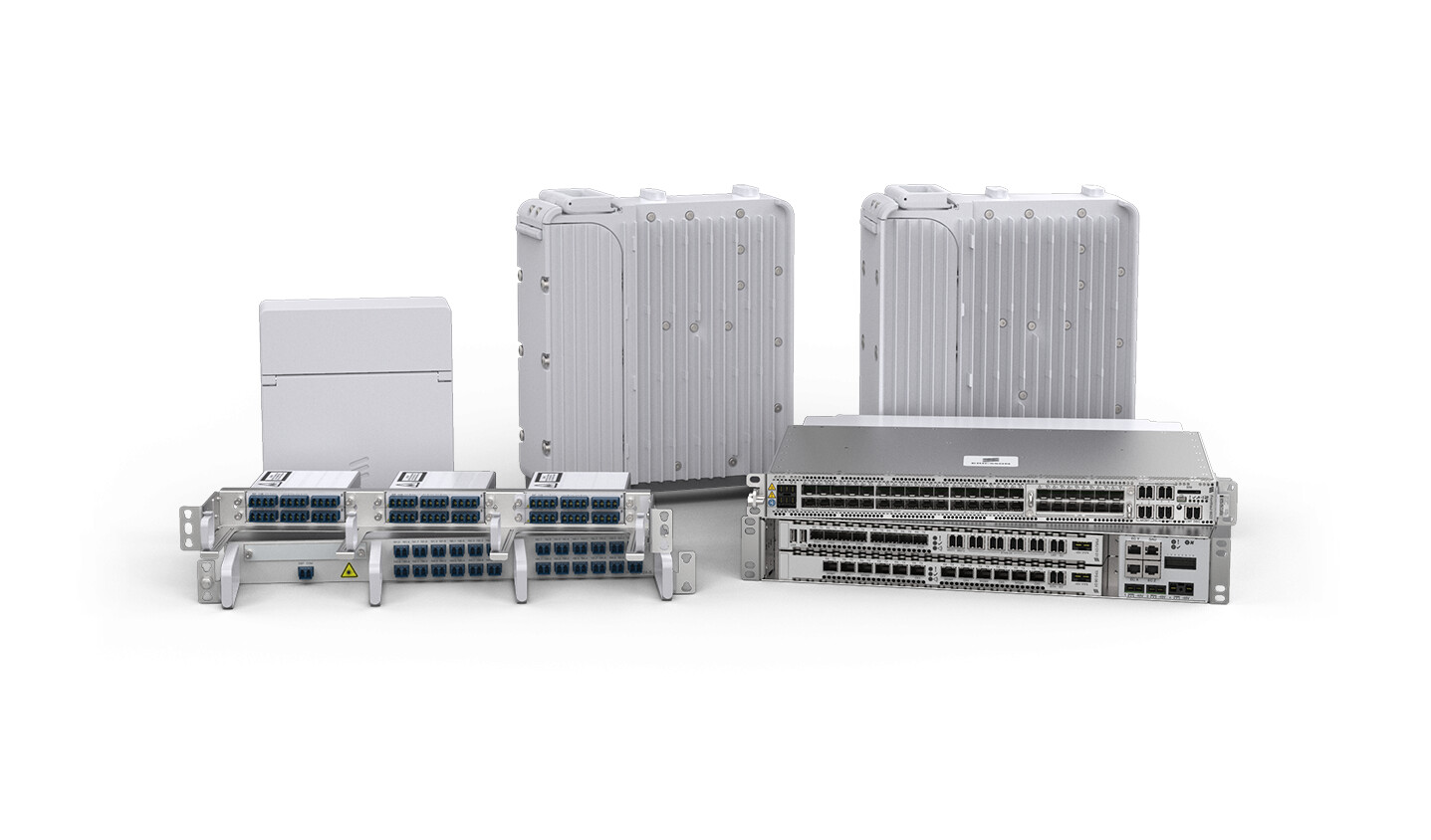
Fronthaul 6000 optical portfolio
Ericsson Fronthaul 6000 serve all RAN connectivity with a superior and flexible 5G optical platform.
Read more