










Experts share the truth about cellular for enterprise: industry ecosystems in action

Head of Technology Strategy & Portfolio Development

Head of Thought Leadership

Strategic Marketing Director

Director Industry Partnerships North America

Head of Technology Strategy & Portfolio Development
Head of Thought Leadership
Strategic Marketing Director
Director Industry Partnerships North America
Head of Technology Strategy & Portfolio Development
Head of Thought Leadership
Strategic Marketing Director
Director Industry Partnerships North America
Listen here
The potential of cellular network connectivity for industries is immense, with almost limitless possibilities. It is already connecting billions of devices with the cloud and enabling the use of real data for automation and increased efficiency like never before, building the foundation for industry transformation and paving the road to smart factories, autonomous operations, future transport and more.
Cellular technology and private networks can offer ideal solutions to help solve the challenges facing enterprises, enabling greater agility, more efficient operations and better insights and intelligence through data. But while some industry segments are leading the way when it comes to early adoption and advancement toward the full commercial realization of 5G, many are moving more slowly than expected. So why is that? What is behind the success of the leading industrial enterprises, and what still needs to be done to enable wider uptake of these technologies?
We brought together our many years of combined experience working closely with industry and enterprises to answer these questions. We’ll share with you our five key takeaways, and dive into three interesting industry cases where ecosystems are helping overcome barriers and take advantage of the opportunities on offer.
1. We need to be where the demand is – starting with video
It may come as no surprise, but a strong business case is the core factor when it comes to technology uptake in industrial enterprises. The type of cellular technology (4G or 5G) is usually secondary – the priority is on what the technology can do for them. They’ll want proof – successfully implemented use cases for a solution that solves a clear and present need, showing a solid return on investment. And while we’re seeing great progress in early adopter segments, other industries are still in the early stages of use case validation.
When it comes to cutting-edge cellular and 5G networks though, there is one area where the market need has become very apparent. Video-driven use cases often dominate those driving industry demand today. Regardless of the sector, from autonomous and connected vehicles to AI vision systems, robotics and advanced drones – it’s all about high-quality, video-driven solutions.
These kinds of use cases cause a shift in the traffic pattern, as video is transmitted from the devices to the edge or cloud. Support for this level of video traffic from devices at scale is not something that alternative connectivity solutions such as Wi-Fi can reliably facilitate, making 5G a necessity for full realization of many video-driven use cases. But we also need to ensure the ecosystem and infrastructure are ready to enable video traffic from device to cloud at scale.
Video uplink capacity must be sufficient to ensure enterprise and industry players don’t have to design private network capabilities for their new use cases against uplink limits. New software solutions, like Ericsson Uplink Booster, can maximize uplink performance via extended coverage, increased user throughput and higher spectral efficiency. If designed and managed properly across the ecosystem, private networks can unlock these unique and innovative use cases that will be central for the connected future of industry.
The importance of the ‘front-end layer’ players
Earlier in this ecosystem evolution blog series, we discussed how ecosystem mapping can help identify opportunities for collaboration, innovation and added value across industries and ecosystems. In the framework provided, we described those players closest to the beneficiary as the ‘front-end layer’, made up of professional services (including system integrators), application providers and device manufacturers.
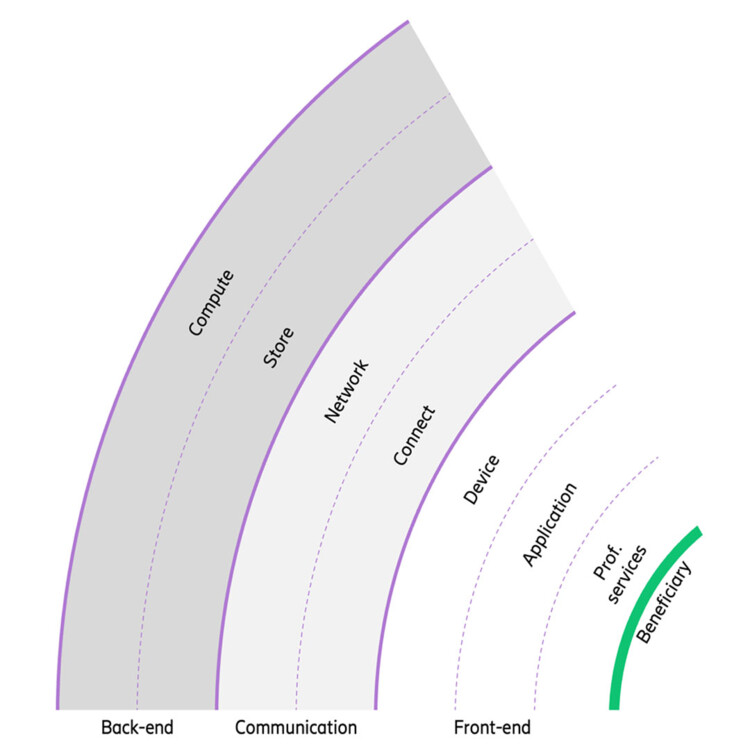
The seven basic building blocks of the ecosystem mapping framework, divided into three main layers – the front-end, communication and back-end layers.
Both the back-end and communication layers are showing steady progress – the technology is here and we’re seeing deployment happening across the globe. But the front-end layer is where we still need to focus in order to get the ecosystem working when it comes to the industrial use of 5G. To put it plainly, system integration and industrial devices can be what make or break the feasibility of a use case and its ability to be implemented into complex enterprise and industrial settings. This is why our next two key takeaways focus on these crucial ecosystem building blocks.
2. System integrators (SIs) with strong industry relationships are key
We’ve seen clear indications that SIs have a vital role to play in this cellular transition for industrial enterprises. They not only have the trust of the enterprise, they also have in-depth knowledge of the enterprise’s OT and IT systems, making them ideally positioned to connect all the different pieces to one solution.
While some of the larger global consulting players focused on strategic digital transformation are progressing more slowly, where we're really seeing early success is with the industry specialists. These are more tactical players, the SIs that are more network-centric, have a strong existing relationship with the enterprises. They have been able to focus on targeted industry segments with specific solutions that solve unique industry pain points and meet specific industry requirements and regulations.
We’ve also seen some cases where SIs have begun to use cellular technology in industries that haven’t been targeted in the past. One such example is education networks in the US, where school districts or governmental institutions want access to a private educational network to reach students in underserved and unserved communities. The SIs have been successful in winning the deals because they're already a trusted partner of these customers.
We’ve seen a similar situation with manufacturing sites, where SI-driven collaborations focusing on a customer problem are leading to the adoption of private cellular for new operational use cases that incorporate both network and operational transformation, led by the SI teams.
Taking advantage of different network solutions to meet specific needs is something we expect to see a lot more of in large and complex sites in the future – and one where compact but flexible cellular solutions such as Ericsson’s will be of enormous advantage and value. All three US carriers could be brought into a 10 million square foot manufacturing facility to ensure reliable public network indoor coverage and connectivity, for example.
At the same time, a private cellular network could be introduced to handle OT traffic for the manufacturing operations, with both public and private networks utilizing common radio infrastructure resources. Innovative radio technologies – such as Ericsson’s multiband Radio Dot solution in an ultra-compact form factor using Power over Ethernet (PoE) and Ethernet connectivity – reduce cost and complexity in the implementation. It's two different business and use cases within the same place ecosystem, creating an interesting combination.
3. The catch-22 barrier in 5G industrial devices
In recent years we’ve seen huge advancements in the number of devices with 5G capabilities. In fact, according to GSMA’s November 2022 5G ecosystem report, the number of commercially-available 5G devices increased by over 50 percent since the end of 2021 alone. But more needs to be done in this area to enable industrial use cases and ensure return on investment.
Currently, a 5G module costs significantly more than a highly capable 4G module, which can have a big impact on a business case and return on investment. If we’re talking about an autonomous guided vehicle or another high-value asset, the cost of the 5G module might be marginal, and a worthwhile addition for the required capabilities. But when it comes to a low-cost device such as a video camera, or use cases where a large number of devices are needed, the business case for using 4G might be much stronger.
While a strong return on investment for 5G technology may be unable to be proven in these cases today, this situation seems likely to change. According to OMDIA Cellular IoT Market Tracker, 5G modules for industrial IoT devices are expected to come down in cost over time, with shipments forecasted to grow by a CAGR of 74 percent between 2021 and 2027.
But for original equipment manufacturers (OEMs) to see the value in mass-producing devices with 5G native capabilities (currently at a higher cost), they are looking for proven demand from the market, or the professional services and applications they will enable. They also take into account if the required network connectivity is already widely implemented. However, there is often not enough impetus for industrial enterprises or CSPs to put a cellular network in place simply to support devices that don’t exist yet – neatly wrapping up a three-way catch-22 situation.
This is why it’s vital that CSPs and industry ecosystem partners engage with the ecosystems around devices, applications and professional services, in order to break the impasse this catch-22 situation has created and realize these cutting-edge use cases. Business-case focused partnerships are collaborations are the best way to enable early adoption and to demonstrate the value of cellular technology to enterprises and industries.
In the meantime, high-value 5G use cases today primarily tap into the existing set of smartphones, tablets, laptops and their ruggedized counterparts, while other industrial or sensor devices are connected via gateway, router or bridge devices that convert to legacy interfaces such as LAN, Wi-Fi or industrial IoT interfaces. This fundamental ecosystem can address many industry transformation cases.
It will also continue to optimize in terms of cost, performance and form factors for the foreseeable future, while industrial OEMs determine whether to include 5G natively in their product strategies. OEM products that are designed with “pluggable” communication modules will also have an easier time adapting to the cellular networking environment with a simpler module change, compared with an embedded design effort.
4. Make the shift to cellular smooth with flexible, future-proof solutions
It’s important to remember industrial enterprises are on a digital transformation journey. They may be looking to connect devices to the cloud, or need coverage over a wide area – use cases which might be well served by 4G private networks. But they may also be uncertain about taking their first steps into the cellular world. Should I go ahead with 4G solutions that meet our needs for today? Or should I hold off for 5G - and wait for the 5G ecosystem to catch up?
What many enterprises might not realize is that there are flexible, future-proof cellular systems and dedicated private network solutions that allow for a smooth transition from 4G to 5G later, if needed. They can meet their needs today, with infrastructure that ensures there won’t be a major second investment if and when they decide to switch to 5G.
As mentioned earlier, the right solution will, increasingly, be one that is built to meet the specific needs of the enterprise (and its customers). It will combine a range of different network and connectivity solutions and must be flexible enough to future-proof against the changes industrial technology will undoubtedly face as its evolution to Industry 4.0 (and beyond) progresses.

Learn why 90 percent of companies with a well-defined resilience strategy invest in digitalization and automation in our latest Future of Enterprise Report.
Read the reportWhen it comes to expanding opportunities for smaller enterprises and sectors like retail, we are seeing smaller, lower-cost, purpose-built connectivity and network solutions continue to develop and expand. These readily-integrated solutions will unlock new markets and opportunities for those industrial enterprises that have traditionally found higher-end solutions too complex or cost-prohibitive.
A new wave of IT-friendly, lower-cost, cloud-based solutions have entered the market with a focus on limited radio and band options (such as small cell only or unlicensed bands only), allowing smaller enterprise sites to take advantage of the performance and coverage of cellular-based solutions. For enterprises with a variety of needs and use cases, this may be the starting point from which to grow and expand into more sophisticated solutions.
5. Manage diverse private cellular markets with strong global partners
As discussed in our second key takeaway, ecosystem collaborations with tactical SIs on the ground are seeing the most success, as they are well-placed to identify the opportunities that are here and now. But the importance of larger, global collaborations should not be overlooked.
Every market for private cellular is unique. The spectrum situation is different, and the need to bring a CSP into the equation is different in every market, which can also make things a little trickier on the ecosystem. The customer is typically trying to find a common solution that applies to all their sites. Ideally, they want their infrastructure solutions to look similar, even across the globe. But the market realities are always a little bit different.
Countries like Singapore, for example, have an extremely dense environment where the spectrum is tightly controlled. Enterprises and SIs have to work with the CSPs, as they have the access to spectrum. In Germany, it’s a very different challenge, where dedicated spectrum for industrial players is available. It’s a different environment again in the United States, where Citizens Broadband Radio Service (CBRS) band is available to deploy 5G networks faster and easier without having to acquire a spectrum license.
The good news is that enterprises don’t have to face this alone - an experienced partner like Ericsson, with a global footprint and presence and strategic partnerships with some of the largest global SIs, understands all these nuances and can give expert advice and guidance to find the best solution for their needs.
Industry and enterprise ecosystems in action
Let’s take a look at three real-world examples where industry and enterprise ecosystem collaborations are overcoming challenges and working together to achieve success with cellular technology.
Industrial ecosystem innovation saving cost and lives in mining
In the mining industry, worker safety, environmental monitoring and asset tracking and management are paramount. There is also strong demand to improve productivity and efficiency through automated operations, requiring better connectivity. But with remote or even underground environments, sophisticated solutions are needed for applications like the remote operation of heavy construction vehicles or other industrial equipment. These use cases are prime examples of complex needs and systems where more traditional technology, such as Wi-Fi through multiple ruggedized access points or fiber, is not feasible.
Canadian gold mining company Agnico Eagle, for example, faced enormous challenges when it came to reliable, quality voice and data communications between workers and equipment deep underground, and operations staff on the surface. They also needed to monitor underground conditions and to track the location of assets. But when you’re dealing with hundreds of kilometers of tunnels deep underground, traditional Wi-Fi is simply not feasible.
By working with its partner, Ambra Solutions, and leveraging radio technology from Ericsson, Agnico Eagle deployed a first-of-its-kind private LTE network 3.2 kilometers beneath the earth’s surface—the deepest in the world. As a result, they were able to improve the safety and work experience of miners, enabling them to stay connected with colleagues and family above ground.
The precise location of people, vehicles, and machinery could also be tracked at all times to prevent dangerous situations. Additionally, with the enabling of remote operating capabilities and intelligent environmental monitoring, Agnico Eagle were able to improve the mine’s efficiency and productivity, advancing sustainability objectives and helping to lower costs.
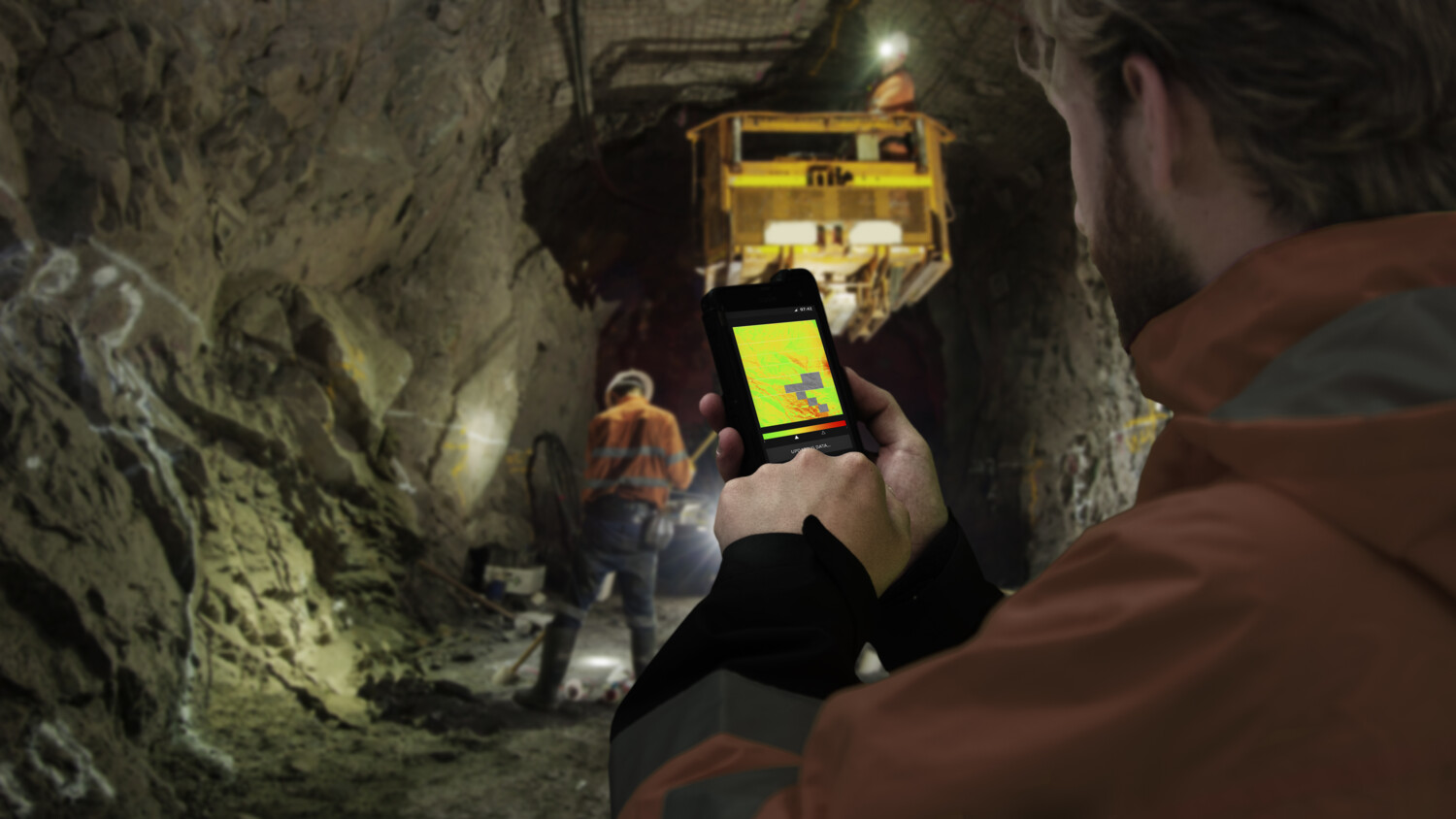
We’ve also seen a great initiative to further accelerate digital transformation of the mining industry in Canada by bringing together the ecosystem. Canadian CSP Rogers Communications partnered with Norcat to establish the Rogers Technology Center of Excellence at the Norcat Underground Center. It’s a collaborative space where ecosystem partners can demonstrate and test efficiency, safety and productivity solutions in a real underground mining environment, helping prove the value of use cases and actively engaging the mining industry ecosystem.
Increasing ROI and reducing emissions at the Port of the Future
Ports are another early mover in the cellular space, where we find similar demanding requirements to those of the mining industry. They require wide area and outdoor coverage solutions that are difficult to serve with Wi-Fi, and experience strong demand to improve efficiency, both for higher productivity and more sustainable operations.
The Port of Livorno has been a trailblazing testbed when it comes to connected ports, deploying and piloting 5G and enhanced Augmented Reality (AR) use cases to automate and improve their operations. This collaboration brought together Ericsson, the Italian Interuniversity Consortium for Telecommunications (CNIT), Italian CSP TIM, Fondazione Eni Enrico Mattei (FEEM) and the Authority Port of Livorno. By utilizing 5G connectivity, the project developed a model which optimized vessel berthing, which not only increased productivity and reduced costs by EUR 2.5 million, but also reduced CO2 emissions by 8.2 percent per container terminal.
Accessing the manufacturing industry with value-added professional services
To consider a more challenging environment, let’s take a look at manufacturing. It’s well established that technology adoption in the manufacturing industry in general is slower than in other industries. With long investment cycles and legacy equipment and infrastructure, many manufacturing enterprises are willing to wait rather than take the risks of early adoption or innovation. But it is also considered a high-potential industry when it comes to cellular connectivity and 5G – particularly for global manufacturers with either large manufacturing sites, or sites with multiple facilities (like a campus setting), looking to improve communication infrastructure and extend coverage, or secure both indoor and outdoor coverage.
Learn how moving from wired to wireless cellular connectivity can bring greater flexibility to Industry 4.0 operations.
In an interesting coming together of electric freight mobility and manufacturing segments, GE Appliances recently partnered with Einride and state and county officials to successfully complete the first-ever pilot of an autonomous, electric vehicle without a safety driver on board on US public roads. Utilizing Ericsson’s private connectivity network technology, the vehicle was able to be operated with seamless functionality, while data information was shared with a Remote Operator at all times to remotely monitor the vehicle. For the duration of the two week pilot, the vehicle supported real-time workflows and safely transported finished goods between GE Appliances’ manufacturing facility and warehouse.
Where do we go from here?
Enabling early success stories like these is a vital stage in the evolution of industry ecosystems. Delivering on the fundamentals – the ability to provide ubiquitous coverage with reliable connectivity – should never be underestimated as a first step. There are still plenty of enterprise and industrial settings where connectivity is unavailable and operational routines are still manual. But with the introduction of robust cellular connectivity and coverage, incredible efficiencies can be unlocked with the transformation to a digitally-enabled workforce and automated, remotely-enabled operation.
It’s all about building confidence in the connectivity infrastructure. This trust is what enables industries and enterprises to become more optimistic and willing to innovate and experiment when it comes to higher-end use cases and video-driven applications – those that will put stress on the communication infrastructure.
Once proven use cases start to build up, a natural momentum is created in the evolution of that industry sector. And we’re already seeing that happening, across a range of very different contexts, and with a wide range of partners facilitating the transformation.
This journey ahead is an exciting one – but one thing is very clear. There’s still work to be done, and this is a journey we can’t make alone, or in silos. It’s only by working together in new and inventive ways that we will be able to bring the full potential of 5G for industry, and these exciting and innovative industrial use cases, to life.
Contact the authors
We hope you’ve enjoyed our ecosystem evolution blog series. If you have questions you’d like answered about cellular solutions for industrial enterprise or industry ecosystems, feel free to contact the authors via email or reach out to them directly via their LinkedIn profiles: Bob Gessel, Peter Linder, Harald Baur or Keren Ronen.
Acknowledgment: The authors of this ecosystem evolution blog series would like to acknowledge the work and contributions of Arthur D. Little, who conducted a joint analysis with us earlier in 2022.
Read more
Download the one-page cheat sheet summarizing the key messages from this post.
Find out more about our ecosystem evolution blog series.
Learn more about how connectivity is enabling enterprises to prepare for the future through business transformation.
Find out more about how cellular technology is transforming industries.
Read more about why it’s time for enterprises to rethink resilience.
Discover how Cradlepoint and their Wireless WAN Edge solutions for enterprise are accelerating the adoption of 5G and unlocking valuable new revenue streams.