Extend coverage and increase capacity with carrier aggregation
Coverage and capacity are the key elements of an optimal 5G user experience. Carrier aggregation is the foundation for a better 5G, an effective tool to extend the coverage of mid and high-band that leads also to an increased capacity. Carrier aggregation is powered by the innovative Advanced RAN Coordination to allow full deployment flexibility and uncompromised user throughput.
See what carrier aggregation can do for your network
5G Carrier Aggregation -with Coverage Boost- powered by Advanced RAN Coordination is a versatile and blended solution for high-performing 5G networks. It is a game-changer for delivering extended coverage and increased network capacity while supporting
- Higher peak rates
- Flexible band combinations
- Intra and inter RAN Compute
- Both platforms, Ericsson Radio System and Cloud RAN
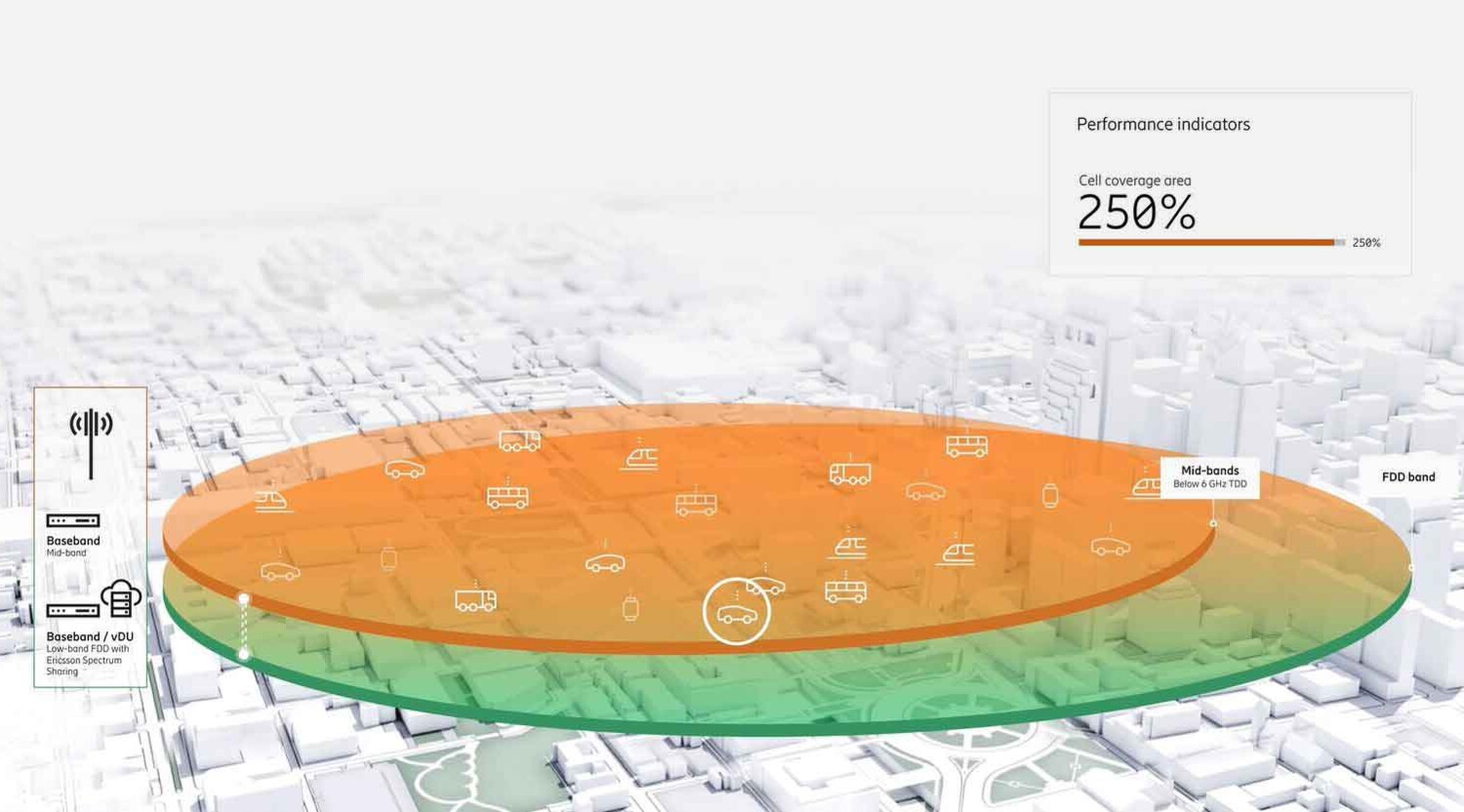
Extend coverage area of mid-band TDD
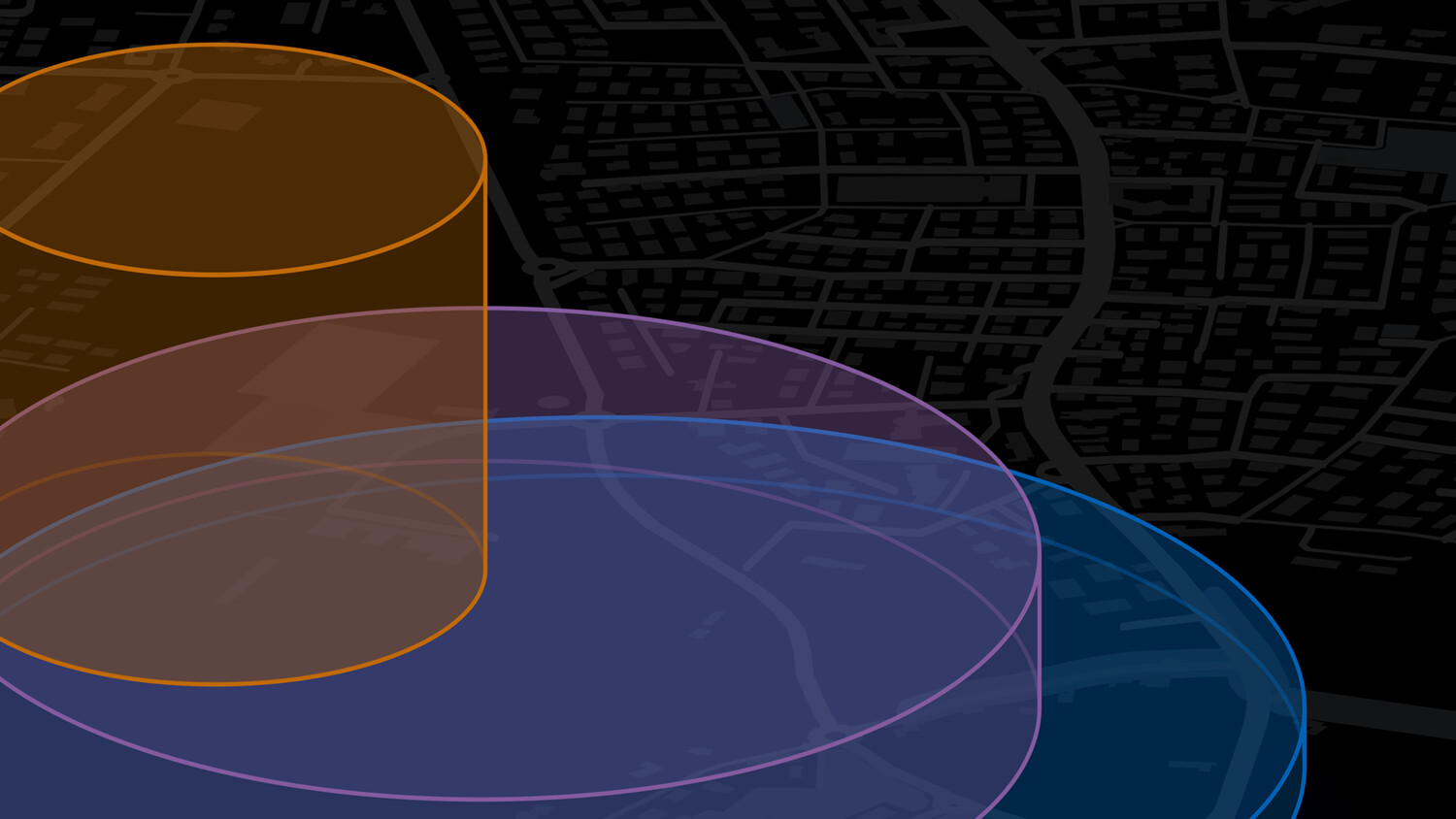
By activating inter-band NR carrier aggregation, the cell coverage area of mid-band TDD extends by a 2.5 factor.
That equals a 25% increase in the population covered.
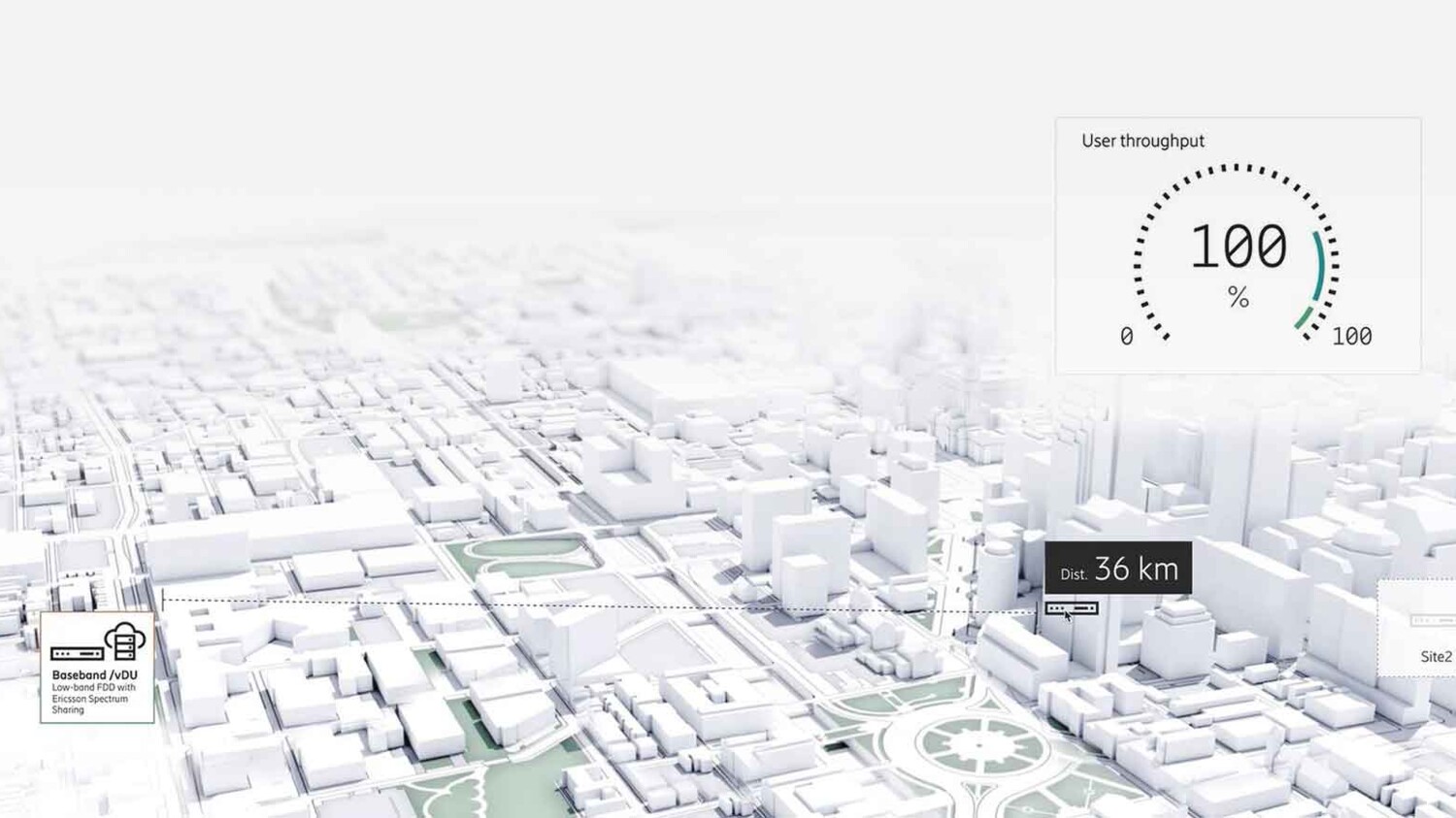
Achieve deployment flexibility
Advanced RAN Coordination can be utilized to separate basebands more than 50 km—giving you full network deployment flexibility while upholding optimal user throughput.
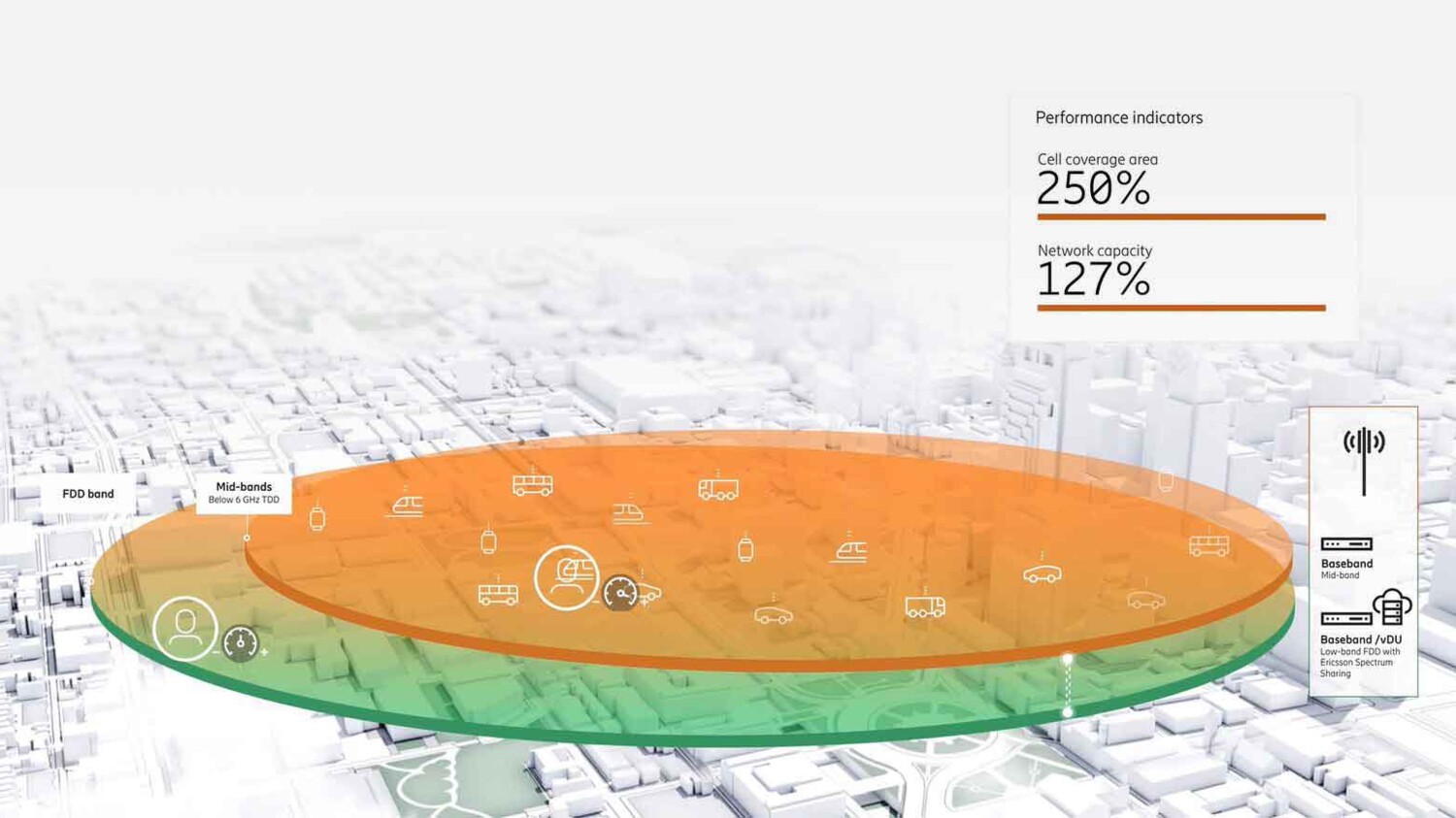
Increase capacity
With inter-band NR carrier aggregation activated, network capacity increases; the result of extended coverage is higher offload from FDD, higher user throughput at the cell edge, and increased capacity.
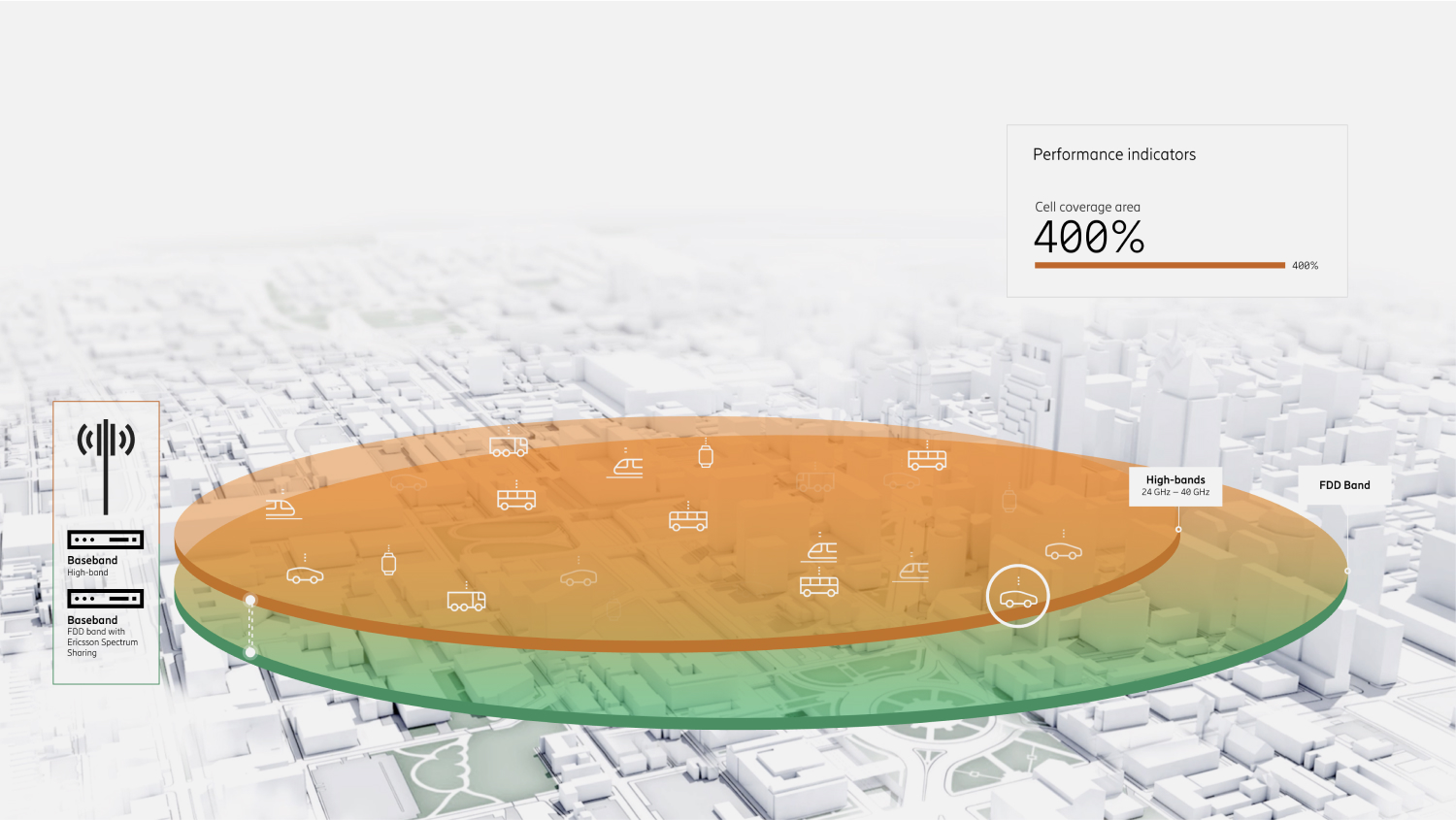
Expand coverage of high-band
Activating inter-band NR carrier aggregation on high-bands allows the cell coverage area to extend—by a 4 factor.
The challenge
To meet the ever-growing demand for wireless data and applications, service providers must find new sources of spectrum sharing while using existing spectrum efficiently.
In addition to enabling new applications and delivering higher data speeds, 5G is unlocking new sources of spectrum in both the mid-band and high-band radio frequencies. Though these new bands are a welcome addition to a service provider’s spectrum assets, the mid and high-band coverage is limited by the radio uplink signal quality and characteristics associated with operating within the higher bands.
To maximize the benefits provided by these new bands, solutions are needed to extend cell coverage.

The solution
Ericsson has addressed the 5G mid-band and high-band coverage limitations by developing a flexible 5G Carrier Aggregation solution which supports control and data traffic on the uplink using a lower frequency band which increases coverage, and on the downlink with a mid or high-frequency band which increases capacity and data throughput.
With Ericsson 5G Carrier Aggregation, a service provider can support the 5G uplink operating on a lower band with the 5G downlink operating on a mid, or high-band thereby providing the best of all worlds—better coverage, increased capacity, and higher data speeds.
Low, mid, and high-band radio frequencies have different coverage characteristics which means the supporting radio and RAN Compute baseband units are geographically dispersed in different locations across the coverage area.
Real-time coordination with less than a one millisecond delay between the baseband units is required to obtain the full benefits of 5G carrier aggregation. To achieve this, Ericsson’s Advanced RAN Coordination provides an E5 interface to enable instant inter-baseband coordination with a delay well below the 1 millisecond requirement.
This ensures the tight, real-time coordination of the baseband equipment enabling 5G carrier aggregation with high performance, low latency, and greater spectral efficiency.

The benefits
A better 5G network will provide more subscribers with higher data speeds while enabling a host of new, low latency applications.
Aggregating a 5G low-band with a 5G mid-band can improve mid-band coverage by up to 7dB extending the cell coverage area by up to 2.5 times and increasing the population that can be supported by the mid-band by up to 25%. The higher available capacity means that more traffic can be offloaded on to mid-band 5G -which uses spectrum more efficiently than 4G-, leading to an overall capacity increase of 27%.
Aggregating a 5G low-band with a 5G high-band can improve high-band coverage by up to 10dB extending the high-band cell coverage area by up to 3.7 times. The extended mid-band and high-band coverage also enable a greater offload of traffic from the lower bands to the mid and high-bands providing a higher throughput at the cell edge.

Maximize mid-band coverage with low-band and carrier aggregation
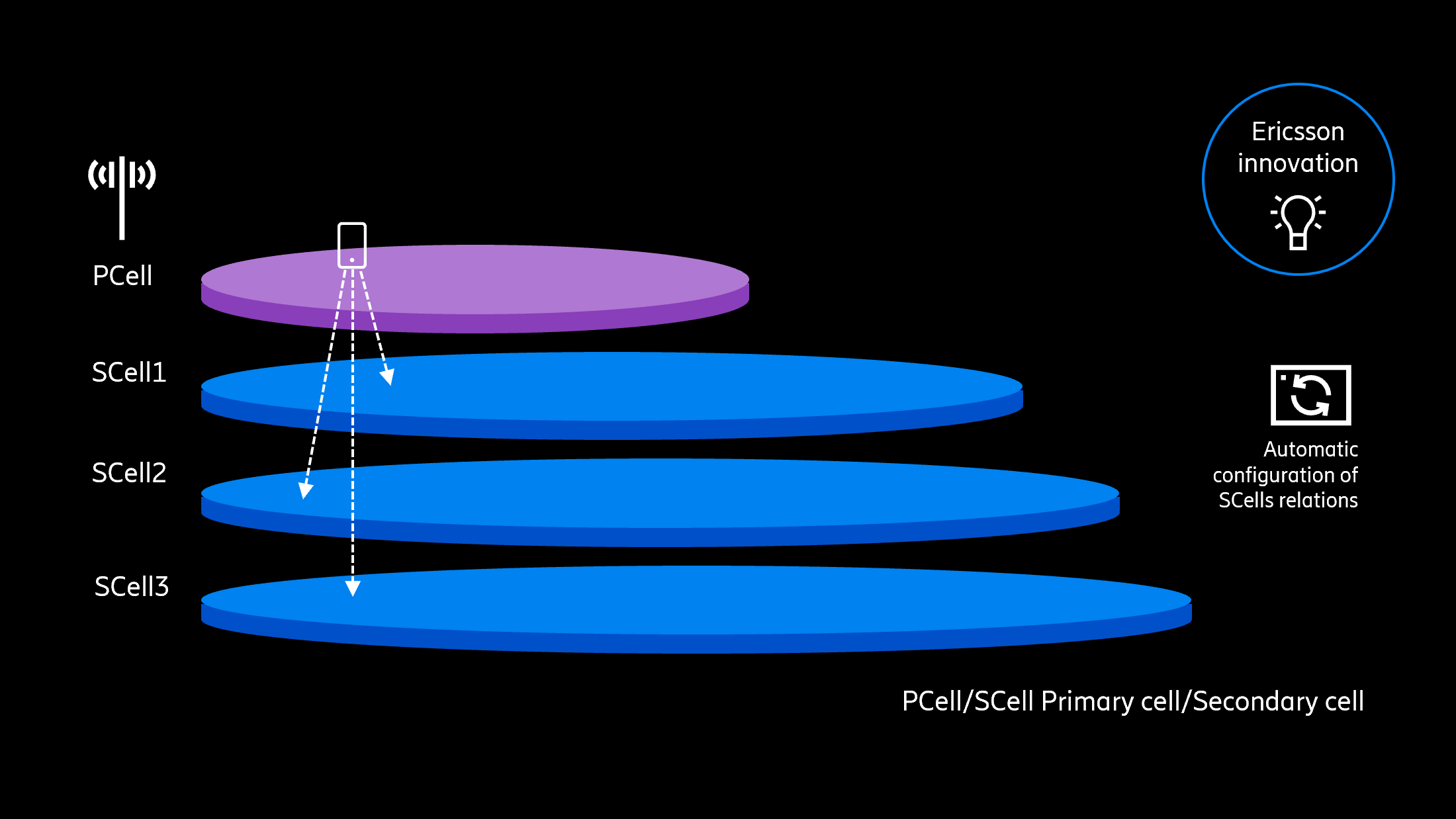
Latest Carrier Aggregation software enhancements
Latest insights


Customer references







Related offerings