









Network build-out to boost digitalization
- English
- 繁體中文
The Kingdom of Saudi Arabia (KSA) is undergoing a radical, nationwide digital transformation. 5G investment and the creation of a solid infrastructure to boost coverage are key to realizing the vision of the future.
The KSA ranked second globally among the G20 countries in the Digital Riser report 2021,1 recently issued by the European Center for Digital Competitiveness, advancing 20 ranks in the general index compared to the previous year. The report analyzed and ranked 140 countries by their digital competitiveness over the last 3 years. Based on the evaluation criteria, countries implementing public-private partnerships to foster innovation and entrepreneurship come out on top of the list. The leap in ranking reflects the ambition and progress of the KSA’s strategy in developing the country’s telecommunications infrastructure’s digital capabilities as part of the Saudi Vision 2030 initiative.
When the Saudi Vision 2030 initiative was introduced in 2016, there was an increased governmental focus on reducing dependency on oil by diversifying the economy and developing public service sectors such as health, education, infrastructure, recreation and tourism. Several digital programs were administrated under this initiative. Among these are collaborations between service providers and the government to build solid telecommunications infrastructure as part of the National Transformation Program, one of the Saudi Vision 2030’s realization programs, enhancing both the fixed and mobile network infrastructure.
The KSA is in a transitional phase where digitalization, supported by a solid network infrastructure build-out, is a national priority for the coming years. As part of this program, during 2018–2020, the digital enabler Saudi Telecom Company (STC) achieved the roll-out of high-speed fixed broadband connections (fiber) to more than 1 million households and provided fixed wireless broadband connectivity to around 500,000 households, connecting more than 2.6 million people in 3,000 remote localities. In addition, the 4G mobile network has undergone extensive modernization and expansion to improve network performance. STC contributed to the deployment of 60,000 Wi-Fi hotspots through its collaboration with the Communications and Information Technology Commission (CITC) to serve public locations, for example, in hospitals, shopping malls and city parks, allowing users 2 hours of free access every day, to further boost digitalization in the KSA.
STC was among the first service providers in the world to launch 5G, with commercial services available since June 2019. It has deployed about 6,200 sites with 5G in 75 cities, in 56 out of 136 governorates. The deployment of 5G networks is a cornerstone of STC’s strategy to improve network performance. However, when the COVID-19 pandemic hit in 2020, there was a strong increase in demand for mobile data which quickly surpassed the forecasted data traffic growth. In response, STC accelerated its 5G roll-out pace to raise network capacity and ensure continuity of services and network performance for its customers. In addition, several digital initiatives related to the health care sector – for example facilitating connections between patients and doctors, as well as managing, storing and displaying medical images remotely – were launched to support in curbing the spread of the disease.
This article was written in cooperation with STC, a market-leading digital enabler in Saudi Arabia, providing innovative digital services and platforms to customers in the MENA region.
5G network deployment strategy
STC is the largest digital enabler in the KSA, with around 20 million mobile subscriptions, earning them a market share of 40 percent. STC launched its 5G commercial services in June 2019 and currently has more than 1.5 million 5G subscribers. The network deployment has resulted in a 5G population coverage of 32 percent since the launch of commercial services, with a target of 42 percent by the end of 2022.
STC’s 4G subscribers have an average monthly data consumption, including all types of terminals, of 43GB, while the same for STC’s 5G subscribers is 101GB. This difference is mainly due to the 5G fixed wireless access (FWA) subscribers’ higher data consumption and more customers on unlimited 5G plans. Since December 2020, the number of active 5G users has grown by 12 percent monthly, and is expected to grow even faster as device vendors are increasingly promoting 5G models over the 4G ones in their portfolios.
STC’s initial network deployment strategy is to extend 5G coverage throughout the KSA to:
- accelerate 5G adoption for enhanced customer experience
- address the business data usage demand while maintaining top ranking in network downlink speed performance
- enable new services and products using advanced 5G use cases and capabilities
- accelerate network innovation
- accelerate digital transformation through the build-out of a solid network infrastructure
One of the driving forces behind the 5G coverage build-out is the demand rate of mobile subscribers in the KSA to this new technology generation, which is much faster than the industry average. A precision-based 5G deployment strategy has also resulted in improved network downlink and uplink speeds. STC uses advanced analytics to identify and prioritize its 5G investment to yield maximum value and return on investment.
Investing in network performance
The strong focus on investing in mobile network performance has put the KSA among the top-ranked countries in mobile network speed benchmarking by external parties.2 Since Q1 2020, the average mobile network downlink speed has increased by a factor of 3, rising from 56 to 147Mbps.3 In STC’s mobile network, the average downlink and uplink performance is about 10 percent better than the KSA average. The average download speed using 5G throughout STC’s network was 398Mbps in Q2 2021, a 14 percent increase compared to the average of 348Mbps in Q1. In the KSA, the average 5G download speed was 370Mbps in Q2 2021.4 The improved performance for STC is due to continuous ongoing projects for expanding, modernizing and upgrading the network with the latest technologies.
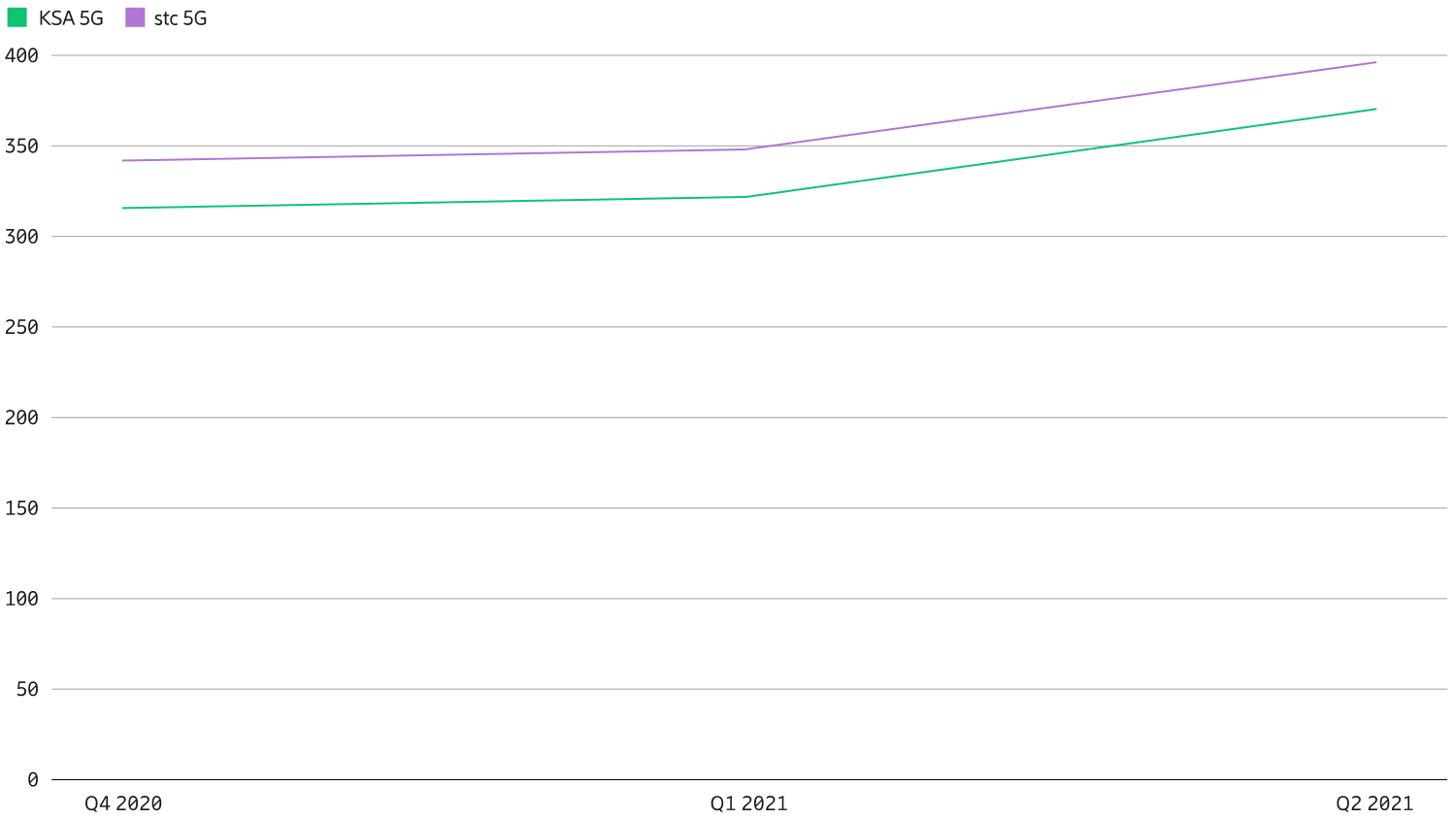
Figure 29: 5G network performance, average downlink speed comparison (Mbps)
Closing the digital divide
An important objective with extending coverage, modernizing and optimizing STC’s fixed and mobile broadband network performance is to further close the digital divide between densely populated and remote areas. The infrastructure should support flawless delivery of online services like e-education, e-government and e-commerce to consumers, enterprises and society. This is all part of STC’s contribution strategy to the Saudi Vision 2030 strategic framework.
One key principle of the Saudi Vision 2030 is that access to the internet should be a basic right for all people in the KSA, regardless of personal economic conditions.
STC is working on reducing the digital divide by developing the ICT infrastructure needed to fulfill that vision. Facilitating and developing high-quality, reliable, sustainable and resilient telecommunications network infrastructure is considered essential for supporting the economic development of the society and increasing digital literacy and skills. 5G is one of the most important pillars to providing the required connectivity infrastructure for both consumers and enterprises to accelerate their digital transformation.
5G use case areas in focus
The growth of 5G mobile services plays a crucial part in the KSA’s overall plan to modernize and digitize its economy. STC are currently exploring new innovative solutions and services that will make full use of the 5G network capabilities. Part of this work is about identifying new business models for entrepreneurs and enterprises that enable them to transform their business with the support of the latest network technologies and services. An innovation hub has been established in partnership with international companies to work with enterprises to co-develop solutions to accelerate innovation and digitization.
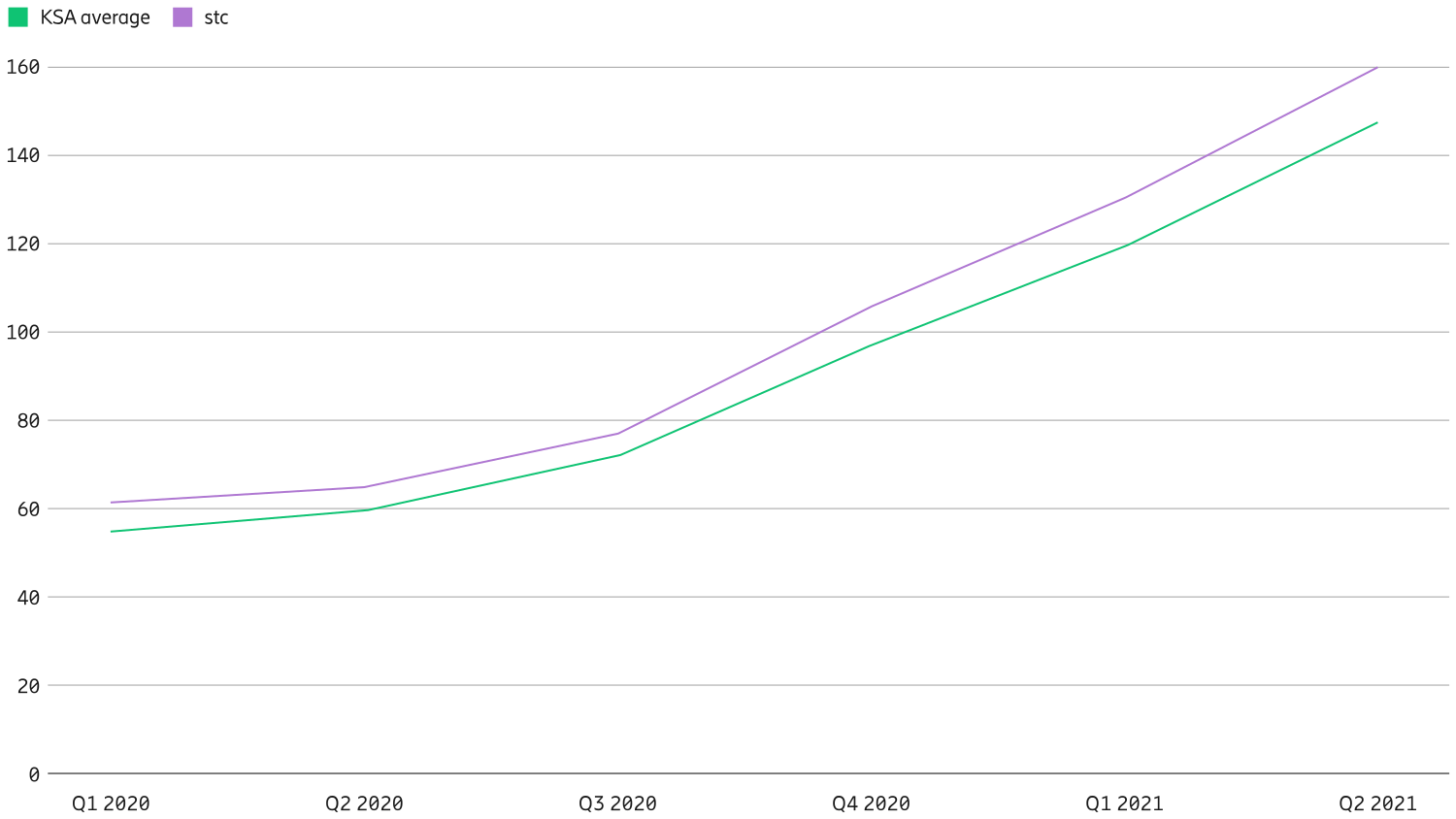
Figure 30: Mobile network performance (all technologies), average downlink speed comparison (Mbps)
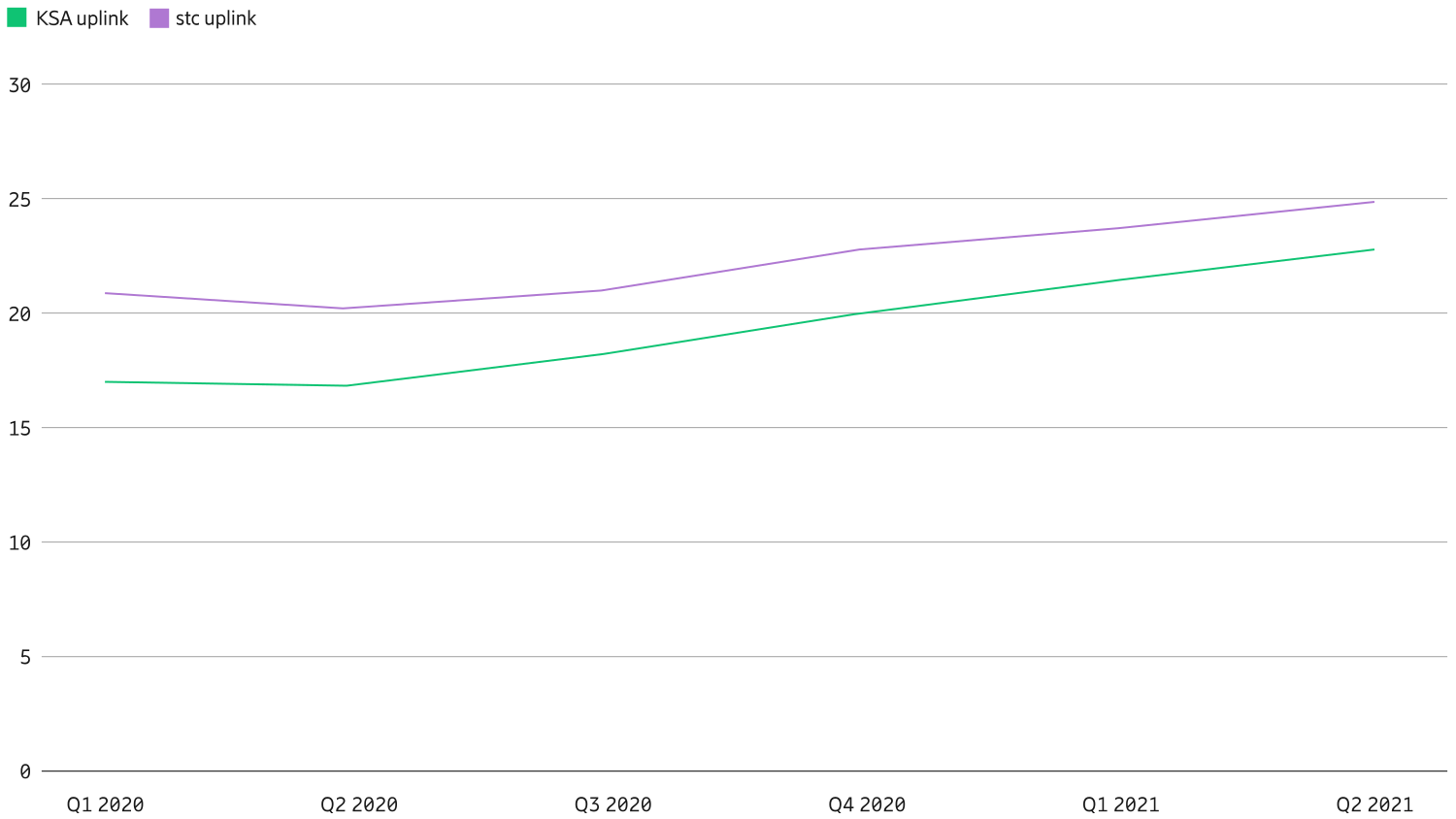
Figure 31: Mobile network performance (all technologies), average uplink speed comparison (Mbps)
Use case areas in particular focus are:
Gaming
Leveraging 5G networks’ ultra-low latency capabilities, stc has established a new subsidiary focusing on gaming and entered a partnership with a cloud gaming provider to develop solutions and gaming packages.
Smart cities
STC is working with partners, government agencies and municipalities to develop smart city solutions.
SOHO
Wireless-based cloud office for small office and home office (SOHO) enterprises over the 5G network with guaranteed QoS.
Secure campus network over 5G
STC is leveraging the 5G standalone (SA) network capabilities in its core network, using network slicing technologies to enable offerings such as smart and secure campus networks for enterprises over the 5G network.
1 The European Center for Digital Competitiveness, ”Digital Riser report 2021”, (September 2021), digital-competitiveness.eu/digitalriser.
2 See for example: opensignal.com/2021/04/15/benchmarking-the-global-5g-experience-april-2021.
3 Communications and Information Technology Commission, citc.gov.sa.
4 Average download speed including all service providers’ data.